Showing posts with label Cruise Missiles. Show all posts

Thursday, October 29, 2015

RCI Developing 275-kgf Thrust Cruise Missile Engine

GTRE developed Manik 425-kgf thrust turbojet at Aero India 2015

RCI is developing a 275 kgf thrust Small Gas Turbine Jet Engine (SGTJE) to power a UCAV capable of cruising at 0.8M at SL. 

RCI will take assistance from NAL's Propulsion Division for design and analysis, engine cycle analysis and configuration of the turbojet engine. 

RCI has also sought private sector, Indian or foreign, participation in the detailed design of the 275-kgf thrust SGTJE. 

Project duration is specified as one year from project start.

Possible Application

The engine is required to be air start capable suggesting it is being developed for a cruise missile. The 275-kgf thrust requirement suggests a relatively smaller, possibly air launched, cruise missile. 

It maybe noted that the Nirbhay, powered by a 500-kgf thrust Saturn engine, would hopefully be replaced by the 425-kgf Manik engine being developed by GTRE. 

Other Cruise Missile Engine Projects

Besides RCI and GTRE, HAL is also developing a 400-kgf thrust Small Gas Turbine for Strategic Application,, based on the PTAE-7 which powers the Lakshya PTA.

IDP Sentinel members can read additional details and specifications of the SGTJE at the link below

Friday, May 8, 2015

Analysis: Brahmos Block-3 LACM Test on May 8, 2015

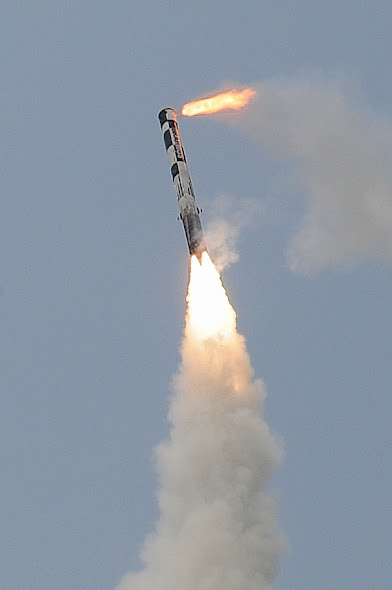
Brahmos Block-3 LACM test on May 8, 2015


The Brahmos Block-3 LACM tested today (May 8, 2015) was likely the Block III Near Vertical Dive variant of the missile.

On October 16, 2014 Brahmos CEO Sudhir Mishra told The Hindu that a near vertical dive variant of the Brahmos Block-III missile was under development.

“We want to demonstrate a 'near vertical dive and surround' capability to take the enemy by surprise. While radars do not have 360 degree coverage in the mountains, we would like to show the missile taking a turn in the horizontal axis and decimating the target around the hill. We hope to do this in a year’s time,” Mishra said.

Brahmos Block-3 LACM test on May 8, 2015

The press release announcing the launch said:

The land-to-land configuration of BRAHMOS Block – III version was test launched from a Mobile Autonomous Launcher (MAL) for its full-range of 290-kms at 1310 hrs....

...Meeting all flight parameters including high level maneuvers, the supersonic cruise missile successfully hit the designated land-based target with desired accuracy, officials confirmed. 

The reference to the high level maneuvers may well be the 'turn around the vertical axis' that Brahmos CEO Sudhir Mishra told The Hindu about.


Thursday, July 17, 2014

Brahmos-A ALCM Live Firing in 2015

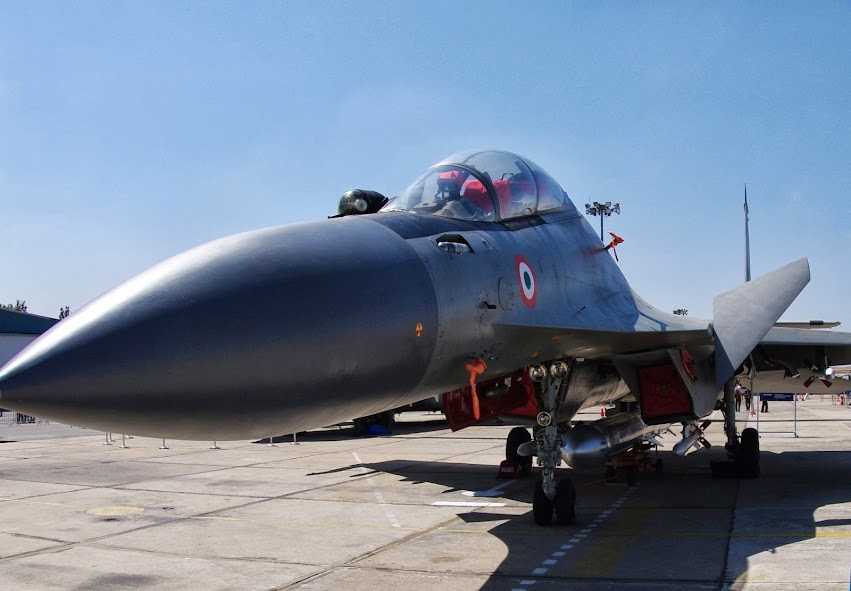
IAF Su-30MKI with Brahmos-A mock-up at Aero India 2011. Photo Copyright Vijainder K Thakur

According to ARMS-TASS, modifications of one the two IAF Su-30MKIs fighters being modified to carry and launch the Brahmos-A ALCM have been completed.

Flight trials using a developmental version of the Brahmos-A missile are likely to start within 2014, but live firing of the missile would take place only in 2015. 

The developmental version, which has been built in Russia, will not feature warhead, fuel and engine, but it will have the electrical circuitry to arm and launch the missile so that the "aircraft weapon system-pylon-missile interface" can be fully tested. The developmental missile will also have sensors to measure load and vibration levels experienced by the missile in flight.

India has developed the missile carriage pylon for the missile and is at present developing the "missile-pylon" interface.

Wind-tunnel tests of Su-30MKI model fitted with a Brahmos-A missile are underway in Bengaluru to ensure clean separation of the missile following release.

Russia is manufacturing the Brahmos-A which has a smaller booster rocket and other differences (see at link below) from the ground launched version of the missile.

IDP Sentinel members can read more about the Brahmos-A at the link below

Wednesday, July 9, 2014

Brahmos Test on July 8, 2014: What Made it Different?

Brahmos developmental test on July 8, 2014.

DRDO classified the Brahmos missile test on July 8, 2014 as a developmental flight and its press release stressed that the test demonstrated the missile's ability to strike a hidden target without seeker based terminal guidance. The press release also claimed that the navigational system used on the missile was a world first.

According to the TNIE, the missile featured a G3oM navigational system on chip (SOC) weighing just 17-gm, which was developed by DRDO's Research Center Imarat (RCI) lab and produced by Bengaluru based private company Accord Software.

Based on an agreement with Russia and India's funding of the GLONASS system, India has access to GLONASS military signal, which is more accurate than the civil signal. India has also developed its own GPS augmentation system, GAGAN, which has an accuracy close to the GPS military signal. In other words, India has assured access to two highly accurate satellite based navigation systems.

Based on an analysis of past press reports, it appears that the G3oM chip can utilize either GLONASS military signal, or GAGAN, seamlessly and automatically switching between the two, to provide positional updates to host missile or aircraft to an accuracy of 3m.

G3oM reportedly features two antennas for  redundancy; in case one antenna gets shielded as a result of maneuvering by the host missile, aircraft or even tank, the other antenna ensures access to the satellite signal.

In future, Indian missiles will also have access to the military signal of IRNSS.

The G3oM is small enough to be fitted on Pinaka artillery rockets and smart bombs to make them deadly accurate.

IDP Sentinel members can read more about the Brahmos and its variants at the link below.

Brahmos Missile - IDP Sentinel

Sunday, April 20, 2014

DRDO Plans Nirbhay, Astra Tests in May 2014

Nirbhay cruise missile maiden test on March 12, 2013

DRDO Chief Avinash Chander told the press in Bhubaneshwar on April 19, 2014 that the second test of the Nirbhay cruise missile would be conducted in May 2014, following test of the BMD exoatmospheric interceptor in end April. He was in the city to address convocation of Siksha 'O' Anusandhan University.

DRDO has been planning the Nirbhay test for a while. Earlier on February 4, 2014, the DRDO Chief told the press on the sidelines of the Indian Science Congress that the second test would take place before February end. Still earlier, the Hindu reported on November 24, 2013 that a second test of the Nibrhay missile is planned in December 2013.

The debut test of the Nirbhay cruise missile at 11:50 AM on March 12, 2013 was aborted after about 20 mins of flight, as the missile deviated from its intended course.

The test was planned to the max range of the missile, which is 1,000 km. Following launch from a road mobile launcher, the first stage rocket booster separated, the second stage turbojet engine starter fired, and the engine attained full thrust; the missile reached a cruise speed of 0.7 M (460 k or 900 kph).

The missile is reported to have successfully navigated to two way-points before veering off course towards the coast.

The missile was flying at a height of 4.5 km when the mission was aborted by switching off the missile's engine. The missile had traveled around  300 km (30% of its envisage range.) at that point. All the parameters till then  were exactly as planned. The missile crashed on land.

DRDO's Avinash Chander, Chief Controller (Missiles and Strategic Systems), told The Hindu, "All the aspects of cruise vehicle were tested and verified. That is a major achievement."

He told Business-standard, "I would call the test 80 per cent successful. The Nirbhay demonstrated that it could take off correctly, establish a cruise profile, and navigate to its initial way-points. These were new performance parameters that we had never tested before, so we are satisfied that the test proved those. But then, one of the sub-systems malfunctioned and we had to terminate the test. All that remains is to determine why this happened and to rectify the flaw."

IDP Sentinel members can read more about the Nirbhay missile at this link.
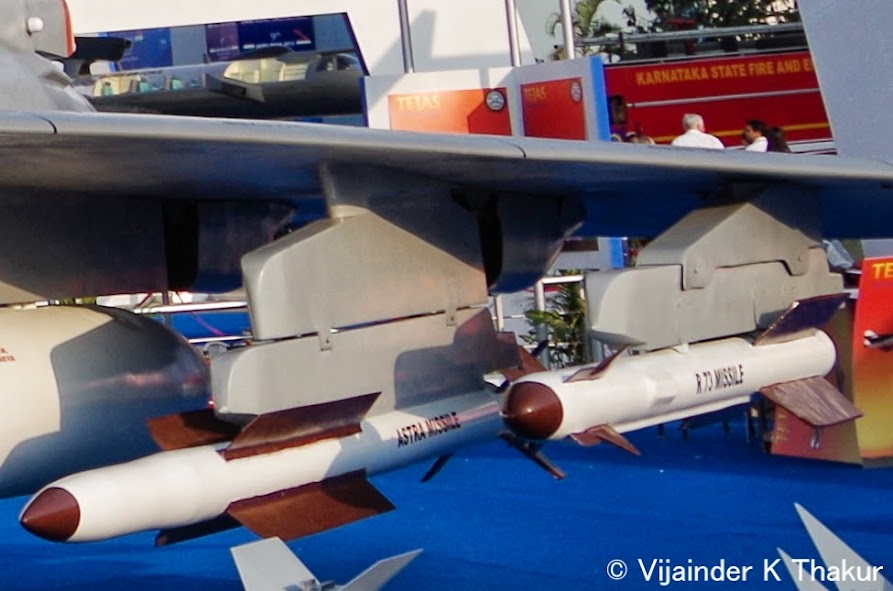
DRDO's Astra and the Russian R-73 (AA-11 Archer) air-to-air missiles on a LCA at Aero India 2013.

DRDO has also scheduled the maiden air launch test of the Astra air-to-air missile in May 2014. The missile would be launched from a Su-30MKI.

IDP Sentinel members can read about the development trials of the Astra missile at this link.

Tuesday, February 18, 2014

SAAB RBS15 Mk-3 Mobile Missile Coastal Battery (MMCB) Contender at DefExpo 2014

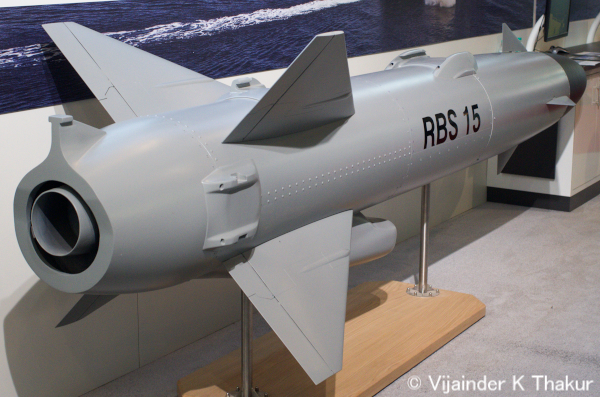
SAAB RBS-15 at DefExpo 2014
SAAB's RBS15 Mk-3 displayed at DefExpo 2014  is a strong contender for India's planned Mobile Missile Coastal Batteries (MMCB) procurement because of its land attack capability and multiple launch platform options.

The RBS15 has been around for 30 years and has been deployed by several countries on ships, coastal batteries and aircraft for targeting sea based threats. The RBS15 Mk-3 has the ability to also engage land targets, a requirement stipulated in the MMCB RFI released by Integrated Headquarters in October 2013.

The latest air-to-surface version of the missile - RBS15F ER - is capable of engaging sea based threats in open seas or littoral waters.

The RBS15 Mk-3 has a range of 200-km and carries a 200-kg blast and fragmentation warhead triggered by delayed impact (to ensure penetration) or proximity fuse. The sea skimming missile can be programmed to route through numerous vertical and horizontal way points, facilitating over the horizon targeting. It's capable of carrying out random maneuvering during its terminal phase.

The missile uses inertial and GPS navigation. It features a pre-launch programmable radar seeker with ECCM and target discrimination giving it a fire and forget ability.

The sea and land launched RBS15 Mk-3 variant of the missile weighs 670-kg and the air-launched RBS15F ER variant, 600-kg.

Mobile Missile Coastal Battery (MMCB) (IDP Sentinel)


Friday, February 7, 2014

Brahmos-M Still Largely a Concept

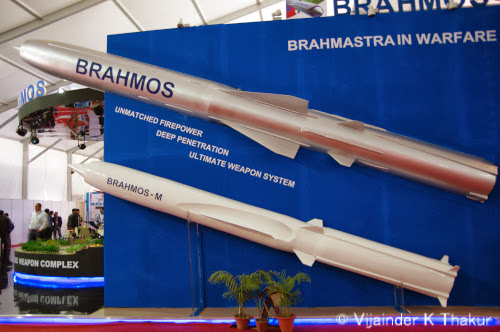
Brahmos-M mock-up at DefExpo 2014 

Brahmos aerospace officials first announced the Brahmos-M as a concept at DefExpo-2012.

Brahmos-M is the missile that Brahmos should have been - a smaller (6-m) and lighter (1.5-ton) supersonic missile capable of being launched from any medium fighter, naval ship, mobile ground launcher or a standard submarine torpedo tube.

At Defexpo 2014, Brahmos Aerospace unveiled a mock-up of the Brahmos-M, but don't go and put an Google News alert on Brahmos-M yet. The missile will be a long time coming. The mock-up notwithstanding, the missile is still a concept.

The problem with developing Brahmos-M is - developing the smaller ramjet engine that will power the missile.  India has yet to locally manufacture the ramjet that powers the Brahmos, over 9-years after the first test launch of the 'jointly developed' missile.

Russia is committed to transfer the technology to manufacture the Brahmos ramjet to India, but it hasn't happened. Either due to Russian reluctance or Indian inability, perhaps both, the TOT remains on the to-do list.

Without an engine, the detailed design of the Brahmos-M cannot be frozen. IDP understands that BATL has been tasked with developing the Brahmos-M engine. BATL's skill are in manufacturing rocket and missile components, not designing new engines.Hopefully BATL will develop a ramjet for the Brahmos-M with assistance from Russia and Indian academic institutions. Till that happens, or Russia coughs up a ramjet after seeing India struggle with the project, Brahmos-M will remain a concept.

For more on the Brahmos-M please see the link below

Brahmos-M Missile (IDP Sentinel)