Thursday, December 4, 2025

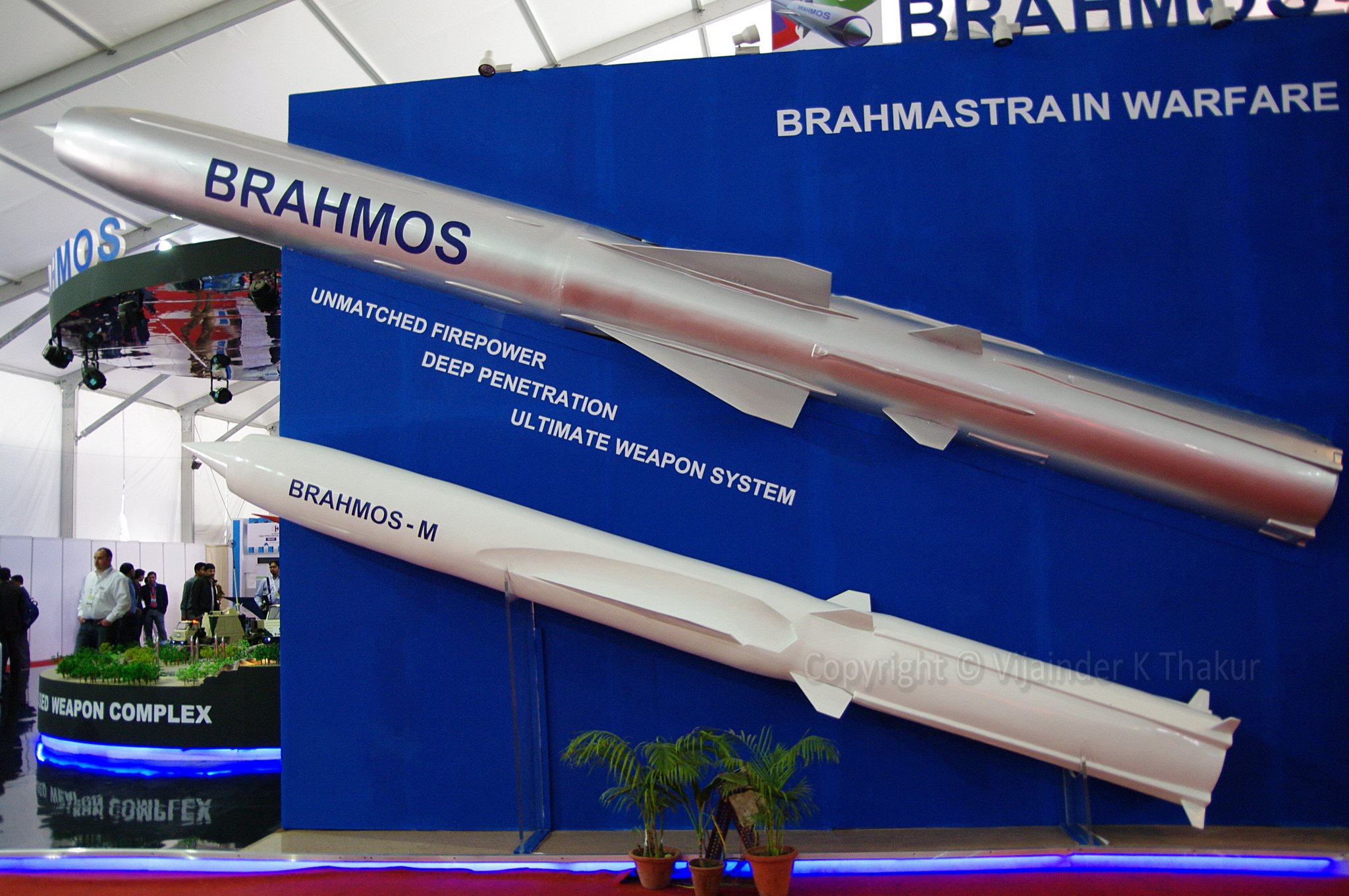
Fourteen Years On: Will BrahMos-NG Become More Than a Concept?

via X

As stated in my earlier post, it has been widely reported in the Indian press that the summit talks between the Indian Prime Minister and the Russian President—scheduled for today and tomorrow—will cover cooperation on the development of the BrahMos-NG missile.

The BrahMos-NG is not a BrahMos variant; it is a clean-sheet design of a high-supersonic missile that will be smaller and lighter than the current BrahMos. The NG was conceived to facilitate:

1. Carriage by lighter fighter jets such as the Tejas Mk.1A and MiG-29UPG.

2. Carriage inside the internal weapons bay of the FGFA, the stealth fighter that India and Russia were developing for the IAF around 2011.

The missile was initially projected to be 6 m long and 0.5 m in diameter. It was to have a top speed of Mach 3.5 and carry a 200–300 kg warhead to a maximum range of 290 km.

More recently, it has been reported that the new missile would be capable of launching from standard submarine torpedo tubes—just like the submarine-launched Exocet used on Type-75 Scorpene submarines.

In July 2019, a BrahMos official reportedly told India Today that the missile would be 5 m long—possibly to enable torpedo-tube launch.

BrahMos-NG – Misleading Development Timelines

Over the years, MoD and BrahMos officials have made overly optimistic statements about the development of BrahMos-NG.

A senior defence official reportedly told Times Now in November 2017 that the air-launched BrahMos-NG was “currently in the design stage,” adding that the missile would be ready by 2019.

In February 2024, BrahMos Aerospace’s Export Director Pravin Pathak stated that flight tests of the BrahMos-NG would begin before end-2025.

He said:

“In parallel with construction of the plant… the first flight samples of the new BrahMos-NG rocket will be assembled for flight testing… before the end of 2025.”

Development Actually Begins

There is good reason to believe that real development began only in September this year.

On September 9, TASS reported that BrahMos Aerospace is designing the missile and intends to begin autonomous testing next year.

TASS quoted Alexander Maksichev, Russian Managing Director of the JV, as saying:

“We are currently at the working design stage… and then we will move on to autonomous tests.”

He added that it was too early to discuss the timeline for actual flight testing.

"Autonomous testing" is likely ground-based testing. Flight testing could require an additional year or two, considering the need to upgrade a test aircraft—likely an IAF MiG-29—with supporting hardware and software.

After 14 years of announcements, it finally appears that the project is moving decisively forward and is awaiting a final political push from President Putin and Prime Minister Modi.

A New Ramjet Engine

Because BrahMos-NG must be significantly smaller and lighter, it requires a new, scaled-down ramjet engine.

During Aero India 2019, a BrahMos official stated that Russia’s NPO Mashinostroeyenia is developing this new engine.

This engine, like the missile itself, is a clean-sheet design. Feasibility studies and engineering analysis were reportedly completed around 2020.

Link With the Su-57

Russia has made a very tempting offer to India to buy its Su-57 stealth fighters for the IAF. 

In July, the IAF had projected to the Indian government a requirement for 2-3 squadrons of stealth fighters in view of the depletion of its fighter aircraft inventory, delay in AMCA development and the existing threat perception. 

If the government decides to take up the Russian offer, which appears rather compelling since it includes transfer of technology, the IAF would want the Brahmos-NG to be compatible with the variant of the Su-57 that it acquires. The missile would have to fit inside the internal bomb bays of the stealth fighter conforming to the load carrying the bays.

During the recently concluded Dubai Airshow, the Su-57 displayed a pair of Kh-58UShK anti-radiation missiles in its forward internal weapons bay during flight rehearsals and demonstrations. 

The Kh-58UShK has a launch weight of 650 kg. Extrapolating, it would appear that the max weight carrying capacity of the forward internal weapons bay is around 1,300 kg. 

In March 2019, BrahMos CEO Sudhir Misra stated that the Tejas underwing hardpoint can support a maximum load of 1,250 kg, including the launcher. This implies that the NG would weigh less than 1,250 kg.

The NG must therefore weigh below 1,300 kg. By contrast:

Standard BrahMos weighs ~3,000 kg

BrahMos-A weighs ~2,500 kg

Thus, miniaturisation is key.

In addition to physical fitment, radar and mission-computer integration would require Russian-Indian collaboration.

If Not Su-57—AMCA Compatibility

If India does not pursue the Su-57, the missile will need to be compatible with AMCA’s internal bay—an uncertain proposition at this stage of AMCA development.

Conclusion

Much remains to be done before BrahMos-NG becomes operational. Russia has begun work on the engine and on a new high-supersonic air-launched missile. India must now decide whether to participate meaningfully—before timelines slip, just as they did in the case of FGFA.

Copyright © Vijainder K Thakur. First published on Thumkar.

BrahMos Missile - What Uprade Does India Want from Russia?


via X

It is being widely reported in the Indian press that during President Putin's visit to New Delhi later today, India and Russia are likely to review the development of the BrahMos missiles and its proposed variants. 

Here is a quick analysis of the cooperation India is seeking for the existing BrahMos missile. In a subsequent post, I will dwell on the assistance we need for the development of the BrahMos-NG variant, which still remains largely conceptual. Notably, in March 2011, former BrahMos Aerospace chief A. Sivathanu Pillai had announced the start of its development with much fanfare

BrahMos Upgrade

India is not seeking Russian assistance to upgrade the existing BrahMos missile to increase its range, as some sections of the Indian press have reported. Instead, it is seeking Russian cooperation to reduce the missile’s production cost and thereby enhance its export potential.

The use of the BrahMos missile during Operation Sindoor not only impacted runways and hangars in Pakistan in a bad way, it also impacted global interest in the missile—in a good way. Indian Defence Minister Rajnath Singh has stated that at least 14 countries have expressed interest in acquiring the BrahMos supersonic cruise missile following its demonstrated success in the operation.

BrahMos Export Performance

The problem with the export of the Brahmos is that it's way too expensive. As such, procuring it in operationally significant numbers is beyond the fiscal capabilities of several small nations. 

India has so far exported the BrahMos missile to the Philippines, with deliveries of multiple batches completed under a $375 million deal signed in 2022. 

Recent reports suggest that in October 2025 India signed export contracts with two undisclosed countries worth approximately $455 million.

Negotiations are underway for the export of the missile to Vietnam ($700 million) and Indonesia ($450 million).

BrahMos Unit Price

Based on procurement figures of the Indian Armed Forces, the standard BrahMos missile is estimated to cost $2–3 million per unit, while the extended-range (ER) variant typically ranges from $3–4 million.

Prices can vary within both standard and ER categories depending on whether the missile is configured as an anti-ship variant or a land-attack cruise missile (LACM), each carrying different mission-specific features.

Cost Comparisons

Because of its high supersonic speed and large warhead, the BrahMos is a unique and potent missile. Only Russia and China have peer missiles. 

Russia's Onyx (P-800 Oniks) missile is a Brahmos analog that has been extensively and very effectively used in the war in Ukraine. Russia exports the missile. It's price is estimated at approximately $1.25 million based on multiple defense analyses and reports. 

The British Storm Shadow missile - which admittedly is a subsonic missile, but being stealthy, has good penetration - has a price tag estimated to be around $2 million.

Reasons for High Cost of Brahmos

The fact that India is discussing the unit cost of the BrahMos with Russia strongly suggests that Russia is exporting critical BrahMos components to India for final assembly. In other words, Russia’s profits come from the sale of these components—not from the missile itself. The reality is that BrahMos Aerospace functions less as a true joint venture and more as a structured arrangement in which the foreign partner earns revenue by supplying high-value parts.

In this respect, BrahMos Aerospace is no different from many of India’s joint ventures with Western or Israeli aerospace firms, where the commercial model similarly relies on exporting components rather than sharing the full value chain of the weapon system.

What is likely, however, is that Russia may be willing to make an exception for India—precisely to underscore how highly it values the strategic partnership.

Preliminary Cost Reduction Negotiations

BrahMos Aerospace Deputy CEO Chilukoti Chandrasekhar visited Moscow in September 2025 to discuss with the Russians India's plans to expand production capacity and lower costs. 

During his visit, responding to a question from TASS, he told journalists.

"The Russian side and the Indian side, both of us, are working to reduce the cost of the missiles so that more export orders can be honored at the same time. To augment the requirements for export as well as for our own need — for our own armed forces — we need to augment our production facilities also. We are working with our Russian partners to augment this facility," he said in response to a question from TASS.

Copyright © Vijainder K Thakur. First published on Thumkar.

Wednesday, December 3, 2025

Beating the Heat: How Anti-Thermal Cloaks Are Changing Drone Warfare

Russian troops reportedly used anti-thermal cloaks to evade detection by surveillance drones equipped with thermal-imaging (TI) sensors, allowing them to penetrate Ukrainian lines in Krasnoarmeysk at night.

The troops entered Ukrainian-held territory despite the presence of enemy drones, ambushed equipment and personnel, and mined roads to cut off supply lines—leaving the adversary confused and disorganised.

The cloaks—nicknamed “anti-drone raincoats” due to their poncho-like design and waterproof qualities—incorporate insulating and reflective materials such as nylon with embedded aluminium or silver particles, or layered Mylar (a reflective foil-like material) sandwiched between fabric.

These “raincoats” prevent the escape of infrared (IR) radiation emitted by the human body, which TI sensors detect as heat signatures. Their outer surface remains close to ambient temperature, reducing the thermal contrast needed for TI detection.

They are particularly effective during “thermal crossover” periods, when air and ground temperatures are nearly equal. This typically occurs after daybreak and sunset, as well as in rain or fog. During the day, the raincoats can also be effective when troops remain close to objects such as rocks or vegetation that are warmer than the surrounding air.


Tuesday, December 2, 2025

Heron Mk.2: Israel’s Surprise Turnaround on Technology Transfer to India


The Economic Times reported on December 1, 2025, that talks are underway for additional procurement and local manufacture of Heron Mk.2 drones.

A source told ANI, “All three branches have decided to purchase the Mk-II.”

The discussions are centered on IAI’s obligation to meet the Indigenous Content (IC) standards mandated for the local manufacture of MALE UAV systems. The requirement calls for 60 percent local work and manufacturing.

Eventually, the Heron Mk.2 is expected to be weaponized with locally manufactured precision-guided munitions.

India and Israel have been in talks since 2016 to weaponize the IAF’s existing inventory of Searcher and Heron drones. However, little progress has been made because of Israel’s reluctance to share critical drone technologies.

In early February 2020, reports indicated that IAI and HAL would sign a contract during DefExpo 2020 to manufacture Heron Mk.2 drones in India, with 100 units planned to meet the requirements of the defence services. Nothing materialized from this proposal.

Israel Aerospace Industries (IAI) is now actively bidding on India’s ₹30,000-crore tender for 87 MALE UAVs, offering deep transfer of technology for 100% local assembly of Heron Mk.2 airframes, engines, avionics, and payloads in India.

One possible explanation for India’s renewed interest in locally manufacturing the Heron Mk.2 could be the DRDO’s recent success in developing weaponization technologies, including sensors, drone-launched PGMs, and drone-based weapon-launch computer systems.

Copyright © Vijainder K Thakur. First published on Thumkar.

Thursday, June 20, 2024

Global Realignments Challenge India's Fence Sitting


The recent visit of the Russian President Vladimir Putin to North Korea and Vietnam signalled a tectonic shift in global alignments as a consequence of the ongoing Russian Special Military Operations (SMO) in Ukraine. 


Major military powers - North Korea, Vietnam, Iran and possibly Indonesia - appear to be gravitating towards aligning with Russia to challenge the US quest for unipolarity and global hegemony. 


India has always championed multipolarity, but has never challenged US unilateralism openly. For example, it has been very circumspect in its dealings with Russia, a special and privileged strategic partner, in order to avoid US sanctions. To an extent where it has allowed even defence procurements to languish. 


In the subsequent paragraphs, we will discuss how India’s fence sitting may soon prove counterproductive.


Emerging Contours of Future Alignment


US unilateralism is most often enforced through NATO, under the guise of protecting democracy or preventing humanitarian crises. NATO's campaigns in Iraq, erstwhile Yugoslavia, Afghanistan, Libya and the Mediterranean sea being examples.


It appears that now some Global South military powers are aligning with Russia to deter NATO interventions. 


China along with Russia and its allies like Iran and North Korea could emerge as bulwarks against wanton NATO interventions in a close knit relationship that mimics the current relationship between the US and NATO. 


The Dilemma for India


India needs to take a principled stand on ongoing realignments to secure India’s future interests. Fence sitting, India's current proclivity, is not a principled stand. 


India is not resource rich. It needs to align with the side that can meet its energy and metals requirement through short and secure trade routes. 


India's natural alignment should be with the emerging alliance to support multipolarity. In many ways, BRICS is that emerging alliance and India is already a founding member of BRICS. 


However, there is some unease in the Indian establishment that China will dominate BRICS to an extent that would not be in India's interest. 


Logically speaking, both China and India are founding members of BRICS. So India will have as much chance to dominate BRICS as China. A lot will depend on which country plays a more prominent role in the organisation. Keeping in mind China's greater economic heft, it is likely that China will. But that is what multilateralism is about, isn't it? 


Many Indians believe that more active Indian participation in BRICS would lead to burning our bridges with the West. Is that really true?


The Allure of the West


The West has made deep inroads into Indian society through subtle and indirect control of Indian corporates, media, financial institutions and entertainment industry.


The American dream has become the dream of tech savvy young Indians. 


Most high ranking Indian bureaucrats have family in the US, as do a lot of politicians. It would be wishful thinking to believe that the presence of family members in the US would not influence bureaucratic and political decisions. 


Ironically, the US Ambassador to India, His Excellency Eric Garcetti, recently alluded to such family ties in the context of relations between India and the US!


Western Disinformation


The Indian media has promoted the Western narrative of Putin being an evil dictator with an imperial mindset, bent upon conquests to expand Russian borders. Most young Indians have bought the narrative without introspection.


Actually, the hate filled Western narrative is completely devoid of substance. Russia is geographically the largest country in the world. As per the last census, it had a  population of approximately 146 million people and a total land area of about 17.1 million square kilometres, which translates to a population density of 8.54 people. 


Why would a grossly underpopulated Russia want to add more territory? 


The fact is, Russia has vast reserves of critical natural resources such as oil, coal and metals, has a vast geographical spread, a low population density and multiple regional ethnicities make it a low hanging fruit to satiate the corporate greed of the West. The West aims to dismember Russia and acquire its resources.


People to People Bond


Most young Indians have no idea about the great warmth in the hearts of the Russian people towards India. They have never visited Russia and completely believe the West’s hate filled narrative on Russia.


While it is true that immigrant Indians in the US command respect, it is also true that few US citizens consider Indians to be peers. There is certainly much less warmth towards Indian people in American hearts than in Russian hearts.


As far as US leadership is concerned, they certainly don’t look upon Indians as equals!


By stepping up its participation in BRICS, India would not be burning bridges with the West. However, if some bridges do get burned, the West will quickly build stronger bridges. Turkey's President Recep Tayyip Erdoğan is proof of this paradoxical axiom. 


The West needs to trade in order to support the high consumption levels of its citizens. Also, the West prefers to trade with stronger nations for greater stability of trade. Whatever else may be abhorrent about the West, their pragmatism cannot be doubted. 


BRICS is Here to Stay & Grow


BRICS emerged as a grouping called BRIC in 2006 when Brazil, Russia, India and China held their first meeting on the sidelines of the United Nations General Assembly. 


In 2010, South Africa was invited to join the group which was then renamed BRICS. For over a decade since then, the growth and importance of BRICS was less than spectacular and India's participation in the group was merely frowned upon by the West. It wasn't considered a cause of concern since BRICS was looked upon as a non entity. 


Following the start of the SMO in February 2024, the West imposed widespread sanctions on trade with Russia. In order to protect their economic interests many non western nations expressed a desire to join BRICS, seeking alternative allies and trading partners.


Iran, Egypt, Ethiopia and the UAE joined the group on January 1, 2024. More nations are poised to join BRICS in the near future. 


It's in India's interest to play an active and constructive role in the progress of BRICS. As a founding member, India can deal with China as an equal. India's relations with other BRICS founder members are as strong as China's and are likely to remain so. 


The Global South looks upon BRICS as a grouping that will usher in true multilateralism in the world. If India sticks with BRICS, it will likely have a role to play in world affairs. A role  that it will never have as a non security council member of the UN.


Were India to drag its feet on BRICS, it would generate a lot of resentment among the countries of the Global South. India's status as a leader of the Global South would be compromised. 


Problem with China

Now, coming back to the elephant in the room whenever and wherever there is discussion on India's role in BRICS - China.


While there can be no doubt that China is an adversary, projecting China as a threat to India's sovereignty or territorial integrity makes little sense. India is the largest nation on Earth in terms of population. It has a vibrant economy and a very large and well trained military with a credible nuclear deterrence. Any contention that China can militarily defeat India has to be absurd. 


India should strive for a quick settlement of its boundary dispute. Our border problem is a legacy of our colonial history. There is room for a different viewpoint on India’s claim, particularly in Ladakh. 


While there is no denying Chinese intransigence and arrogance, typical of an autocratic leadership with an imperial mindset, is a big impediment to settling the border dispute, tough negotiations under tough leaders can resolve the imbroglio.


However, if a settlement remains elusive, India should adapt to a life with unsettled borders. It should firmly hold the LAC, something it has repeatedly slipped up on doing in the past.


If required, the Indian armed forces could be given a clear mandate to hold the LAC based on maps showing current troop deployments. The COAS could then annually certify before the parliament that the LAC is still being held as per the maps. And if not, explain why not. No political or bureaucratic discretion would be allowed on the present status of the LAC.


Conclusion


In view of recent global realignments, there is perhaps a need for India to tweak its foreign policy. India has always advocated global multipolarity, so it must stand up to its beliefs. 


India needs to act in its best  interest, which doesn't necessarily point to neutrality, sitting on the fence or sitting on moral high ground. 


Realignments don't involve burning bridges. Strong nations respect other strong nations. 


Finally, India needs to accept China for what it is - a belligerent state with an autocratic leadership inclined to bully weaker nations. But, Indian political leadership need not be influenced by Chinese belligerence. The leadership needs to trust and have confidence in the Indian Armed Forces' ability to protect India's territorial integrity, and give them freedom to do their jobs. 


Friday, July 16, 2021

Russia's LO Checkmate! No One Saw it Coming!


Via Twitter


Introduction

Russia's Sukhoi is company funding development of a LO supermaneuverable optionally manned single engine lightweight (18 t) Mach 2 fighter that will be unveiled at MAKS 2021

On July 12, 2021, days ahead of MAKS 2021, Russia's Rostec announced:


“The United Aircraft Corporation will present a fundamentally new military aircraft on July 20 - on the first day of the MAKS-2021 International Aviation and Space Salon in the city of Zhukovsky


Rostec also released the following teaser video 


Ростех представит на МАКС-2021 принципиально новый военный самолет ОАК - YouTube


The video suggested that the new fighter was pitched at countries like India, Vietnam, Argentina and the UAE.


( I believe a LO short range super maneuverable fighter better meets IAF's defensive requirements that fighters such as F-22, F-35 or Su-57).


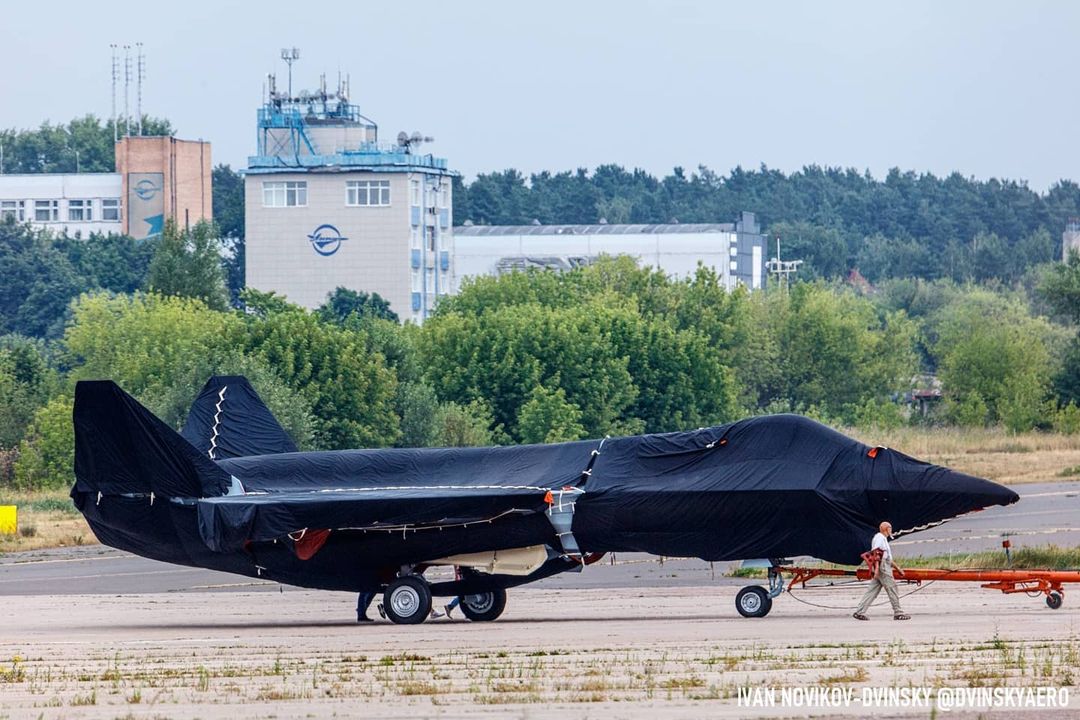
A day later, photographs of the fighter (or its mockup?) being towed ensconced in a shroud appeared on the web.


Features

Going by the photograph above and the teaser video on YouTube, Russia's "Checkmate" features a LO V-tail that would provide some degree of yaw and pitch control. Additional yaw and pitch control required for super maneuverability would likely be provided by thrust vectoring.


Surprisingly, based on the photograph above, the fighter does not feature stealthy shaped exhaust. The S-70 Okhotnik was shown at MAKS 2019 with shaped exhausts.

History

Russian aviation industry officials have alluded to a new LO fighter since 2017 (with development having started in 2015), yet western media, inclined to be in denial of Russian advances in aviation technology, was completely surprised by the new Russian stealth fighter. It's likely, Western intelligence too was caught off guard. As such, Russia's chosen name for the fighter - Checkmate - is doubly apt.

On May 26, 2021, TASS reported quoting an industry source that Russia is developing its first single-engine low-observable light tactical fighter aircraft.

"The Sukhoi company is developing a single-engine light tactical plane with the takeoff weight of up to 18 tonnes. The plane’s maximum speed will be above 2 Mach. It will also have super-maneuverability and improved takeoff and landing performance, thanks to a thrust vector control engine. The plane’s thrust-to-weight ratio will be above 1," the source said.

In December 2020, Rostec CEO Sergei Chemezov told reporters that the company was working on the concept of an advanced, optionally manned, single-engine light-and medium-class.

"Work is underway to develop a combat aviation system of the future in its light and medium classes. Under the design, this may be a universal platform in the manned and unmanned versions. The company is working on the concept and the operational requirements for such a platform. We are doing this on our own initiative so far, without [federal] budget funds," the Rostec chief said.

In a news report on May 25, 2020, Pravda reported that Russia started development of a multi-purpose stealth fighter - MiG LMFS - in 2015.  The fighter is conceived as a replacement for the MiG-29 and MiG-35 aircraft and will be based on the technology used for the development of the Soviet MiG-1.44, which was far ahead of its time.


"MiG-LMFS" is designed with front horizontal stabilizers. They will be placed just above the wing to stabilize air flow in front of it. As it is believed, the aircraft should have a triangular wing and a V-tail. With a takeoff mass of about 15 tons, it will be able to take up to 5 tons of payload, for example, medium-range K-77M missiles.


The airplane will be armed with a 30 mm caliber cannon. The fighter is to be equipped with two VK-10M turbojet units with a total thrust of 20 tons. In the future, a single Product-30 engine with the afterburner power of 18 tons can be used. This engine was developed for the Sukhoi Su-57 fighter and currently undergoes flight tests.


The MiG-LMFS would feature internal carriage of weapons, have a range of 4,000 km and a top speed of 2,500 kph.


Earlier in 2017, Sergey Chemezov, the head of Rostec, told reporters about plans to develop a 5th gen fighter based on the MiG-29 with the United Arab Emirates. 


Kravchenko confirmed MiG was involved on three major development programs — a “prospective plane,” a long-range interceptor and a UAV — but would not elaborate on activities related to a potential fifth-gen jet. [source]


Thursday, May 13, 2021

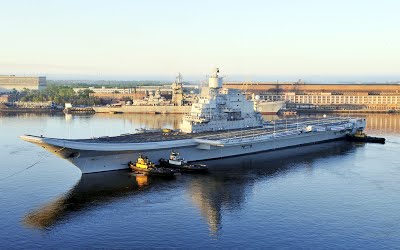
Buoyed by Rezistor-E Success on INS Vikramaditya, Russian Navy to Install Precision Landing System on Admiral Kuznetsov


According to data made available to TASS by Russia's Chelyabinsk Research Institute of Measuring and Radio-Technical Equipment, Indian Navy pilots have already conducted over 1,500 landings on INS Vikramaditya using the Rezistor-E landing system which has "performed splendidly."

The Rezistor-E is a radar based air traffic control and precision approach radar system featuring digital channel data exchange with MiG-29K/MiG-29KUB fighters operating onboard INS Vikramaditya. The system has been developed and produced by Russia's Chelyabinsk Research Institute of Measuring and Radio-Technical Equipment. 

The Rezistor-E system facilitates safe deck operations even during marginal visibility conditions. The system aids the pilot to fly the aircraft on an optimum glideslope upto to a distance of 30 meters from the flight deck, after which the pilot lands on visual cues.

The Rezistor-E system has also been installed on the indigenously designed and built aircraft carrier INS Vikrant which is currently undergoing trials. 

The Russian Navy is set to replace the Rezistor-K42 precision approach system on its Admiral Kuznetsov aircraft carrier - which is currently undergoing repairs at the 35th Ship Repair Plant - with the  Resistor-E PAR similar to the one being used by the IN.

The Rezistor-E PAR system installed on Admiral Kuznetsov will use Russian electronics and undergo full-scale trials at one of the two NITKA shore based training facilities available in Russia.

In addition to the Rezistor-E radar based system, INS Vikramaditya is also equipped with the Luna Optical Landing (OLS) system, which provides visual descent glidepath information to pilots through a system of lenses and colored lights in the terminal phase of approach and landing on aircraft carrier, to facilitate touch down accuracy desired to to snag the arrester cables.

The IN wants an improved OLS that is visible from a longer distance than is possible with the Russian Luna system currently fitted. It also wants higher resolution for colored light to ensure clarity.

The Central Scientific Instruments Organization (CSIO) has developed an improved OLS, last known to be undergoing trials at the Goa SBTF. The current status of the indigenous OLS is not known.