Showing posts with label MTA. Show all posts

Thursday, August 13, 2026

The Russian Wild Card in HAL's MTA Bid


Multiple sources have reported that the Indian Ministry of Defence on August 12, 2026 issued an RFP for the procurement of 60 new multirole transport aircraft for the Indian Air Force (IAF), with an option for additional aircraft. The programme is intended primarily to replace the ageing An-32 fleet. ANI reported that the tender has been issued to multiple Indian companies, including Tata, Mahindra and Hindustan Aeronautics Limited (HAL), with Indian companies expected to play the lead role.


The programme envisages Indian companies tying up with foreign Original Equipment Manufacturers (OEMs) to establish local production. According to ANI, around 20% of the aircraft are to be delivered in fly-away condition, with the remainder manufactured in India with more than 60% indigenous content.


According to ThePrint, the MTA is intended to fill the capability gap between the An-32 and Il-76 fleets and could eventually replace both in terms of numbers and capability. The IAF's original 2022 RFI specified a payload of 18–27 tonnes, while subsequent reporting indicates that the upper limit was raised to 30 tonnes.


In an earlier Thumkar post in December 2025, I discussed the foreign OEMs likely to bid for the MTA project and compared the performance of the aircraft they were expected to offer. At that point, however, HAL was not widely known to be in the reckoning. I will therefore focus here on what HAL may have to offer.


On April 3, 2026, The Times of India posted a video concerning the MTA programme. The accompanying commentary, reportedly based on an interaction with HAL CMD D. K. Sunil, indicated that HAL had renewed discussions with Russia regarding a possible joint response to the MTA requirement. 


The original Indo-Russian MTA


The original MTA was envisaged as a twin-engine military transport aircraft capable of carrying 12,000 kg over 4,700 km or 20,000 kg over 2,000 km, with operations in all geographical and climatic conditions, including high-altitude airfields up to 3,300 m and unpaved runways.


Its pressurised cargo-compartment cross-section was to be identical to that of the Il-76MD. This would have permitted the use of existing cargo-handling, transportation and airdrop equipment and infrastructure. Russian sources also stated that the aircraft's dimensions, cargo compartment and powerplant would enable it to carry up to 80% of the weapons and military equipment then in Indian service.


India and Russia began negotiations on the aircraft in 1999. HAL records that an agreement to prepare a detailed project report for co-development of the MTA with Russian partners was signed on June 6, 2001. A joint design, development and co-production agreement involving HAL, Ilyushin and Irkut followed in June 2001.


The Indian requirements subsequently differed significantly from the Russian specifications. Ilyushin's General Director said that the Indian requirements delivered in January 2006 were “somewhat different” from the Russian specification, leading to further discussions and a redesign. A new letter of intent was signed on January 24, 2007, followed by a new intergovernmental agreement on joint development on November 12, 2007.


The Preliminary Design Phase (PDP) contract was finally signed on October 12, 2012, and PDP activities commenced on December 1, 2012. HAL's 2012–13 annual report confirms these dates.


HAL's 2013–14 annual report stated that the Joint Technical Preliminary Design Phase had been completed at UAC-TA in Moscow, while the contracts for detailed design, experimental work, prototype fabrication, testing and certification were still being negotiated.


Russia initially planned to power the MTA with the PS-90A, with the then-under-development PD-14 family subsequently envisaged as an alternative.


The engine subsequently became one of the major stumbling blocks.


A contemporary Economic Times report said that the IAF required a full-authority digital engine control (FADEC) system, while Russia had argued that the PS-90's performance did not require such a system. A 2016 interview with UAC President Yuri Slyusar was more explicit: he acknowledged that the PS-90 did not have “full-fledged FADEC” and said that the FADEC requirement had apparently been introduced during the programme.


There were also concerns about the PS-90A-76's ability to operate safely at Himalayan altitudes, including its engine relight capability. Contemporary Indian aviation reporting identified both the relight issue and the absence of full-authority digital engine control as concerns.


On January 13, 2016, Ilyushin CEO Sergey Velmozhkin confirmed to TASS that the Russian-Indian project had been frozen as a joint project.


IL-214 reborn as IL-276


Following India's withdrawal, Russia continued development of the aircraft independently, eventually redesignating it Il-276. It was essentially a further development of the Il-214/MTA concept, with a payload of around 20 tonnes.


In 2024, however, interest in the Il-276 appeared to wane following the emergence of the Il-212 project. The Il-212 is being developed as a replacement for Russia's An-26 and An-72-class transports.


A UAC source quoted in reporting in January 2024 gave the proposed Il-212 a maximum payload of 17 tonnes when powered by two PD-8 turbofans. This is worth treating as a design target rather than a firmly established production specification, since the aircraft remains under development.


Reviving the Il-276 project would nevertheless be an attractive option for HAL because it would build on the considerable design work already undertaken for the Indo-Russian MTA programme and could potentially involve considerably more technology transfer than a straightforward foreign-aircraft assembly arrangement.


However, reviving the mothballed project would inevitably introduce some development and acquisition delay.


There is also the unresolved question of the PS-90A's engine-control system.


Does the PS-90A now have FADEC?


The situation is more complicated than it was in 2015.


Current documentation concerning the PS-90A-76 identifies its control arrangement as:


“BAC (Basic Automatic Control) with EEC (RED-90M) & SAC (Stand-by Automatic Control mode with Electro-hydro-mechanical control system TD-90.”


This indicates that the engine has an electronic engine controller but also a standby electro-hydromechanical control system.


A Russian patent published subsequently describes the RED-90 electronic engine controller as the main device of a digital engine-control system “of the FADEC type” and specifically identifies RED-90 as being used with the PS-90A. The patent also states that the RED-90 samples PS-90A engine parameters at 50 Hz.


This is significant, but I would not yet equate it unequivocally with the Western understanding of a modern, redundant, full-authority FADEC on the PS-90A-76.


Russia has nevertheless continued to modernise the PS-90 family, and the RED-90 is unquestionably a digital electronic engine controller.


Thus, it is possible that a later version of the RED-90M/PS-90A-76 control system has moved closer to, or now actually provides, full-authority digital control. This needs confirmation before the engine can safely be described as having FADEC.


Alternative Russian aircraft


Assuming that the PS-90A-76 does not meet the IAF's FADEC requirement, there has been speculation that HAL could make its MTA pitch with a Russian medium airlifter other than the Il-276, with which it has been closely associated in the past.


Two obvious possibilities would be the Il-212 and Il-76MD-90A.


Neither is a perfect fit for the Indian MTA requirement.


The Il-212, with its reported maximum payload of 17 tonnes, falls just below the 18-tonne lower limit reported for the current requirement. Its major attraction, however, would be its two PD-8 engines. Russia has developed an indigenous electronic automatic-control system for the PD-8, and the engine is intended to be used on the Il-212.


The PD-8 is an all Russian, fuel efficient turbofan engine with FADEC or equivalent, which is comparable to Western military engines.However, the engine is still relatively new and its operational maturity is yet to be established.


The surprising option: IL-76MD-90A


Setting aside the initial incredulity, the Il-76MD-90A, with a maximum payload of approximately 60 tonnes, could make a surprisingly credible MTA solution if operated with payloads in the 18–30 tonne range.


The aircraft would have enormous payload margin relative to the Indian requirement. It also offers a large cargo compartment, rear loading, substantial range and the ability to carry loads far beyond the maximum payload of most of the aircraft competing for the MTA contract.


However, its compliance with the Indian requirement cannot be established from payload alone. The complete RFP would have to be examined for requirements concerning runway performance, high-altitude operation and other relevant parameters.


The principal disadvantage would obviously be operating cost and the fact that the Il-76MD-90A is a much larger aircraft than an 18–30-tonne MTA would appear to require.


On the other hand, India already possesses considerable Il-76 operational and maintenance experience. The IAF also has existing infrastructure and trained personnel associated with the type.


If the RFP does not impose a significant size or operating-cost constraint, and if the RED-90M/PS-90A-76 control system is ultimately demonstrated to satisfy the IAF's FADEC requirement, the Il-76MD-90A could be a very interesting interim solution.


It could provide HAL with a relatively mature platform while buying time to revive and further develop the Il-276, complete its testing and eventually establish indigenous serial production.

Wednesday, December 10, 2025

Lockheed Martin and TASL: The Partnership Likely to Shape India’s Next Transport Fleet


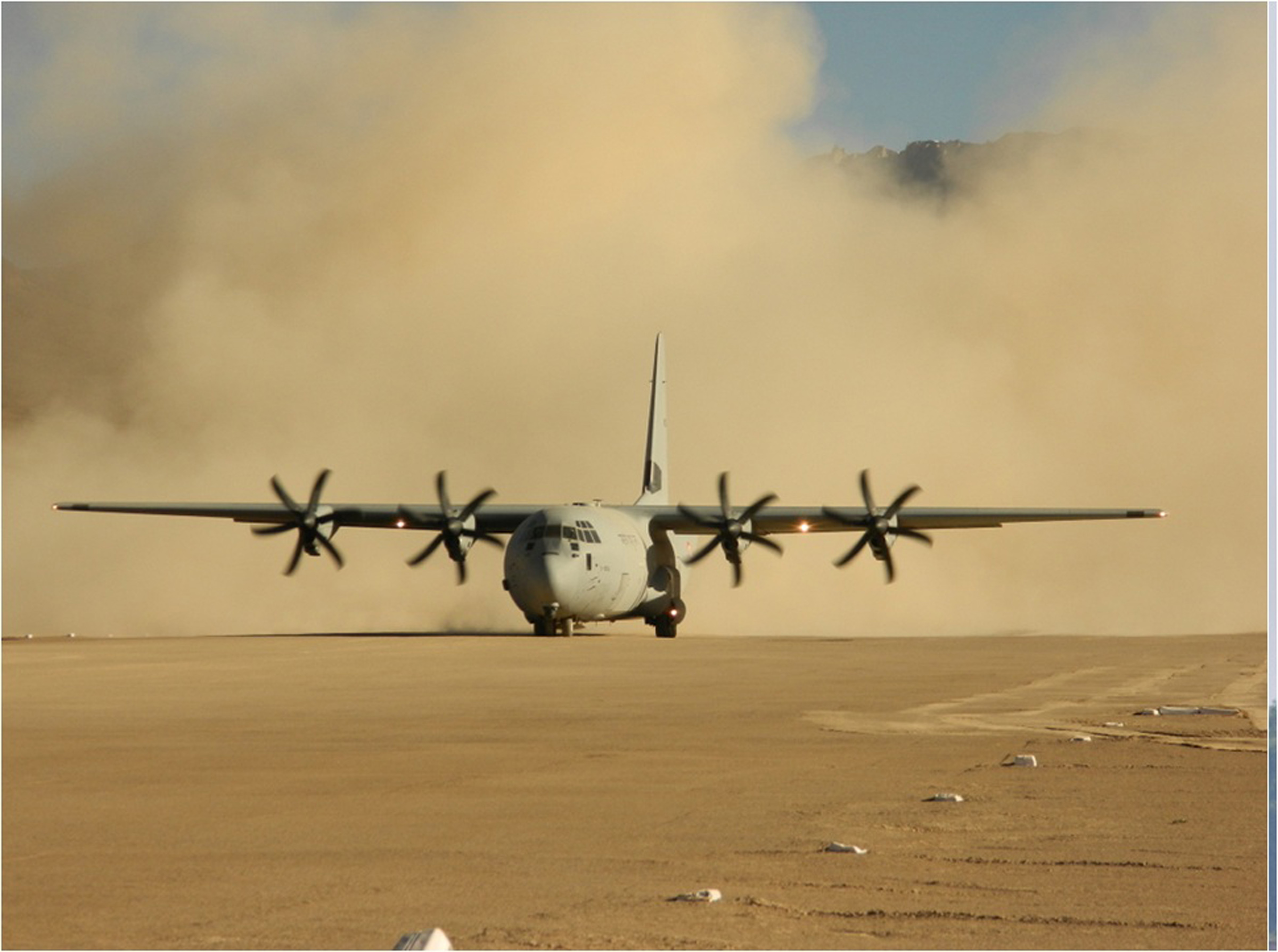
IAF C-130J landing on a ALG during IAF exercise ‘Gaganshakti-2018'
Photo credit: PIB


TASL is building an MRO (Maintenance, Repair and Overhaul) facility for C-130 transport aircraft in Bengaluru. According to ET, TASL is also preparing a bid to supply medium transport aircraft (MTA) to the IAF.

The new MRO facility is likely to be completed by 2026 and receive its first C-130J by early 2027. The IAF currently operates a fleet of 12 C-130Js procured under a deal signed in 2008.

An-32 Replacement

The IAF plans to replace its existing fleet of around 100 Antonov An-32 medium transport aircraft acquired from the erstwhile Soviet Union with around 40–80 MTA aircraft.

The An-32s were progressively inducted into the IAF starting in 1984. In June 2009, India signed a $400-million agreement with Ukraine’s Ukrspetsexport to upgrade its fleet of 105 An-32 aircraft and extend their technical life from 25 years to 40 years.

Under the agreement, 40 An-32s were to be upgraded at designer-certified plants in Ukraine, with 10 aircraft being upgraded annually. The remaining 64 An-32s were to be upgraded at the IAF’s No. 1 Base Repair Depot (BRD) in Kanpur using material and technology transfer from Ukraine.

The An-32s will progressively approach the end of their extended technical life from 2030–32 onwards.

Joint Development of MTA with Russia

India initially tried to co-develop its own MTA in partnership with Russia. In 2012, both countries signed a pact to develop a 15-20-tonne aircraft for cargo/troop transportation, paradrop operations, and air-drop of supplies including the ‘low-altitude parachute extraction system.’

The primary objective of the project was for India to achieve self-reliance in design, development and production of aircraft of this size, and to manage the program with international collaboration and a large number of global suppliers. However, the deal was scrapped in 2016 after both countries failed to come to an agreement regarding the engine and aircraft design.

Current IAF Transport Fleet

India currently operates a wide range of transport aircraft including the Dornier 228, Avro HS-748, An-32s, C-130Js and the larger IL-76s and C-17s.

The IAF’s Avro fleet is being replaced by the Airbus Defence and Space developed C-295. Sixteen aircraft are being delivered to India in flyaway condition from Spain, while 40 are being locally assembled in India by Tata Advanced Systems Ltd. (TASL) in partnership with Airbus Defence and Space. 

Of the 40 aircraft to be assembled in India by TASL, the first 16 would incorporate 30 per cent indigenous components. The remaining aircraft would need to be assembled with 60 per cent indigenous components.

With local assembly and indigenisation of the C-295 well on track, focus has now shifted from Avro replacement to An-32 replacement.

Desired MTA Capabilities

As per a Request for Information (RFI) issued by the IAF in December 2022, the replacement aircraft should be capable of operating from high-altitude Advanced Landing Grounds (ALGs) in Ladakh and the Northeast, carrying an 18- to 27-tonne payload.

Notably, the upgraded Indian Air Force An-32RE aircraft has a maximum payload capacity of 7.5 tonnes, but the IAF wants the replacement aircraft to have a much higher 18- to 27-tonne payload.

Apparently, the Government of India is not sure how many aircraft would be needed to replace the An-32 fleet.

It has been reported that “in its RFI, the IAF has sought a rough order of magnitude (ROM) cost of the aircraft and associated equipment for a batch of 40, 60, and 80 aircraft.”

The RFI lays emphasis on vendor participation in technology transfer, assistance with indigenisation, and capability building to ensure local manufacture of systems, subsystems, components and spares. Vendors are expected to make India a regional or global hub for MRO.

Vendors Expected to Respond

Three companies have reportedly shown interest in the MTA project — the US’s Lockheed Martin, Brazil’s Embraer, and Europe’s Airbus.

Lockheed has offered its C-130J Super Hercules aircraft, 12 of which are already in use with the IAF. Embraer has offered its latest KC-390 Millennium, and Airbus has proposed its A-400M Atlas.


Embraer has reportedly announced a partnership with Mahindra.

The three aircraft on offer differ greatly in their capabilities, but they have something in common — they are all larger than the aircraft envisaged by the IAF, assuming that the MTA proposed to be developed with Russia was the ideal aircraft for the IAF.

As would be expected, none was conceived for the kind of high-altitude landing ground operations that the IAF undertakes to support the heavy deployment of the Indian Army along the Line of Actual Control. No other country has such a requirement.

The C-130, with its 19-tonne payload, comes closest to the Qualitative Requirements (QRs) that the IAF has projected. The Embraer KC-390, which can carry 26 tonnes, exceeds the requirement, and the A-400M, which can carry 37 tonnes, stretches credulity over the logic on which the aircraft is being proposed.

With reduced payloads, the KC-390 and A-400M are likely to match, or even exceed, the C-130’s landing and takeoff performance.

Conclusion

The C-130J has an excellent reputation in the IAF. It is ideally suited to India’s mission environment, which often involves operating out of austere, high-elevation airstrips in hot conditions.

On August 20, 2013, an IAF C-130J landed at the Daulat Beg Oldie (DBO) Advanced Landing Ground (ALG) in Ladakh. At an elevation of 16,614 ft, the airstrip is believed to be the highest in the world.

Besides good reputation and performance, the C-130 is likely to emerge as a strong MTA contender for the following reasons:

1. It is operated by 22 countries, with more than 570 aircraft manufactured so far. In comparison, the KC-390 has 10 operators and 47 aircraft produced so far, while the A-400M has 10 operators and 178 aircraft delivered.

2. TASL has a working relationship with Lockheed Martin, and an enviable reputation within the armed forces as a reliable private-sector vendor.

3. US proclivity to impose sanctions is unlikely to be a stumbling block because the US is also known to make exceptions, particularly when they affect a military-industrial complex giant like Lockheed Martin.

However, there is a stumbling block — a big one at that. Lockheed Martin will absolutely deny any meaningful transfer of technology.

Copyright © Vijainder K Thakur. First published on Thumkar.


Monday, August 31, 2015

MTA Proposed to Feature German Communication Equipment


MTA Model during DefExp 2014

During MAKS-2015, Russia's NPP Polyot is reported to have discussed with the German company Rohde & Schwarz the possibility of joint development of communication equipment for the Russian-Indian military-transport aircraft MTA.

A NPP Polyot official reportedly said, "We have confirmed the intention to work together, have prepared our proposal to the Indian side for the next round of negotiations."

Rohde & Schwarz, which has an Indian subsidiary, makes secure communication products such as Software Defined Radios as well as test equipment for avionics and navigation assemblies.

NPP Polyot earlier discussed communication requirements, including data links, for the MTA and FGFA with IAF officials during Aero India 2015.

For those who may have missed the point, the big news is that the much delayed MTA project is still live and kicking!

IDP Sentinel members can read more at the link below

Multi Role Transport Aircraft (MTA)

Saturday, December 13, 2014

Is IAF Intransigence Scuttling the FGFA and MTA Projects?

Scale model of PMF/FGFA at Aero India 2013

According to press reports, the IAF is playing hardball with Russia over the FGFA and MTA projects.

India's HAL and Russia's United Aircraft Corporation (UAC) signed a preliminary contract for the development of a FGFA for the IAF on December 21, 2010 during the visit by Russian of President Dmitry Medvedev to India. Four years later, the two countries are still struggling to finalize the contract.

According to the TOI, the final R&D and design contract for the FGFA has been held up because the IAF wants iron-clad assurances on the stealth capabilities, engine performance, sensors and weapons fit of the aircraft.

To the uninitiated, IAF demands may sound reasonable, but I have serious reservations. Before I elaborate on the reservations I would like state that the opinions I express below are are based entirely on what has been reported in the press. I have now inside knowledge.

FGFA

Under the FGFA project, India and Russia plan to jointly develop a version of the Russian T-50 stealth fighter customized for IAF requirements. The Indian version, referred to as Perspective Multi-role Fighter (PMF), would use the same airframe, engines and main systems as the T-50, but differ in its avionics and weapon suite. Russia plans to use the jointly-developed PMF fighter as an export version of T-50. The fighter is expected to enter IAF service by 2022.

Development of the PMF version of the T-50 is expected to cost $11 billion with India and Russia contributing $5.5 billion each.

It is pertinent to reiterate that the PMF would be customized version of the T-50, just as the Su-30MKI is a highly customized version of the basic Su-30 design.

Flight tests of the T-50 started in January 2010. State testing of the aircraft started in May, 2014. Deliveries of the aircraft to the Russian Air Force are scheduled to start in 2016, They could commence even earlier if state testing doesn't throw up any surprises.

Currently the T-50 is powered by two NPO Saturn AL-41F1 (Product 117) engines. Product 117 is an upgraded version of AL-41F1S engine developed for Su-35.

Eventually, the T-50 would be powered by the Product 30 engine, which would be 30% lighter and feature higher thrust and 30% lower life-cycle costs than the Product 117 engine.

Considering that the T-50 hasn't completed its development life cycle, hasn't been tested with its planned weapon fit, and its final engine is in early stages of development, is it reasonable for the IAF to seek iron-clad assurances on the aircraft's performance from Russia?

All that the Russians could practically agree to at this stage is that the PMF would be developed from the final version of the T-50.

If that doesn't satisfy the IAF, it may well be best to wait for the induction of the T-50 into the Russian Air Force in 2016. The IAF can then test fly the aircraft and if satisfied sign the final contract to develop the PMF. Such an approach would delay PMF induction even further.
Scale Model of the MTA on display at DefExpo 2014

MTA

Coming to the MTA - according to the TOI, one of the reasons why the MTA project has ground to a halt is because the aircraft will not meet IAF' high-altitude performance requirements.

When did the IAF discover these shortfalls? Weren't the specs agreed upon when the preliminary agreement was signed in November 2007!

There could be two reasons for high altitude performance shortfalls - Inadequate engine performance or an airframe design that is optimized for different flight envelope.

It's customary to design a military aircraft around proven engines and technology available in the country, The MTA, a joint project, would have to be developed around an engine available either in India or Russia. India is decades away from developing a fuel efficient high bypass turbofan that could power the MTA, but Russia has developed several such engines.

Agreeably, Russian turbofans have lower fuel efficiency and higher life cycle costs than western engines. As such, India would want the MTA designed around a western engine, but the Russians maybe averse to powering a military transport they intend to use with western engine, particularly after western sanctions were imposed upon the country consequent to the Ukrainian crises.

If differing engine preferences are the problem, India needs to accommodate Russian sensitivities, or risk losing support of its most reliable and trusted military partner.

It's possible that engines aren't the problem. Instead, differences have emerged between India and Russia over the flight envelope for which the aircraft is to be optimized. That could only have happened if the aircraft was not carefully speced by the IAF before India and Russia signed a preliminary agreement to develop the aircraft. Or perhaps, the IAF has now changed the speces?

Going by the information available in the public domain there appears to be an IAF overreach in play. If so, MoD must oversee and question IAF procurement planning to ensure the service remains in tune with national interests.

IDP Sentinel memebers can read more about the PMF/FGFA and MTA projects at the links below.