Showing posts with label FGFA. Show all posts

Friday, May 22, 2026

India Walked Away from the FGFA. The Need for a Twin-Seat Stealth Fighter Did Not!


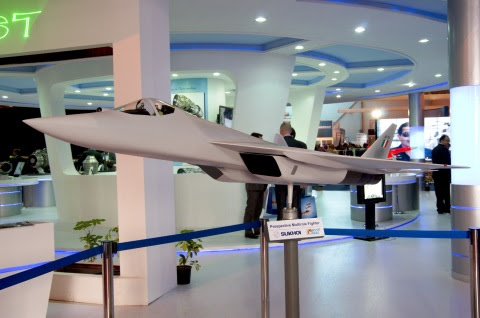
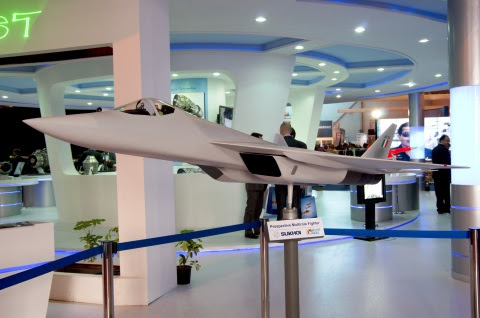
 The Fifth Generation Fighter Aircraft (FGFA), which India and Russia once planned to co-develop, was envisioned as a two-seat variant of the Su-57.

The IAF’s requirement was never for a stealth fighter — it was, and likely continues to be, for a twin-seat stealth fighter!


It's likely that the IAF’s preference for a twin-seat fighter was based on its experience operating the Su-30MKI. Besides pilot training and operational conversion, a twin-seat fighter could also support multi-role operations benefiting from a second crew member, such as complex strike coordination, electronic warfare/attack roles, and reconnaissance.


The reported reasons for India opting out of the FGFA program — lack of supercruise and unproven operational capability — were always unconvincing, considering that India, as a co-developer of the fighter, would eventually have addressed those shortcomings.


The Rationale for a Twin-Seat Stealth Fighter


All 4th-generation fighter development programs foresaw the eventual need for a twin-seat variant. The initial designs provisioned for a second seat, usually by placing a fuel tank and relocatable electronics behind the cockpit. That space could later be utilized for a second cockpit by moving the electronics and dispensing with the fuel tank.


Stealth fighter development programs for the F-22 and F-35 chose to depart from the twin-seat convention for the following reasons:


1. A twin-seat configuration compromises stealth shaping to some extent.

2. It reduces internal fuel-carrying capacity, thereby compromising range. (Stealth fighters cannot carry fuel externally in drop tanks.)

3. The fighters were primarily designed to penetrate contested airspace; it was believed that sensor fusion would be adequate to enable a single pilot to fly such missions.


In brief, it was believed — with good reason — that twin-seat stealth fighters would add complexity, reduce internal fuel or payload in some cases, and increase radar cross-section.


MUM-T Operations


It has now been clear for several years that the choice of single-seat-only stealth fighters did not anticipate the emergence of the requirement for Manned-Unmanned Teaming (MUM-T) operations.


The Su-57D, for example, is reportedly designed to team up with four S-70 Okhotnik modular drones configured for roles such as SEAD, electronic warfare, reconnaissance, and aerial combat. The control and coordination demands of MUM-T operations far exceed what sensor fusion and AI alone can enable a pilot to manage.


South Korea's KF-21 Boramae Stealth Fighter


South Korea followed a pragmatic approach in developing its KF-21 stealth fighter — an approach that is paying rich dividends in terms of meeting performance and development timeline goals.


Specifically:


The KF-21 features significant reduction in RF observability rather than all-aspect low observability. (To achieve the latter, it would have required materials that the nation had not yet developed.)

The KF-21 features a twin-engine, semi-stealth design with external weapons carriage (no internal weapons bay in the early blocks).

Of the six prototypes built, two were twin-seat variants.


The first prototype rolled out in April 2021 and flew in July 2022. All prototypes collectively conducted roughly 1,600 sorties over 42 months of incident-free flight testing, achieving supersonic flight, aerial refueling, and weapons integration. System development concluded in early 2026.


The first serial-production KF-21 to roll out in March 2026 was, significantly, a trainer!


Initial deliveries to the ROKAF are slated for the second half of 2026, with 40 Block I aircraft targeted by 2028 and up to 120 total aircraft (including Block II) by 2032.


Block I prioritizes air superiority; Block II will add full multirole air-to-ground and anti-ship capabilities. Block III variants will address stealth shortcomings and include internal weapons bays.


The two-seat variant will play a pivotal role. It will not only accelerate pilot training and operational conversion but also facilitate the development of advanced variants and future concepts such as loyal-wingman operations.


An electronic warfare/attack variant — the KF-21EA — is planned, with a dedicated Electronic Warfare Officer (EWO) station in the rear cockpit.


China's J-20S


Ahead of the KF-21, China’s J-20S — a two-seat variant of the Chengdu J-20 Mighty Dragon — became the world’s first operational twin-seat fifth-generation stealth fighter.


The fighter was unveiled at the 2024 Zhuhai Airshow.


Prototypes first flew in 2021; the aircraft entered, or approached, PLAAF operational service in 2025, with frontline markings appearing by mid-year.


The J-20S is reportedly optimized for combat (MUM-T operations), not training or operational conversion. The second crew member — a Mission Systems Officer — manages MUM-T-related sensor fusion, electronic warfare/jamming, and tactical command and control.


While the pilot focuses on flight and air superiority, the Mission Systems Officer directs loyal-wingman drones for coordinated strikes, reconnaissance, and SEAD (Suppression of Enemy Air Defences).


Su-57D


Russia’s UAC announced on May 19, 2026, that the Su-57D — a two-seat, multifunctional, fifth-generation fighter — had commenced flight testing. The Su-57D is now the third stealth fighter with a twin-seat variant.


Circumstantial evidence suggests that Russia provisioned for a twin-seat variant of the Su-57 from the start of the aircraft’s development.


Reliable Russian social media recently reported that the Su-57D “was converted from the already existing 055 aircraft in the shortest possible time.”


“The Indians wanted such an aircraft, and we customized it for them.”


Converting an existing single-seat airframe into a twin-seater in a short time would not have been possible had Sukhoi not designed the aircraft for such a conversion.


The most likely reason Sukhoi did not develop a twin-seat variant earlier was that the Russian Aerospace Forces never projected the need for one.


However, over the past couple of years, Sukhoi has completed development and operational testing of the S-70 Okhotnik stealth combat drone. Su-57 fighters have successfully carried out operational Su-57 + S-70 MUM-T missions in Ukraine.


The need for a twin-seat variant of the Su-57 has now been firmly established, and Russia’s Ministry of Defense has already ordered a batch of the twin-seaters.


HAL Likely to Offer a Customized Su-57D Variant


Russia has offered to help HAL build a customized variant of the Su-57D for the IAF. The offer reportedly involves ToT and industrial participation, including joint-venture production of components in India, licensed assembly, MRO facilities, and possible avionics customization.


If Rosoboronexport and HAL successfully negotiate the technological and financial terms of their collaboration, HAL is likely to offer the customized Su-57D variant to the IAF.


The HAL–Rosoboronexport tie-up is unlikely to be derailed by any CAATSA sanctions because U.S. leverage over HAL is limited. Any U.S. move to stop the supply of GE F404 or F414 engines to HAL is likely to hurt Boeing as much as it hurts India. From India’s perspective, such sanctions now would be preferable to sanctions imposed when the LCA Mk-2 and AMCA programs are approaching maturity and serial production.


Copyright © Vijainder K Thakur. First published on Thumkar.

Tuesday, October 24, 2017

Building a Case for the F-35 by Trashing the Su-57?


Twitter image posted by @BuddyPixy

A recent report in the ToI titled 'Fifth Generation Fighter deal. Can India cancel it?' suggests that the IAF has serious reservations about going ahead with the FGFA deal.

The report quotes unnamed serving IAF officers as saying that the RCS of the Su-57, on which the FGFA would be based, does not have an RCS comparable with the F-35, the Su-57 engine is not modular, and the cost of operating Russian aircraft is exorbitant.

(Note: Serving IAF officers are not authorized to speak to the press, which justifies the anonymity of the sources quoted by the report. However, anonymity also raises the possibility of fabrication.)

All the three points raised by the anonymous IAF sources are dubious.

RCS Comparison

The RCS comparison in the report is simplistic. RCS varies with the aspect of the aircraft (front, side, rear) and the frequency of the RF energy used by adversary radar. According to open source, western figures Su-57 RCS varies from 1.0 sqm to 0.5 sqm while the RCS for the F-35 is very impressively in the range of 0.0001 sqm to 0.0015 sqm! (The report wrongly quotes the F-35 RCS as being 0.2m.)

What the report does not mention is that the Su-57 features  2 L-band radars in the leading edge root extension (LEX) of its wings.

L-Band radars are more effective against Low Observable (LO) targets than X-Band radars typically fitted on fighters including the F-35. However, because of their longer wavelengths. L-Band radars feature reduced resolution. The combination of L-Band and X-Band, supported by good algorithms to fuse the target returns, can significantly reduce the effectiveness of LO shaping. In other words, the Su-57 could conceivably detect an F-35 as easily as an F-35 can detect a Su-57, their vastly differing RCS notwithstanding.

In clear weather, the effectiveness of the X and L band radar combine would be further increased by the fusing of Su-57 IRST readouts. (Russian IRSTs are known to be very capable.)

Survivability in Contested Airspace

Another important factor to keep in mind is that LO shaping is a means not a goal. The goal is survivability in contested airspace. Air Forces want a fighter that can operate in heavily defended adversary airspace without being easily shot down.

Contested airspace survivability comes from a combination of LO, Electronic Warfare (EW), and Self Protection Suit.

LO shaping makes it difficult for airborne and ground radars to continuously 'see' the adversary, EW spoofs (generates false returns) and blinds airborne and ground radars making it difficult for them to guide surface-to-air missiles, and a Self Protection Suit blinds or confuses the IR or RF seekers fitted on air-to-air and surface-to-air missile

Russian EW capabilities are good. The Su-57 will extensively use them to spoof adversary radar.

Boeing F/A-18E/F

As part of the service life extension program for the F/A-18E/F, Boeing is introducing modifications that will make the aircraft more stealthy. 

Boeing F/A-18 and EA-18 program manager Dan Gillian says the aim of the F/A-18E/F modifications is to make the aircraft "stealthy enough in a balanced survivable way to be effective." 

“The F-35 is a stealthier airplane, but we have a balanced approach to survivability, including electronic warfare and self-protection."

Like the proposed F/A-18E/F, the Su-57 takes a more balanced approach to survivability.

FGFA Engine

The Su-57 currently features the AL-41F1 engine, The production variant of the aircraft would be fitted with the Product 30 engine which is 30% lighter, features improved thrust (19,000 kgf vs. 15,000 kgf), has better fuel efficiency and fewer moving parts resulting in improved reliability and 30% lower life-cycle cost.

The extent of modularity of the Product 30 engine is not known. However, like LO, modularity is a means not a goal. The engine has less moving parts and is hence more reliable. 

The Product 30 engine is still on the test bench. Any comments on the extent of its modularity would be highly speculative.

Operating Costs

Russia chose to make the Su-57 less stealthy than its western analogs because it wanted to reduce operating costs! Any suggestion that operating costs of the Su-57 would be higher than those of the F-35 would not just stretch the truth, but also the imagination!

Conclusion


What I have stated above was part of my response to a request for comments on the ToI report from an online publication. The publication quoted just my comments on the FGFA engine (after introducing a grammatical error.) The comment was picked up by other news outlets including The Drive. Indeed, The Drive Warzone goes on to build a case for the IAF to drop the FGFA and opt for the F-35 instead! Which makes me wonder? Was that the original intent of the ToI article? 

I believe that having appointed an expert committee led by  Air Marshal S Varthaman (Retd.) the government should accept its recommendations.

I also believe that neither Russia nor the US is going to part with its frontline stealth technology and any F-35 purchase is going to come with more strings than the babus in MoD or the Air Marshals in Vayu Bhavan could count in the days preceding their retirement.

Wednesday, October 7, 2015

IAF's FGA Project Entering a Death Spiral?

FGFA

The list of the IAF's reservations over the PMF/FGFA project is growing longer by the day, and is probably long enough to put the project in serious jeopardy. What is more disturbing, the list is starting to include inane items! Also, items on the list are now being leaked to the press by senior IAF officials, something that was not heard of in the past. Leaks, unlawful as they are, were earlier the prerogative of MoD babus who are apparently above the law.

Here is the list of IAF reservation against the FGFAm in reverse chronological order of leaks


  1. Russia has not been given a tentative per unit production cost for the aircraft and the IAF is wary that the cost may turn out to be exorbitant. 
  2. Russia has still not been able to develop the Product 30 engine that will power the FGFA. Without the engine, the aircraft cannot super cruise.
  3. Russia has not offered any weapons developed specifically for the FGFA. The weapons offered so far were developed for 4th gen fighters like the Su-30M and Su-34. These weapons are too large for the internal weapon bay of the PAK-FA and would need to be carried externally compromising the aircraft's low observability.
  4. Russia has so far not allowed IAF test pilots to test fly the PAK-FA.
  5. India has sought 27 technical clarifications on the joint project, but Russia has reverted only on 19.
  6. IAF wants Russia to commence delivery of the FGFA within 36 months of signing the development contract for the customized variant of the PAK-FA, instead of 94 months agreed to by Russia.
  7. India wants a larger work share in developing the FGFA.

I will let the reader decide which of these points, if any, are inane; and which possibly serious show stoppers. For example, is the IAF request to test fly the aircraft at this stage of its development reasonably? Would the US or France meet such an IAF request?

The IAF Chief in his press conference on October 4, 2015 stated, " "There are some issues which have cropped up in terms of the work share, in terms of the present technological and technical aspects of the PAK-FA, and of course the cost visibility. So these are the issues we are looking at and they have been taken up at the highest level."


Facts Check


I present here some public domain facts that the reader may like to factor in before making a call on the relevance of IAF concerns.

Cost Visibility


The PAF-FA is under development and is unlikely to be ready for export till 2020. The Rafale has been operational for over a decade and India has committed to purchase 36 Rafales. There is no cost visibility on the Rafale yet, but ironically the Air Chief says the IAF wants to buy 100 more Rafales!

Weapons for Internal Bay


Russia is in the process of developing air-to-ground weapons small enough to fit into the T-50's internal bomb bay.

At MAKS-2015 Russia's Tactical Missiles Corporation (TMC) unveiled three new or derivative weapons developed specifically to fit the internal weapon bays of the T-50:


  1. GROM E1/E2 guided, standoff weapon
  2. X-59Mk2 cruise missile  
  3. X-58USHKE/IIR stand-off anti-radiation attack missile


The H-59MK2 Grom is a stealthy turbofan engine powered cruise missile, a heavily upgraded version of the H-59 family missiles.

All three are advanced weapon systems that the western world would like to know more about. Is it realistic for the IAF to expect Russia to share weapon details and cost at this stage? Would the IAF expect the same from the US or France?

FGFA Powerplant


The initial batch of the T-50 fighters will be powered by the 14.5 tons thrust NPO Saturn AL-41F1 (Product 117) engines, the upgraded version of AL-41F1S engine developed for Su-35, which in turn is a derivative of the NPO Saturn's AL-31F series that power the Su-27/Su-30 family of fighters.

Moscow-based Salut and NPO Saturn are building a brand new stealthy powerplant for the T-50, which is not a derivative of the AL-41F1 (Product 117) engine that powers it. Called Product 30, the new engine will be 30% lighter than the Product 117 engine and come with 30% lower life-cycle cost.

The new engine is expected to offer about 17.5 tons (171.6 kn) of thrust in full after burning mode and somewhere in the range of 12 tons (117.7 kn) in dry mode, allowing the aircraft to comfortably super-cruise at around Mach 1.5.

In June 2015 it was reported that United Engine Building Corporation (UEBC) has built a prototype of the new engine. Two prototypes of the engine are scheduled to be built in 2015.

UEBC CEO Vladislav Maslov had earlier said that work on developing the stage-2 will be completed in 2020.

Is Russia really the problem in the unraveling FGFA deal?

Monday, December 22, 2014

Russia Ready for 50% Work Split in FGFA Development, But IAF Beware What You Wish For!


PMF/FGFA scale model at Aero India 2013

Russian Embassy officials have told The Hindu that an agreement on the FGFA is likely as early as January 2015.

Russia is reportedly open to equal work share on the project but has stated that “Russia has problems with the Indian demand. If India has the ability to provide certain design know-how and technologies we are open for equal work. But this may not be so as seen with the case of Light Combat Program (LCA) and the aircraft under development is a Fifth Generation program.”

The Russians contention is true and we need to swallow our pride and mull over it!

The Indian press has been harsh on the Russian for their reluctance to concede a 50% work-share split in the development of the PMF/FGFA variant of the T-50.

As I pointed out in an earlier blog post, under the FGFA project, India and Russia plan to jointly develop a version of the Russian T-50 stealth fighter customized for IAF requirements. The Indian version, referred to as Perspective Multi-role Fighter (PMF), would use the same airframe, engines and main systems as the T-50, but differ in its avionics and weapon suite.

Development of the PMF version of the T-50 is expected to cost $11 billion with India and Russia contributing $5.5 billion each.

In plain English, the PMF would be customized version of the T-50, just as the Su-30MKI is a customized version of the basic Su-30 design.

The IAF intends to use PMF as its front line stealth fighter. The Russians want the PMF to be the export variant of the T-50. Both countries have high stakes in the project, not to mention $5.5 billion dollar each investments.

Neither side would want the stealth characteristics of the T-50 to be compromised by PMF modification, as would happen by adding a second pilot seat or enlarging weapon bays to accommodate any India specific weapons. Both sides would want the PMF developed in quick time. Both sides would want to ensure that software tweaks required for the PMF variant are implemented quickly without breaking existing T-50 code. Most importantly perhaps, both sides would want project costs to remain locked at the projected $11 billion.

Its a no brainer that Russian experts would give the IAF what it wants faster and more cost effectively than HAL. Why then the pedantry of a 50-50 work split?

As to the need for TOT, why not link the PMF contract to Russian assistance in developing the AMCA. ADA is kidding no one by projecting that it can develop the AMCA on its own in a time frame that guarantees the aircraft's relevance, something that it couldn't do with the LCA!

IDP Sentinel members can read more about the FGFA project at the link below.

Perspective Multi-role Fighter (PMF) / FGFA (IDP Sentinel)


Saturday, December 13, 2014

Is IAF Intransigence Scuttling the FGFA and MTA Projects?

Scale model of PMF/FGFA at Aero India 2013

According to press reports, the IAF is playing hardball with Russia over the FGFA and MTA projects.

India's HAL and Russia's United Aircraft Corporation (UAC) signed a preliminary contract for the development of a FGFA for the IAF on December 21, 2010 during the visit by Russian of President Dmitry Medvedev to India. Four years later, the two countries are still struggling to finalize the contract.

According to the TOI, the final R&D and design contract for the FGFA has been held up because the IAF wants iron-clad assurances on the stealth capabilities, engine performance, sensors and weapons fit of the aircraft.

To the uninitiated, IAF demands may sound reasonable, but I have serious reservations. Before I elaborate on the reservations I would like state that the opinions I express below are are based entirely on what has been reported in the press. I have now inside knowledge.

FGFA

Under the FGFA project, India and Russia plan to jointly develop a version of the Russian T-50 stealth fighter customized for IAF requirements. The Indian version, referred to as Perspective Multi-role Fighter (PMF), would use the same airframe, engines and main systems as the T-50, but differ in its avionics and weapon suite. Russia plans to use the jointly-developed PMF fighter as an export version of T-50. The fighter is expected to enter IAF service by 2022.

Development of the PMF version of the T-50 is expected to cost $11 billion with India and Russia contributing $5.5 billion each.

It is pertinent to reiterate that the PMF would be customized version of the T-50, just as the Su-30MKI is a highly customized version of the basic Su-30 design.

Flight tests of the T-50 started in January 2010. State testing of the aircraft started in May, 2014. Deliveries of the aircraft to the Russian Air Force are scheduled to start in 2016, They could commence even earlier if state testing doesn't throw up any surprises.

Currently the T-50 is powered by two NPO Saturn AL-41F1 (Product 117) engines. Product 117 is an upgraded version of AL-41F1S engine developed for Su-35.

Eventually, the T-50 would be powered by the Product 30 engine, which would be 30% lighter and feature higher thrust and 30% lower life-cycle costs than the Product 117 engine.

Considering that the T-50 hasn't completed its development life cycle, hasn't been tested with its planned weapon fit, and its final engine is in early stages of development, is it reasonable for the IAF to seek iron-clad assurances on the aircraft's performance from Russia?

All that the Russians could practically agree to at this stage is that the PMF would be developed from the final version of the T-50.

If that doesn't satisfy the IAF, it may well be best to wait for the induction of the T-50 into the Russian Air Force in 2016. The IAF can then test fly the aircraft and if satisfied sign the final contract to develop the PMF. Such an approach would delay PMF induction even further.
Scale Model of the MTA on display at DefExpo 2014

MTA

Coming to the MTA - according to the TOI, one of the reasons why the MTA project has ground to a halt is because the aircraft will not meet IAF' high-altitude performance requirements.

When did the IAF discover these shortfalls? Weren't the specs agreed upon when the preliminary agreement was signed in November 2007!

There could be two reasons for high altitude performance shortfalls - Inadequate engine performance or an airframe design that is optimized for different flight envelope.

It's customary to design a military aircraft around proven engines and technology available in the country, The MTA, a joint project, would have to be developed around an engine available either in India or Russia. India is decades away from developing a fuel efficient high bypass turbofan that could power the MTA, but Russia has developed several such engines.

Agreeably, Russian turbofans have lower fuel efficiency and higher life cycle costs than western engines. As such, India would want the MTA designed around a western engine, but the Russians maybe averse to powering a military transport they intend to use with western engine, particularly after western sanctions were imposed upon the country consequent to the Ukrainian crises.

If differing engine preferences are the problem, India needs to accommodate Russian sensitivities, or risk losing support of its most reliable and trusted military partner.

It's possible that engines aren't the problem. Instead, differences have emerged between India and Russia over the flight envelope for which the aircraft is to be optimized. That could only have happened if the aircraft was not carefully speced by the IAF before India and Russia signed a preliminary agreement to develop the aircraft. Or perhaps, the IAF has now changed the speces?

Going by the information available in the public domain there appears to be an IAF overreach in play. If so, MoD must oversee and question IAF procurement planning to ensure the service remains in tune with national interests.

IDP Sentinel memebers can read more about the PMF/FGFA and MTA projects at the links below.

Wednesday, November 12, 2014

FGFA License Production Preferable, Hints Russian Official?

FGFA scale model at Aero India 2013.

An official of Russia's UAC, the group that owns Sukhoi, hinted that license production of FGFA maybe a better option for India than co-production. He cited the success of the Su-30MKI program.

UAC's Mikhail Pogosyan told Russian news agency TASS on Tuesday that no timeline could be projected for finalization of the FGFA contract between India and Russia because of differences.

"There are several issues related to the organization of the work, the terms, the cost and technical details. This requires certain time and the corresponding coordination procedure at the level of governments of both countries,” Pogosyan said.

He then referred to the licensed production of the Su-30MKI in India and said, “In general, the program of licensed production of the aircraft develops successfully.”

It could be the translation. Or it could be a hint!.

Anyway, as is the case with Brahmos, labeling FGFA as co-development is a farce. It's unreasonable for India to expect Russia to part with stealth technology for just $5.5 billion. Paying them more would not help either.

What would really help is stepping up funding for the AMCA!

Saturday, November 8, 2014

IAF: Boldly Securing India's Future

IAF Su-30MKI and IL-78 tanker

Parts of the following article appeared in the October 2014 issue of Geopolitics marking Air Force Day.

Air Force is a technology driven service, much more so than the Navy or the Army. The last century saw rapid advances in military aviation technology, and the current century is seeing the trend continue.

Since independence, the IAF has continually adapted to technological breakthroughs  - jet propulsion, supersonic flight, airborne radars, electronic warfare, Precision Guided Munition (PGM), thrust vectoring, phased array multifunction radars, AESA radars, Network centric warfare, Optical Sensors, Stealth and UAVs.

The IAF has absorbed and embraced these technologies and re-oriented its tactics to use them.

Opinion is divided on how effectively and rapidly the IAF coped with past technological changes. Admittedly, there was a phase (mid sixties to early eighties) when the IAF appeared to go into slumber. It remained isolated from western Air Forces, despite being modeled after them. It didn't interact with the Soviet Air Force, despite the close geopolitical alignment of India and the Soviet Union because it shared very little with the Soviet Air Force other than aircraft and air combat weapon systems.

The IAF's isolation ended with the acquisition of the Jaguars in the early 1980s, and the Mirage-2000 later in the decade.

The 1991 unraveling of the Soviet Union proved to be a turning point for the IAF. A mixed blessing, the breakup disrupted supply of spares for the IAF's Soviet origin weapons, but the end of the Cold War and consequent thawing of Indo-US relations allowed India to source its weapons from Israel, a close US ally.

India found itself in a unique position - A country that could source its weapons from the best arms manufacturers in the world -  from Russia, a time tested friend; from the US, a natural ally; and from Israel, a friend with bonds deeply rooted in history.

The IAF took full advantage of India's unique positioning, perhaps more so than the Army and the Navy, blending Russian engineering with western electronics to come up with cost effective and potent marvels such as the Su-30MKI.

The service started exercising with friendly countries across the spectrum - USA, UK, France, South Africa, Singapore - to imbibe best practices and improve interoperability. The IAF's recent exercise with the Russian Air Force - AviaIndra-2014-  illustrates how far the IAF has travelled.

The 1998 Pokhran nuclear tests and the resultant cooling of India's relations with the US forced the IAF to remain heavily dependent on Russia for its aircraft and missile requirements. However the setback in Indo-US relations proved short lived.

Over the past 15 years, large scale induction of Su-30MKIs, upgrades to the IAF's MiG-21, MiG-27 and MiG-29 fleets; introduction of net centric warfare through AFNET and data links; induction of force multipliers like tankers and AWACS aircraft; and regular exercise with foreign air forces have added considerably to the IAF's punch. Acquisition of the MMRCA, planned upgrades to the IAF's Mirage 2000 and Jaguar fleets, and modernization of airfield infrastructure (MAFI) would continue the trend.

The IAF still has a long way to go in areas such as ISR, UAS and UCAVs. Also, more challenging technological advances in military aviation are around the corner - Cooperative engagements, Optionally manned fighters, and hypersonic flight, to name a few.

Resting on the oars, is not an option for the artistes of the sky! The IAF needs to press on with its new found nimbleness in adapting to changes.

The service is now uniquely positioned to become the world's leading air force - an effective deterrent for our adversaries.

The proverbial elephant in the room is financial constraint. China's GDP is three times larger than ours, a sobering handicap around which the IAF must draw its future plans.

A close look at IAF's re-equipping plans over the the next 20 years proves to be reassuring - with Rafale, Tejas LCA, LCA Mk-2, FGFA, and AMCA fighters; Phalcon AWACS, EMB-145 AEW&C and Airbus A330 MRTTS force multipliers; and additional C-17s and C-130J transports in the pipeline.

Too much perhaps has been written about the status of the Rafale project, so we will focus on the less talked about future fighter acquisitions.

Tejas LCA at Aero India

Tejas LCA


The Tejas LCA Mk-1 is just months away from FOC and induction into the IAF.

In November 2001, while sanctioning Full Scale Engineering Development (FSED) of the aircraft, MoD stipulated December 2008 as project completion date. The date has since been revised to March 2015.

(An 8 year long delay in a 7 year long project is difficult to condone, but it must be kept in mind that the LCA was initially sanctioned as a technology demonstrator project and its two prototypes were not built to production standards. They were built to be serviced by ADA engineers; as a result, many components were not fitted to be line replaceable. Post FSED sanction, the aircraft needed much internal re engineering to facilitate flight line servicing by IAF personnel. HAL was to progressively bring the Tejas to production standards while building the 8 Limited Service Production aircraft, but senior IAF officers connected with the project say that early LSP aircraft were no different from the prototype!)

The IAF has placed orders on HAL for 40 Series Production (SP) aircraft to equip two squadrons. The first SP aircraft is close to delivery; another two are scheduled to be delivered before the year end.

Priced around $30 million, the Tejas is a very cost effective solution to the IAF's need for a lightweight air defense fighter with a credible strike capability; much easier to fly and far more lethal than the MiG-21 Bis / MiG-21 Bison aircraft that it's set to replace in the IAF.

HAL plans to initially produce eight aircraft per year and later ramp up production to 16. It has signed Long Time Business Agreements (LTBAs) of 3-5 years with its sub-vendors to keep prices low, assuring vendors of production orders for up to 40-50 aircraft at a time.

If HAL production of Tejas SP aircraft meets IAF's quality expectations, and the aircraft lives up to its promise in squadron service, the IAF would likely place additional orders for Tejas, especially in view of the delay in the LCA Mk-2 project.

Despite the current IAF order for just 40, HAL has plans to meet a requirement of 200 Tejas LCA aircraft in the next decade!

Though a cost effective fighter, the Tejas LCA powered by the  GE-F404-IN20 engine, doesn't measure up to IAF Qualitative Requirements, because durIng its development lifecycle, the aircraft ended up being nearly 1.5 ton heavier than its designed weight.

It was initially hoped that the weight gain would be compensated by fitting the more powerful GTRE developed Kaveri engine. However, in September 2008, it was conceded that the Kaveri wouldn't be ready in time.

LCA Mk-2


The decision to develop the LCA Mk-2 was taken when it became evident to the IAF while testing LSP Tejas LCAs that the aircraft performance was short on certain key Air Staff Requirements including


  1. Power to Weight Ratio
  2. Sustained Turn Rate
  3. Maximum speeds at low altitudes
  4. AOA range
  5. Weapon delivery profiles


Performance shortfall like sustained turn rate and maximum low level speed could only be remedied through the use of a more powerful engine, so it was decided to develop a new variant of the aircraft powered by the more powerful GE-F414-INS6 engine.

LCA Mk-2 at Aero India 2011

Minor modifications are being made to the LCA Tejas Mk1 airframe to accommodate the slightly lengthier engine. The fuselage is being extended by 500mm. (The stretching of fuselage would eliminate the need for the dead weight lead plates fitted on the LCA Mk-1 in order to ensure stability of the aircraft.)

Besides a more powerful engine, LCA Mk-2 will feature


  1. Structural Weight Reduction
  2. Aerodynamic Improvements
  3. Upgraded Flight Control Computer
  4. Electronic Warfare Suite
  5. Upgraded Avionics
  6. Retractable probe for inflight refueling
  7. On board oxygen generation system
  8. Increased fuel capacity.


In a sense, the LCA Mk-2 is the aircraft that the IAF really wanted, not the Tejas LCA.

Project Progress

Preliminary design of the LCA Mk-2 by HAL and ADA was to be completed by March 2014;  detailed design was to start immediately thereafter. There is no confirmation that this has happened.

ADA-HAL are designing LCA Mk-2 using DFMA (Design for Manufacturing and Assembly) methodology, which ensures that aircraft components are designed for easy manufacture, without adversely impacting the ease with which they can be fitted on the aircraft. The first time use of DFMA methodology in designing an aircraft would ensure better quality and quick ramp up of serial production after IOC.

LCA Mk.2 was to make its first flight in 2014, with full-rate production to follow two years later. However, it is now evident that first flight is more than two years away.

Despite the delay, if the LCA Mk-2 project delivers on its promise, it would prove to be a turning point in the evolution of the IAF. With air-to-air refueling, it would add significantly to the IAF's strike punch, besides boosting the IAF's air defense capability.

Perspective Multi-role Fighter (PMF) / FGFA

India and Russia plan to jointly develop a version of the Russian T-50 aircraft customized for IAF requirements. The Indian version would use the T-50's airframe, engines and main systems, but differ in its avionics and weapon suite. The FGFA would use more composite and electronics developed in collaboration with Israel.

Russia is planning to use the jointly-developed 5G fighter as an export variant of the T-50. The fighter is expected to enter IAF service by 2020.

India's HAL and Russia's Rosoboronexport and Sukhoi signed a contract worth $295 million for Preliminary Design (PD) of the FGFA in December 2010.

Under the PD contract, Indian engineers underwent 20 courses to familiarize themselves with the aircraft. The training was completed in July, 2011.

FGFA Scale Model at Aero India 2013


The Russians provided Indian professionals with the original data and the software to create a single working environment. A group of Indian experts worked in Russia in January October 2012, and a group of Russian specialists in India.

By April 2013, HAL and Sukhoi had finalized the design and technical specs of the aircraft and agreed on a work share for the research and development (R&D) phase.

A contract for the aircraft's full-scale development, worth $11 billion,  is expected to be signed during President Putin's scheduled visit to India in December 2014.

The IAF was to evaluate the T-50 before signing a full scale development contract with Russia. At the time of going to the press, it's not clear if this evaluation has taken place.

In September 2014, it was reported that the IAF isn't satisfied with the AL-41F1 (Product 117) engines that currently power the T-50, as also the aircraft's stealth features and weapons carriage system.

Moscow-based Salut and NPO Saturn are building a brand new stealthy powerplant for the T-50, which is not a derivative of the AL-41F1 (Product 117) engine currently fitted on the aircraft. Called Product 30, the new engine will be 30% lighter and feature 30% lower life-cycle cost.

Apparently, the R&D contract drawn up the the Russian partners doesn't cover fitting of the Product 30 engine.

Additionally, there are differences between the two partners over the operational capability of the Tikhomirov-NIIP N036 Byelka AESA radar of the aircraft  and the IAF is concerned about the overall development cost, maintainability and safety features of the aircraft.

Difference between India and Russia at this stage of the program are not surprising, and certainly not alarming. The in-fashion 'joint production' labelling in reality clothes what is essentially a buyer seller relationship and  buyers-sellers squabbles over the price and usefulness of a new product are only to be expected!

Meanwhile in Russia, state testing of the T-50 started in May 2014 and deliveries of the aircraft to the Russian Air Force are scheduled to start in 2016.

In other words, once the FGFA development contract is inked, its success would be assured with timely deliveries, as was the case with the Su-30MKI program.

During Aero India 2013, the then CAS told journalists that the first prototype of the aircraft would arrive in India in 2015, the second in 2017, and the third in 2018.

India plans to acquire 214 aircraft by the end of 2030., but could well end up buying over 400.
Neutralizing the PLAAF Stealth Threat with FGFA

China is developing two stealth fighters - J-20 and J-31. Like the US F-22 Raptor and the F-35 Lightening-2, the J-20 and J-31 are designed to evade detection by ground based radars.

China also has VHF AESA ground based radars that can detect Low Observable (LO) aircraft like the US Raptor and Lightening-2.

Unlike the US and Chinese LO aircraft, the T-50 isn't designed and equipped as much to evade detection by ground based radar, as to detect the Raptor earlier and engage it in close combat to assert its superior maneuverability.

The T-50 / FGFA would have a similar advantage over the two Chinese stealth fighters.

The IAF has done well in choosing the T-50/FGFA over the F-35 Lightening-2. The FGFA would make a worthy successor to the venerable Su-30MKI and secure the future of our country till the middle of this century.

AMCA

The Advanced Medium Combat Aircraft (AMCA) is conceived to be a 20-ton category fifth generation LO fighter featuring super maneuverability, super cruise, and sensor fusion.

The project is currently in the design phase. Feasibility study was completed by end of FY 2011.

The AMCA is being designed as an affordable fighter with swing role capability to meet the requirements of the IAF post 2020. It would carry 5 tons of weapons and be able to release them at supersonic speeds.

As a 20-ton fighter with a 1,000km range, the AMCA will cover the gap between the 10-ton, 500km range Tejas LCA, and the 30-ton, 1,500km range FGFA.

AMCA Scale Model at Aero India 2013

A single seat fighter, the AMCA would replace IAF's MiG-29 and Mirage-2000 aircraft. A two seat version would be developed, but primarily as a trainer, since an additional cockpit compromises LO of a stealth fighter. (The Radar Cross Section of a fighter can be optimized for either single or twin seat configuration, with a single seater likely to be the stealthier design.)

ADA is hopeful that it will be able to incorporate some sixth generation fighter features.

Some of the new technologies that ADA wishes to incorporate in the AMCA include a FBW control system with photonic interface to reduce the length of wires (fly-by-light).

Sixth Generation features include improved range, persistence, situational awareness, human-system integration and weapon fit to counter enemy anti-access/area-denial measures such as electronic attack, passive detection, cyber attack and directed energy weapons.

Stealth Characteristics

The AMCA design is optimized for reduced signature, not maximized stealth. The aircraft is not shaped for all aspect stealth, like the US Raptor (F-22) or the Chinese Chengdu J-20. Instead, shaping is optimized to  minimize frontal Radar Cross Section (RCS), as is the case with the T-50/FGFA.

The AMCA will feature "serpentine-shaped" air intakes, internal weapons bays, and advanced radomes to increase stealth. Radar-absorbing composites and paints will supplement the design.

AMCA blends stealth with maneuverability, while keeping costs affordable.

AMCA Powerplant

The aircraft will be powered by a new engine that the GTRE plans to develop with the help of one or more foreign consultants, Snecma being one of them.

Like the Lightening-2, Rafale and Eurofighter, AMCA will achieve supermaneuverability by using a powerful engine. However, if the IAF prefers thrust vectoring based supermaneuverability, ADA will tweak the aircraft design accordingly.