Friday, April 4, 2014

Indian Navy Seeks Design Consultant for Constructing Naval Air Station at Karwar

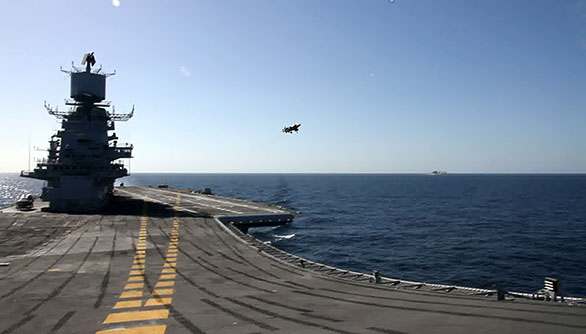
INS Vikramaditya, which is based in Karwar, is seen here escorted by a IN Harrier on arrival in the Indian Ocean in January 2014. Photo courtesy Indian Navy.

The Indian Navy has sought Expression of Interest from design consultants for constructing a Naval Air Station (NAS) at Karwar within 4 to 5 years, as part Project Seabird Phase IIA.

The NAS will feature a main, 2,000m x 45m runway (15/33) with a  2,000m x 23m parallel taxiway, a standby 1,000m x 30m cross runway (04/22), link taxiways, hangars, ordnance loading apron, ATC tower, MET building and all associated operational, admin, storage, fueling system, security facilities and services, including power, water, fire fighting sewage, etc. 

The main runway will support Precision Approach Category CAT I in the 33 direction and non precision approach in the 15 direction.

Navigational aids at the NAS will include Radar (SSR/ASR)/ CADF/ AFLS/ ILS/ DVOR/DME & PAPI for runways, airfield lighting and communication facilities.

Supporting infrastructure would include residential accommodation and messes for officers and sailors, boundary wall, drainage, roads, culverts, flood mitigation measures, electrical substation and lighting of the complete air station.

The envisaged NAS facilities are intended to meet the following objectives:-

(a) Provide self contained airfield to support the operations of fixed wing aircraft, Helicopters and UAVs by day and night from the Naval Air Station, Karwar. 
(b) Support transit operation of military aircraft belonging to Indian Air Force and Indian Army. 
(c) Provide limited diversionary facilities to aircraft op m nearby airfields.
(d) Provision for expansion in future catering to the requirement of operation of civil/ commercial aircraft. 
(e) Provide requisite facilities for all the necessary operational, training and logistic support to air squadrons which will be based at NAS. 
(f) Provide Residential facilities viz. Officers Mess & Single Sailors accommodation. 
(g) Provide adequate Communication, IT and security facilities required for the efficient operation, management and security of the sensitive Naval Air Station.
(h) Provide power supply, water distribution system, fire fighting facilities and sewage treatment plant etc.

The site/ land required for the development of the Naval Air Station is already in the possession of the Indian Navy. The Detailed Project Report (DPR) for Project Seabird Phase IIA including that for the development of the Naval Air Station at Karwar, has been prepared by the consultant appointed for this purpose. 

The design consultant selected by the Navy would be required to prepare engineering drawings and draw up specifications, prior to tendering for contracts; manage and monitor the capital cost during the design and construction phase, prepare Terms of Reference (TOR)/ tender documents for selection/appointment of contractor(s) for the package.

IDP Sentinel members can find additional details on Project Seabird at the following link

Thursday, April 3, 2014

Indian Army Initiates Procurement of Towed Air Defense Guns

L-70 AD Gun Indian Army. Photo Courtesy Indian Army

The Indian Army is planning to procure towed Air Defense (AD) Guns and ammunition with Maintenance Transfer of Technology (MToT). The new AD Guns will presumably replace the L-70 AD guns currently in service.

The Army has released a RFI from OEMs/Vendors in India for a gun that is capable of engaging air targets during day and night using Fire Control Radar and  Electro Optical Fire Control System (EOFCS). The gun should also be capable of engaging air targets passively, without the Fire Control Radar. Preferred gun caliber is 30-mm or above; the guns are required to be broad gauge transportation compatible.

The Army wants a gun that can effectively engage targets in mountainous terrain.

Self Propelled AD Gun and Missile System

In January 2010, the Indian Army released a RFI for procurement of Self Propelled AD Gun Missile System. The Army is looking for an all weather engagement capable system, with the gun and missiles mounted on the same or different vehicles. If they are mounted on the same vehicle, either the guns or the missile should be slaved to the fire control radar. If they are mounted on different vehicles, the gun should be slaved to the fire control radar. The gun must also be capable of engaging aerial targets with or without the fire control radar.

The gun should have a effective range of 2,500-m or more and be capable of engaging targets to an altitude of 1,500-m. The missile system should have an effective range of 5-km or more and be capable of engaging targets travelling upto speeds of 500-m/sec with an SSKP of not less than 70%.

The rail transportable system should be capable of moving 50 Km cross country in a day with on board fuel tank and in addition be able to operate for eight hours in a day without refueling.

Hybrid BIHO 30mm Gun and Missile Air Defense System

Tata Power SED is collaborating with South Korea's Doosan DST to produce a hybrid version of Doosan's 30mm BIHO Self Propelled anti-aircraft gun system. The hybrid system will field the existing twin 30mm guns as well as VSHORAD missiles and will be mounted on chassis of K-21 IFV manufactured by Doosan DST, but the hull and chassis of the IFV will be manufactured, using alternate material, based on Doosan TOT,  at Tata's new manufacturing facility being set up on the outskirts of Bengaluru.

IDP Sentinel members can get more information at the links below

Self Propelled Air Defense Gun Missile System - IDP Sentinel
Tata Power SED's Hybrid BIHO 30mm Gun & Missile Air Defense System - IDP Sentinel

Monday, March 31, 2014

Ukraine Delivers 7th Batch of Upgraded An-32s

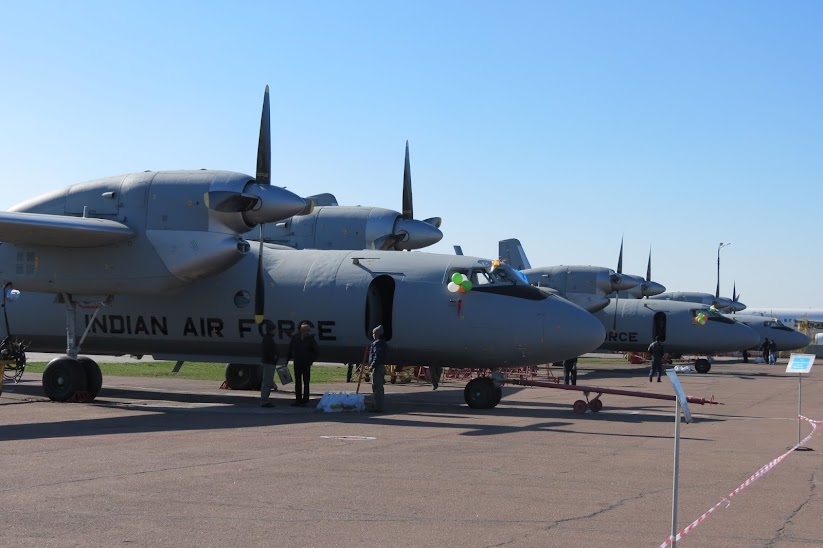
Seventh batch of upgraded An-32 aircraft delivered by Ukraine.
On March 29, 2014 Ukraine delivered the seventh and penultimate batch of five upgraded An-32 to India. The aircraft were flown from Kyiv in Ukraine to Kanpur in India under special arrangements made with Ukraine's European partners to permit the military aircraft to fly out of the country which is at loggerheads with Russia.

In July 2009, India and Ukraine signed a contract worth around $400 million for deep upgrade to the IAF's fleet of 105 An-32 aircraft.

Under the contract, 40 aircraft are to be modernized in Ukraine and the rest of the aircraft at the BRD-1, Kanpur.

Ukraine’s Antonov Plant and Civil Aviation Plant 410 are executing the contract.

The upgrade will make the An-32 lighter and more fuel efficient, and includes fitting of collision warning equipment, ground proximity early warning equipment, satellite navigation system, aircraft rangefinders, modernized height finders, new radar set with two MFDs, new oxygen equipment, and modernized crew seats.

Upgraded An-32 will be able to land making an ICAO category II approach.

In December 2009, India signed a separate three-year contract worth $110 million with Motor Sich OJSC (Zaporizhia) for upgrade of the AI-20 engines fitted on the Indian An-32s.

Ukraine delivered 10 upgraded aircraft to India in 2011, 2012 and 2013 each. The last batch of 5 upgraded An-32s was delivered in August 2013.

As of today, 35 aircraft, out of the 40 to be upgraded in Kyiv have been delivered.

The supply of the final batch of 5 aircraft is scheduled for the summer.

Antonov An-32 Upgrade (IDP Sentinel)

Army Seeks Image Intensification Sight for 7.62-mm Light Machine Gun

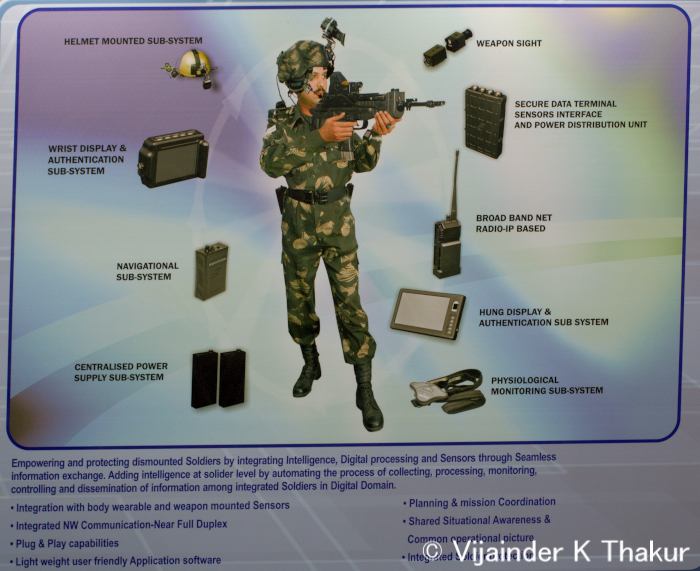
Army's F-INSAS program
On March 31, 2014 MOD released a RFI for Image Intensification (II) based Weapon Sight for 7.62mm Light Machine Gun.The 7.62-mm LMG is being procured separately.

The Army wants a light weight, ruggedized II device that can facilitate engagement of human targets at night / hours of darkness / poor visibility at the effective range of 800-m and above.

Procurement of the sight and LMG are being made under the Army's F-INSAS project.

Earlier on February 27, 2014, MOD released a RFI for Night Sight for 7.62mm Light Machine Gun (Thermal Imaging). The Uncooled Thermal Imaging Sight are required to be light weight and ruggedized to enable accurate engagement of human target at night / hours of darkness / poor visibility at the effective range of 800m and above.

The Army had earlier released a similar RFI on December 9, 2011.

On February 25, 2014, the Army released a RFI for Passive Night Sight (PNS) for Rifle AK-47. The requirement is for light weight, rugged, passive night sights based on Image Intensifier Technology that can be fitted on AK-47 rifles to facilitate accurate engagement of pin point target at night/ hours of darkness/ indoor dark areas.

Tuesday, March 25, 2014

DRDO Pitches its AIP Section for 6th Scorpene Sub

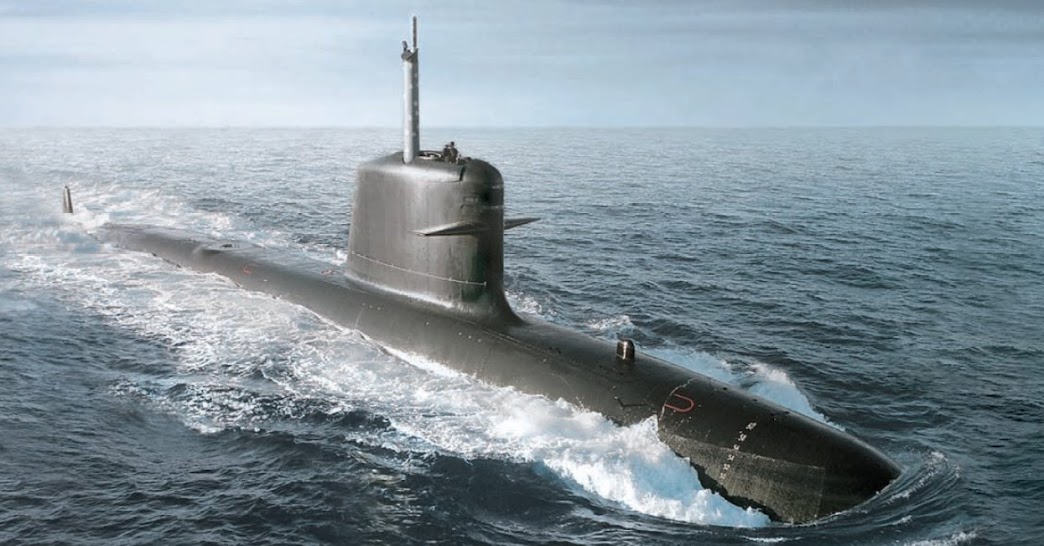
Scorpene Submarine

DRDO is in talks with DCNS to install a DRDO-developed AIP based on hydrogen fuel cell on the last Scorpene submarine built at Mazagaon Dock under the Navy’s Project 75.

DRDO DG (Naval Systems & Materials), V. Bhujanga Rao, told The Hindu, "Our technology is proven on a land-based prototype. A submarine-based prototype plug weighing nearly 300 tonnes is now being worked on. The French MESMA AIP being offered for the Scorpenes is an old system with a steam turbine.”

He added that the DRDO AIP could be reconfigured for the submarines to be acquired under Project 75I .

DRDO is developing Air Independent Propulsion (AIP) technology for use on submarines at the Naval Material Research Laboratory (NMRL), Ambernath.

A land based technology demonstrator project is currently underway. Full scale operations of a AIP System is likely to be demonstrated by 2015.

Earlier, the Indian Navy asked MDL to equip the fifth and sixth boats with Air Independent Propulsion by fitting an additional section.

During his visit to India with French President Nicolas Sarkozy in December 2010, DCNS CEO Patrick Boissier said that if a contract were to be placed on DCNS by next year, AIP systems could be integrated into the fifth and the sixth submarines rolling out of MDL in 2018.

The four Scorpenes launched earlier could be retrofitted under an upgrade program.

IDP Sentinel members can read additional information on the Scorpene project at the link below

Project 75 Scorpene Submarines - IDP Sentinel

Saturday, March 15, 2014

Breaking! IAF Dumps HTT-40, Initiates Procurement of Additional 106 PC-7 Mk II Basic Trainer Aircraft (BTA)

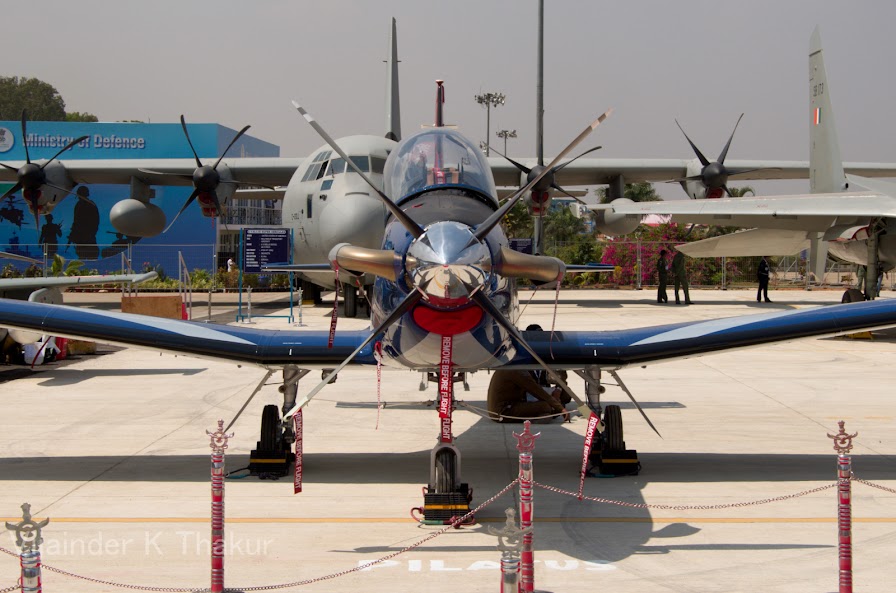
Pilatus PC-7 Mk-2 at Aero India 2013
The MOD has sought proposals from Indian companies for supply of 106 Pilatus PC-7 Mk-2 Basic Trainer Aircraft (BTA) under the category of Buy and Make (Indian) as stipulated at Para 4(c) of DPP-2013.

Competing Indian vendors are expected to form a joint venture with OEM M/s Pilatus Aircraft Ltd, Switzerland, and supply an initial lot of aircraft with support equipment in flyaway condition under the Buy portion of the procurement, and the remaining aircraft and equipment through licensed production/indigenous manufacture in India under the 'Make' portion.

The aircraft and associated equipment in this procurement are required to be supplied in the same configuration/specifications and scale as was contracted with M/s Pilatus Aircraft Ltd earlier.

The IAF wants the supply of the 106 aircraft to start in 2015-16 and be completed by 2020-21.

The IAF is already operating the PC-7 Mk-2 BTA for training its rookie and instructor pilots, having procured the aircraft from Pilatus under a contract for supply of 75 aircraft signed on May 24, 2012. The contract is expected to be fulfilled by mid-2015.

The contract contains a TOT clause to enable a local company to maintain the platform throughout its service life of over 30 years. There is also an option to extend the scope of the contract within 3 years, which would be exercised for the additional procurement.

At the time of signing the initial contract, it was expected that the IAF's requirement for additional 106 BTAs would be met by HAL, which is in the process of developing the HTT-40 trainer as a PC-7 Mk-2 replacement. However, the IAF now believes that HAL will not be able to to develop the HTT-40 in time and has opted for additional PC-7 Mk-2s instead.

The IAF's decision is also based on a desire to limit the types of aircraft in its inventory to ensure more efficient maintenance.

In January 2014, it was reported that the IAF has sought MOD nod for producing the PC-7 Mk-2 BTA at 5 BRD in Sulur, near Nashik, having told the MOD that the service is facing a shortage of pilots due to by bottlenecks in training caused by limited availability of trainer aircraft.

The IAF proposal is backed by Pilatus, which sent a team to Sulur to inspect the facilities available there. The cost of producing the aircraft at Sulur is assessed as being comparable with the price paid for the 75 aircraft purchased earlier.

IAF is also citing the success of South African Air Force in producing Pilatus trainer in-house, while pointing out that the IAF's facility at Sulur is better than the one in South Africa.

According to the IAF proposal, the first 10 of the 106 aircraft would be bought off the shelf, 28 in semi knocked down kits, and 68 in completely knocked down kits.

IDP Sentinel members can read additional details at the link below

Friday, March 14, 2014

HAL and NAL Regional Transport Aircraft (RTA) Draws US Industry Interest?

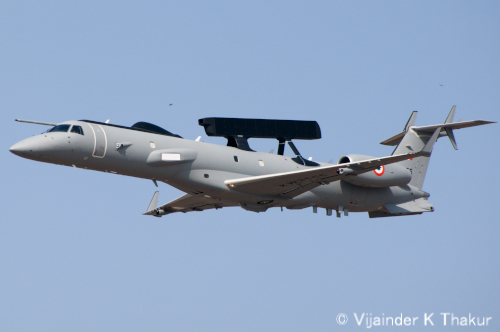
The Indian AEW&CS project is based on the Embraer EMB-145 regional jet


HAL and NAL, who have been hallucinating about developing planning to develop a 70-100 Seat Regional Transport Aircraft (RTA) since at least 2008, have claimed in a HAL press release that captains of American industry have shown interest in the project at the India Aviation show at Hyderabad (March 12-16) and are ready to collaborate on the project.

The assertion is surprising since in the past, speculation has centered on a RTA developed in collaboration with Canadian Bombardier or Brazil's Embraer. (Why Bombardier or Embraer would help HAL become a competitor in the limited market is anybody's guess.)

Technically, Bombardier is an American company, so maybe there is no reason to be surprised. More so since Boeing doesn't make RTAs.

Anyway, HAL and NAL propose to setup a joint venture with initial funding of Rs 20 crore to produce the RTA. The project has government backing despite serious doubts about the viability of a RTA in the Indian commercial aviation sector.

If the Indian RTA ever rolls out of a HAL manufacturing plant, it's likely to be lapped up only by Air India not any private airline;  with politics, not profits, as the imperative. And if the grossly mismanaged Air India ceases to exist by the time the HAL-NAL RTA rolls out, there is always IAF to dump the aircraft on.