Showing posts with label LCA Navy. Show all posts

Sunday, March 5, 2017

Should ADA Push LCA Navy Mk.2 Against IN Wishes, or Focus on the AMCA?


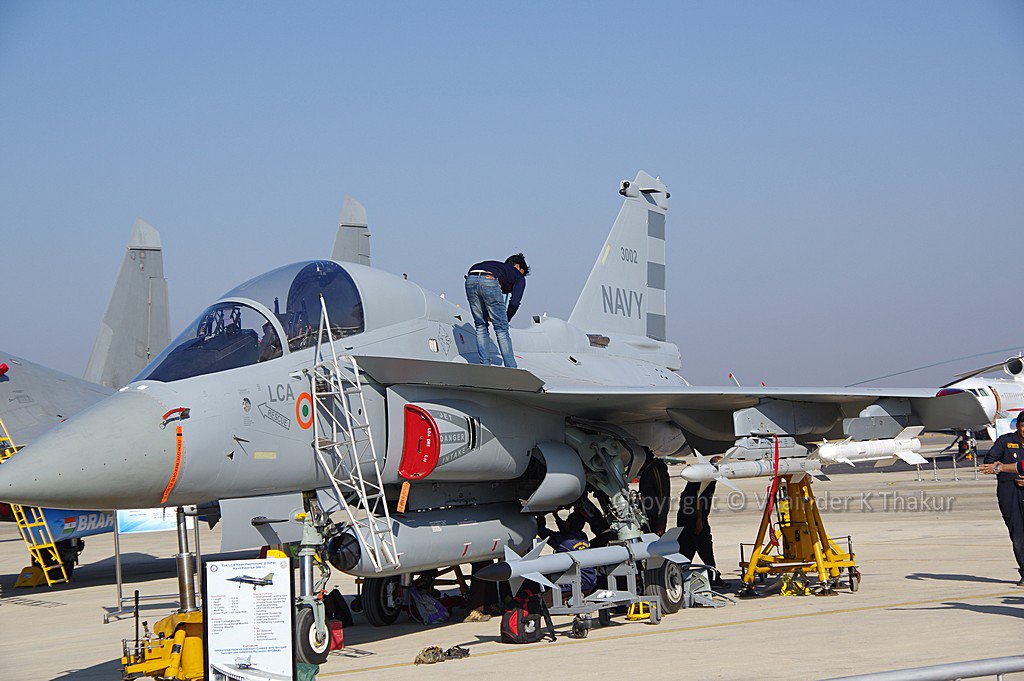
LCA Navy Mk.1 at Aero India 2017

On December 2, 2017, the Chief of Naval Staff Admiral Sunil Lanba told the press that the Indian Navy is scouting for another carrier operations compatible fighter besides the MiG-29, since LCA Navy lacks the payload required to be effective when operating from a carrier.

“The present LCA Navy does not meet the carrier capability which is required by the Navy. We will continue to support the Defense Research and Development Organization (DRDO) and Aeronautical Development Agency (ADA) in their efforts to develop a carrier-based fighter aircraft. At the same time we will seek aircraft elsewhere which can operate on the aircraft carrier,” said Admiral Lanba.

On January 24, 2017 the Indian Navy went ahead and released a RFI for procurement of approximately 57 Multi role carrier borne fighters (MRCBF) for aircraft carriers of the Indian Navy (IN).

However, speaking to the press in February 2017, ADA Director Commodore C D Balaji (Retd.) said that the Navy Chief's December remark that the LCA Navy lacked adequate payload was restricted to LCA Navy Mark I.

"...We knew (it) was a heavier platform upfront and it was basically a technology demonstrator and that is how it is intended," he said.

Recalling the development testing underway since 2016, Balaji said "....we will convert this project into a product and that will happen once we do an arrested recovery (by mid of this year), the moment we do that we will carry the learning into Mark II which has already been designed."

Clearly, the IN and ADA are not on the same page on the future of LCA Navy. The Navy wants to support LCA Navy as a technology development project, but ADA wants to see LCA Navy Mk.2 operationally embarked on IN aircraft carriers.

ADA is reported to have vigorously lobbied with RM Manohar Parrikar to keep the LCA Navy Mk.2 project alive. ADA's desire is well intentioned and widely supported by defense enthusiasts who believe that in order to become a great power India must equip its forces with home made weapon systems.

However ADA's attempt to arm twist the IN through the RM to eventually accept LCA Navy Mk.2 for embarkation makes little sense because despite a more powerful engine (LCA Mk.2's F414 has 10% greater thrust than the Mk.1's F404 engine) and optimized design, LCA Navy Mk.2 will fall woefully short of IN requirements specified in its MRCBF RFI.
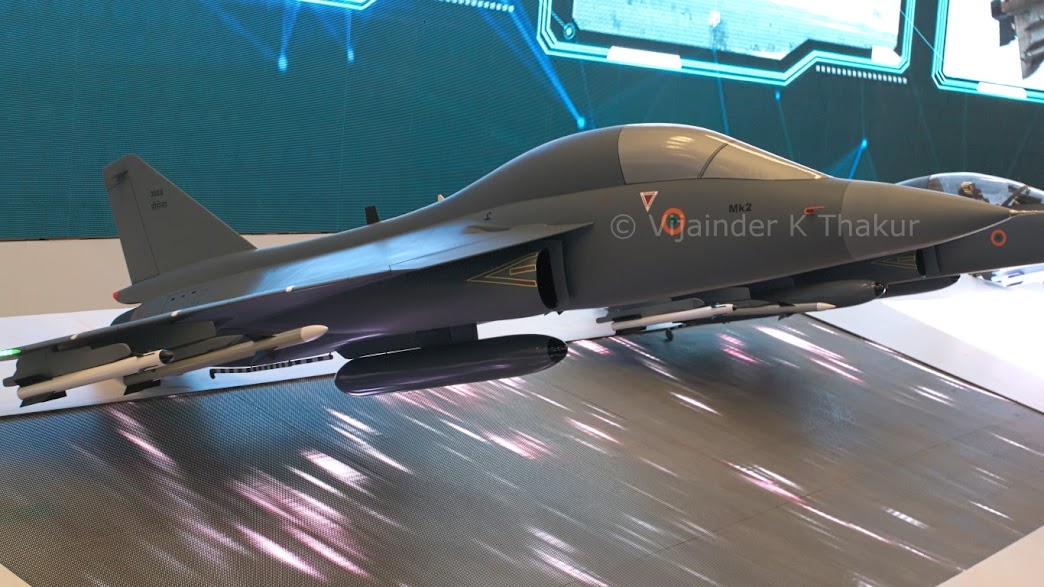
Scale model of LCA Navy Mk.2 armed with 4 air-to-air missiles at Aero India 2015


LCA Navy Mk.2 Limitations

ADA's aggressive plugging of LCA Navy Mk.2 suggests that the Mk.2 is as capable as the MRCBF that the navy is seeking. This is far from the truth. The extra thrust of the F414 engine would make the LCA Navy Mk.2 more maneuverable but will not significantly increase its weapon load, which the IN considers inadequate. The extra thrust would come at the cost of higher fuel consumption, particularly close to max power setting, negating some of the benefits accruing from the 700 liter extra fuel that the Mk.2 would carry.

LCA Navy Mk.2 will be a more capable air defense (AD) fighter than the Mk.1 but will continue to lack credibility as a strike aircraft. It's range and weapon load carrying capacity would be limited even when operating from 3000m runways, let alone when conducting STOBAR operations from a 200m carrier deck.

It's worth noting that the ADA itself plugs LCA Navy Mk.2 as an AD fighter that would provide cover to a carrier group against fighter and cruise missile threats, not as a strike fighter. Scale models of LCA Navy Mk.2 displayed at Aero India 2015 and Aero India 2017 were shown carrying just four air to air missiles (two on each wing) with a center-line drop tank.

Ironically, the IN RFI defines operationally clean configuration (OCC) for the MRCBF to imply that it's carrying four Beyond Visual Range (BVR) missiles and two All Aspect Air-to-Air Missiles (A4M). A total of six missiles, two more than the LCA Navy Mk.2 would carry!
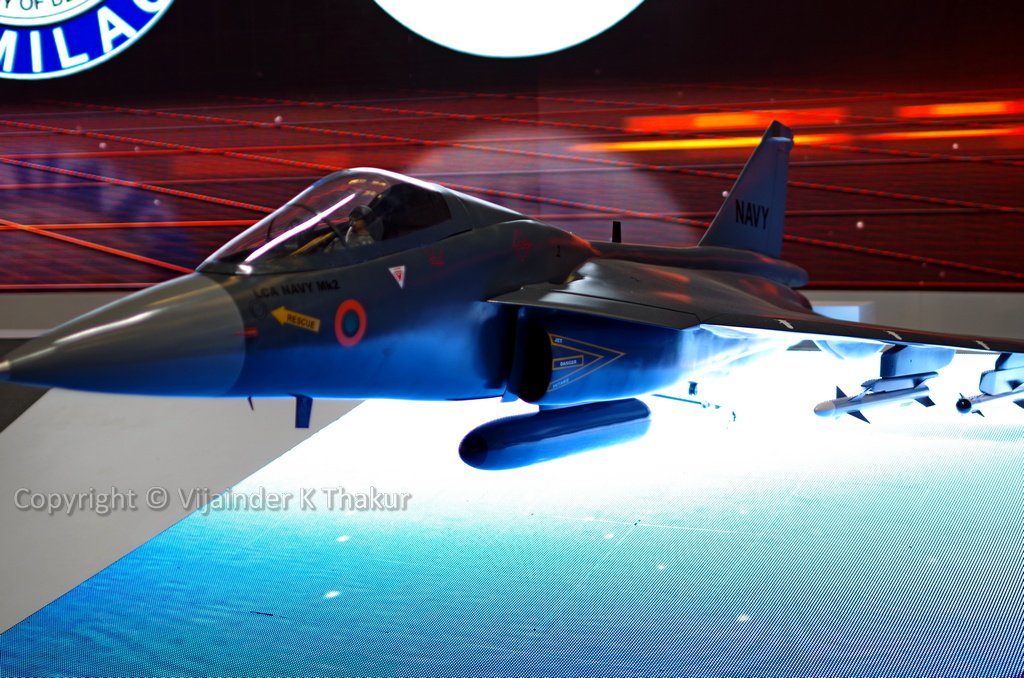
Scale model of LCA Navy Mk.2 at Aero India 2017


Understanding IN Requirement

Carrier groups are primarily strike groups, capable of delivering sustained fire power while operating at considerable distance from home shores. Typically, an aircraft carrier embarks only one fighter type to minimize logistics and maintenance overheads. The primary role of the embarked fighter is strike, so it must features good weapon load and range. Since strike missions often require escort fighters and escort jammers, embarked fighters must also be capable of undertaking these roles.

An embarked multi-role fighter allows mission planners to change the force mix - strike, escorts, jammer - based on how heavily adversary airspace is contested. The single embarked aircraft type is reconfigured for its assigned task.

The US F/A-18E/F, the French Rafale-M, and the Chinese J-11 are examples reconfigurable, multi-role carrier borne fighters with good weapon load and range.

The IN wants a MRCBF - Multi Role Carrier Borne Fighter, and the LCA Navy Mk.2's credentials as a multi-role fighter are weak.

It would not be a good idea to embark LCA Navy Mk.2 aircraft on INS Vikramaditya or INS Vikrant alongside MiG-29Ks, as ADA seems to suggest in its brochures and presentations. Having two fighter types on board, would dramatically push up maintenance and logistics infrastructure requirements. More importantly, it would constraint mission planners, deprive them of the flexibility in selecting force mix. Mission force mix would become dependent on embarked force mix! For example, when operating in uncontested airspace LCA Navy Mk.2s would have little to do.

The USN does not embark two fighter types on its super carriers capable of hosting 60 fighters. IN carriers are much smaller and embark around 20 fighters. Operating constraints will become severe. With 60% serviceability and even split of embarked types - INS Vikramaditya would be able to field just 6 MiG-29Ks and 6 LCA Navy Mk.2s at a time, hardly a credible strike force!

Other RFI Shortfalls

Besides limited range and weapon load, LCA Navy Mk.2 would fall short on many other requirements specified in the Navy RFI.

Radar and EW Suite

The RFI specifies a radar capable of engaging airborne and surface target, preferably in a interleaved mode. The aircraft should be equipped with a Radar Warning Receiver (RWR) capable cuing an on-board Airborne Self Protection Jammer (ASPJ), Counter measures dispensing suite (CMDS), Missile Approach Warning System (MAWS) and towed decoy for handling threats?

Interchangeability / Modularity

The Navy RFI also stipulates high degree of interchangeability / modularity - all major airframes components / parts / panels, sub-assemblies, including the canopy should be fully interchangeable between aircraft. Hot and cold engine sections should swapable. It should be possible to change the engine of an aircraft on the carrier itself.

These requirements are easily understood considering that an aircraft carrier could be operating hundreds of miles from home shores. Interchangeability allows recourse to cannibalization to keep more aircraft airworthy. To achieve interchangeability, ADA as the design agency and HAL as the production agency would need to achieve better design and production standards.

Conclusion

Clearly, when drafting the RFI the IN was visualizing Chinese carriers and nuclear submarines in the Indian Oceans, perhaps adversary beachheads on several Andaman and Nicobar group islands. The Navy was probably thinking Super Hornet and Rafale-M, both twin engined medium fighters. Competing against the Super Hornet, the LCA Navy Mk.2 with just one of the two engines fitted on the US Navy fighter would be clearly out of league.

LCA Navy equipped IN carriers aren't going to be enough to deter PLAN forays into the Indian Ocean, so should the IN still procure them to help India achieve self sufficiency in arms production?

Rather than pushing the LCA Navy Mk.2 as the right MRCBF for the IN, ADA would better serve the nation's interest by focusing on AMCA development. ADA certainly doesn't have the infrastructure and talent to pursue both projects simultaneously.

But ADA should continue to pursue LCA Navy as a technology demonstrator, something the Navy wants it to do. After ADA masters arrested landing, as it plans to do later this year, the agency should pursue auto-landing on deck and other relevant technologies, so that when the AMCA project gets a green light, ADA has all that it needs to develop the AMCA Naval variant.


Monday, January 12, 2015

LCA Mk-2 : A Long Wait for the IAF and the IN

Tejas Mk-2 model at Aero India 2011. Photo Copyright © Vijainder K Thakur

LCA Mk2 is being developed for use by the IAF and the IN.

The decision to develop a Mk-2 version of the LCA was taken in September 2008, when it became clear that the Kaveri engine would not be ready in time for LCA IOC, and the aircraft would have to be inducted into service with the lower thrust GE-F404 engine and consequent performance shortfalls.

LCA Tejas Mk-2 would be the aircraft that the IAF had sought with the LCA project and the IAF would have to make do with the under performing LCA Mk-1. Completely out of options, the IAF agreed to induct two squadrons of LCA Mk-1, an aircraft that it didn't want, in the hope that the money paid would fund development of the LCA Mk-2.

Six years since the decision to develop LCA Mk-2, even the design of the aircraft hasn't been finalized. Ironically, the reason for the tardy progress of the LCA Mk-2 project is that ADA has been focused almost exclusively on pushing LCA Mk-1 through its IOC and FOC!

LCA Mk-1 has overshadowed LCA Mk-2. Will it continue to do so? Is the IAF once again going to be short changed by DRDO and HAL laid back work culture?

Hope is not lost, but the promise of LCA Mk-2 has a deju vu tinge reminiscent of sales pitch that we have been suckered into.

With the current rate of progress, even if we let our optimism run amok and completely ignore ADA/HAL past record, operational induction of LCA Mk-2 into the IAF is at least ten years away.

How good is that? Ten years from now, the PLAAF would be inducting J-20 stealth fighter bombers, and the PAF J-31 stealth fighters. What advantage would a small sized but easily tracked fighter with limited range give to the IAF then?

Maybe I am over-reacting. I admit to having written a blog post over ten years back suggesting that ADA treat the LCA project as a technology demonstrator, the way it was conceived, and focus on developing a more capable fighter. The post was panned by the folks at drdorakshak.com bharatrakshak.com, often with liberal use of expletives.

Since I do have dubious credentials, in the rest of the blog post I will just present what is officially known about the LCA Mk-2 project. Hopefully, that will leave readers in the same cheerful frame of mind that they were in when they start reading the post.

Project Progress


According to DRDO Chief Avinash Chander, preliminary design of LCA Mk-2 had been completed and ADA is now validating the design.

Last year, ADA was known to be scouting for a consultant to help with design validation. I am not sure what became of that, but a DRDO official told IDP Sentinel that ADA was ready to proceed independently failing a satisfactory consultancy arrangement.

ADA-HAL are designing LCA Mk-2 using DFMA (Design for Manufacturing and Assembly) methodology, which ensures that aircraft components are designed to ensure easy manufacture, without adversely impacting the ease with which they can be fitted on the aircraft. The first time use of DFMA methodology in designing an aircraft would ensure better quality and quick ramp up of serial production after IOC.

Powerplant

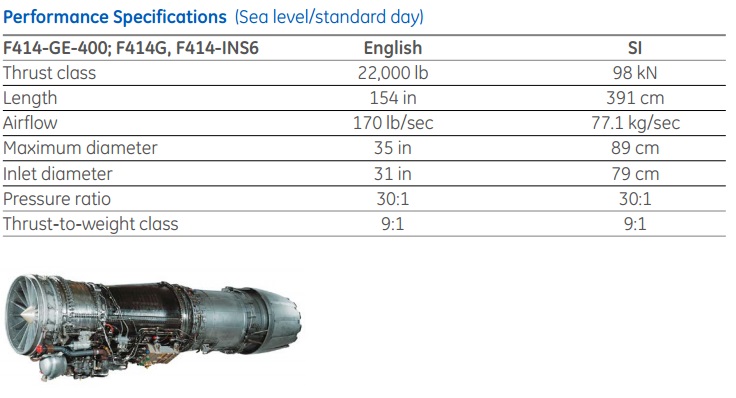
LCA Mk-2 will be powered by the GE-F414-INS6 engine, a variant of the GE-F414 engine developed for the Boeing F/A-18E/F Super Hornet. The 22,000 lb thrust class modular engine features a 35 percent increase in thrust over the GE-404 engine.

Advanced engine features include a Full Authority Digital Electronic Control (FADEC) for better operational characteristics and advanced materials and cooling techniques for improved performance and extend component life.


ADA is procuring 99 GE-F414-INS6 engines to power the Tejas Mk-2 and LCA Navy, for which a contract has been finalized and approved.

Under the contract, GE would ship 18 engines with the remaining being manufactured in India by HAL  under transfer of technology [agreements]. The 18 engines will come by 2014-15.

India will have the option of ordering another 100 engines in the future.

Airframe Modifications


Minor modifications are being made to the LCA Mk1 airframe to accommodate the slightly larger E-F414-INS6 engine. The fuselage is being being extended by 500mm.

The dimensions of Mk2 would be as follows

Span  :  8.20m
Length: 13.70m
Height:  4.52m

It is reported that redesign of the airframe to fit the F414 engine would eliminate the need for the dead weight lead plates fitted on the Mk-1 in order to ensure stability of the aircraft.

Upgrades


Besides a more powerful engine, Tejas Mk-2 will feature other improvements. Here is the complete list of planned upgrades:

  1. Structural Weight Reduction
  2. Aerodynamic Improvements
  3. Upgrade of Flight Control Computer
  4. Electronic Warfare Suite
  5. Avionics Upgrade
  6. In flight refueling retractable probe
  7. On board oxygen generation system
  8. Increased fuel capacity.

Features Overview

  1. Supersonic at all altitudes
  2. 15km service altitude
  3. Tailless compound delta wing
  4. Composite structure
  5. Improved performance
  6. Improved maintainability
  7. Improved Survivability
  8. Digital Fly by wire
  9. Fuel dump system
  10. Multi mode radar

Cockpit

It is proposed to have two 6x8 smart MFDs on LH, RH and one 5x5 MFD in center console in Tejas Mk2.

LCA Navy Mk-2 model at Aero India 2011. Photo Copyright © Vijainder K Thakur

LCA Navy

LCA Navy will be based on the LCA Mk-2 aircraft.

Initial development of the LCA Navy, using Shore Based Test Facility (SBTF) at Goa,  is being done using prototypes (NP1, NP2, NP5) developed from LCA Mk-1. Carrier trials would be done using prototypes developed from LCA Mk-2. Only LCA Navy Mk-2 aircraft will embark on a carrier.

Initially, ADA planned to develop one twin seater trainer (NP1) and one fighter (NP2) along with  Shore Based Test Facility (SBTF) at Goa.

IDP Sentinel members can track LCA Mk-2 developments on the page at

LCA Mk-2 (IDP Sentinel)

Sunday, December 21, 2014

LCA Navy Maiden Ski Jump Details & Analysis

LCA Navy NP1 moments before lift off during maiden ski-jump take-off at SBTF at INS Hansa in Goa on December 20, 2014.


LCA Navy's maiden ski jump take-off at SBTF at INS Hansa on December 20, 2014 was a milestone event, not because it happened (Ski jump take-off are as old as the Harriers!), but because it happened in hands-off automated take-off mode!

Yes, LCA Navy feature hands-off take-off using ski-jump to ensure smooth transition to stable flight, and hands-off landing with steady AOA, autothrottle approach, flareless touchdown, and arrester hook engagement. During take-off and landing the pilot is required to only give steering inputs to stay on the center line.

According to a DRDO press release on the test flight, Naval Prototype 1 (NP-1) - piloted by Commodore Jaideep Maolankar, the Chief Test Pilot of National Flight Test Center - had a perfect flight with results matching the predicted ones to the letter. The flight validated the hands-off take-off algorithm of the Flight Control Software (FCS).

NP-1 attempted the ski-jump after a 300-m roll in clean configuration presumably with full internal fuel.

A safe take-off required 150 knot at a climb rate of 6.4 degrees. But, the aircraft achieved higher acceleration with a climb rate of around 11 degrees.

In the tests ahead, NP1 will progressively reduce the length of its take-off roll and increase payload. INS Vikramaditya, which could one day base LCA Navy, has a total deck length of 273-m. The maximum take off length available is between 160-180 metres.

The ultimate goal for the LCA Navy program is to demonstrate a full load take-off with 90-m roll.

Five more ski-jump take-offs are planned in the current series of tests.

"Based on the test points achieved, we will schedule the next leg of trials," DRDO Director-General (Aero) Dr K Tamilmani told OneIndia.com.

According to Tamilmani, NP-1 will start arrester hook landing trials within 6-8 months.

It's pertinent to remember that LCA Navy is in Phase-1 of its development, which involves using a LCA Mk-1 modified to take off using a ski jump and perform arrested landing. Phase 1 is a technology development and demonstration phase.

In Phase 2, LCA Navy will be certified for carrier operations using aircraft built in the Tejas Mk2 configuration, powered by GE-414-INS6 engine with a max thrust of 22,000 lbs.

Only Phase 2 aircraft will participate in carrier operation certification, with Phase 1 aircraft being reserved exclusively for SBTF operations.

IDP Sentinel Members can read more about the LCA Navy project at the link below.

LCA Navy (IDP Sentinel)