On May 20, 2026, an Indian Army (IA) Cheetah helicopter crashed in the Tangste (Tangtse) region near Leh in Ladakh during a routine high-altitude sortie.
The helicopter was carrying three IA officers — two pilots and passenger Major General Sachin Mehta, General Officer Commanding of the 3 Infantry Division.
All three survived with minor injuries. They walked away from the wreckage in high spirits, as was evident from a selfie posted by them on social media that went viral.
Ageing Chetak, Cheetah Helicopter Fleet
The crash drew attention to the IA's ageing fleet of around 350 Cheetah and Chetak helicopters. For over two decades, the IA has been seeking replacement of the 1960s-vintage French helicopters manufactured in India by HAL.
In 2010, HAL, based on its experience and learning from manufacturing the Cheetah and Chetak helicopters, as well as from developing the Dhruv Advanced Light Helicopter, announced that it would develop a Light Utility Helicopter (LUH) to replace the Cheetah and Chetak helicopters.
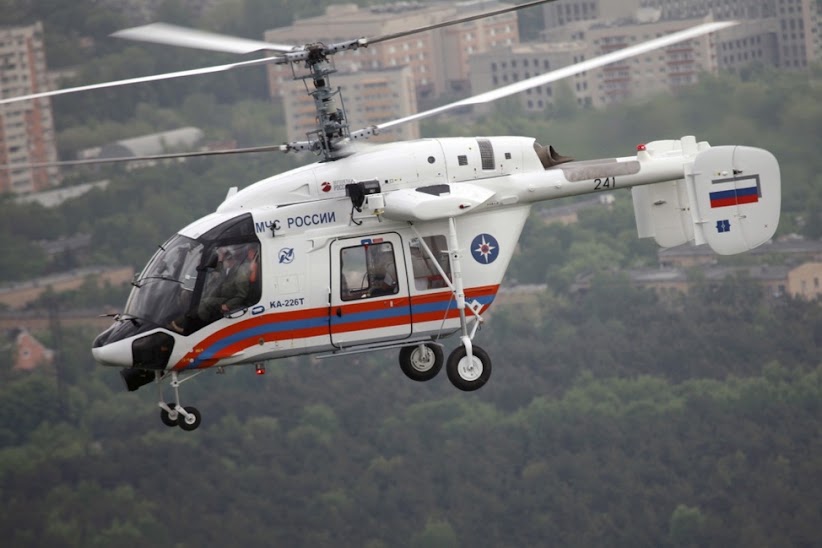
On a parallel track, Indian PM Narendra Modi, during his visit to Russia in December 2014 for the annual summit meeting, signed an agreement to jointly manufacture Kamov Ka-226T light utility helicopters in India at HAL.
As per the agreement, India and Russia were to produce at least 200 Ka-226T helicopters for the Indian Armed Forces, with additional units potentially manufactured for civilian use and export.
The LUH is a 3-tonne, single-engine light utility helicopter. Powered by the Safran HE Ardiden-1U engine, rated at 750 kW, the LUH has a maximum AUW of 3,150 kg. It is capable of flying at 220 kph, with a service ceiling of 6.5 km and a range of 350 km with a 400 kg payload. It can seat six — a crew of two and four passengers.
The Ka-226 is a slightly larger 3.6-tonne, twin-engine, multi-role light helicopter with coaxial contra-rotating rotors (no tail rotor). It is capable of flying at 220 kph, with a service ceiling of 6.5 km and a range of 600 km. It has a crew of one to two and can seat six to seven passengers.

LUH Program Status
The programs to replace IA Chetak and Cheetah helicopters with the LUH and Ka-226 helicopters are both woefully behind schedule.
The LUH program has been delayed by technical challenges, supply-chain issues, and certification problems. Technical challenges include main rotor blade refinements and noise/vibration issues. The imported Automatic Flight Control System (autopilot) from Safran faced supply disruptions during COVID and integration problems. There has also been scope creep, with the Army adding advanced autopilot requirements that were not part of the original specifications.
Nine of the 12 Limited Series Production units had been built but remained undelivered as of May 2026.
Certification, which was targeted for late 2025, will likely slip to late 2026.
Ka-226 Program Status
The Ka-226 program failed to make headway due to disagreements over local production costs, technology transfer issues, and Russia's inability to meet 70% indigenous content targets because the aircraft was powered by French engines.
In January 2022, the Defence Procurement Board (DPB) reviewed the Ka-226T manufacturing project as part of India's efforts to reduce dependence on foreign defence equipment. Following the review, the project stalled, likely due to two key factors:
1. Development of the Light Utility Helicopter (LUH): The DPB considered HAL’s indigenous LUH program a viable alternative. The LUH, a 3-tonne-class helicopter, was being developed to meet both military and civilian requirements.
2. Restricted Access to French Engines: At the time of contract signing in 2015, the Ka-226T was powered by French Arrius 2G1 engines. However, following geopolitical tensions, France denied Russia access to the engine. Consequently, Russia could not meet its obligations to fully support Ka-226T manufacture in India as the OEM.
Russian Import Substitution Alters the Landscape
Meanwhile, Russia continued to develop the Ka-226T to fulfil Indian requirements.
Following Russia's estrangement from France, the UEC-Klimov enterprise announced in 2019 the development of a new VK-650V gas-turbine turboshaft engine with a takeoff power of 650 hp.
The VK-650V is intended to replace the French powerplant on Russian Ka-226T and Ansat helicopters. According to UEC, variants of the VK-650V could also be adapted to power drones and hybrid propulsion systems for aircraft.
In June 2024, UEC delivered the first prototype VK-650V engines for flight tests on an Ansat helicopter.
On February 7, a Rostec press release stated that UEC “has received type certification for the VK-650V turboshaft engine, designed for light helicopters. The VK-650V is now ready for serial production and operational deployment.”
On May 22, 2026, a prototype Ka-226T helicopter equipped with two new Russian VK-650V turboshaft engines completed its first full-fledged circular flight in Tomilino near Moscow.
Potential Ka-226T Revival with the VK-650V Engine
The certification of the VK-650V engine could potentially revive the stalled project to manufacture Ka-226T helicopters in India.
Since contract negotiations were suspended, Russia has replaced many foreign components on the Ka-226T with locally manufactured ones. At the time of contract signing, only 72% of the components were of Russian origin. As a result, Indo-Russian Helicopters can now begin production of the Ka-226T with a higher level of indigenous content than before.
HAL is significantly behind schedule in delivering an LUH conforming to the requirements of the Indian Armed Forces. Keeping in mind the large number of light helicopters due for replacement, it could be over a decade before the Chetaks and Cheetahs are finally phased out.
In any case, there is market potential for two locally manufactured helicopters targeting the Armed Forces, paramilitary forces, law-enforcement agencies, the civil sector, and exports.
Relying solely on HAL’s LUH program is a high-risk strategy, given HAL’s uncertain delivery timeline.
Both the LUH and Ka-226T programs conform to the Make-in-India paradigm. The indigenous content and level of technology transfer (ToT) absorption for both the LUH and the Ka-226T are expected to be similar.
If the Russians were to agree to limited or complete manufacturing ToT for the VK-650V engine, India would gain much more than a helicopter engine, keeping in mind the possible use of the engine as a drone powerplant.