Showing posts with label DTTI. Show all posts

Wednesday, October 28, 2020

All Foundational Agreements Signed , but What about Tech Transfer under DTTI?


The US in 2006 proposed that India sign the following 3 foundational agreements to facilitate increased defense co-operation

  • Logistics Support Agreement (LSA). Now known as  Logistics Exchange Memorandum of Agreement (LEMOA)
  • Communication Interoperability and Security Memorandum Agreement (CISMOA) 
  • Basic Exchange and Cooperation Agreement for Geo-Spatial Cooperation (BECA)

On October 27, 2020, India and the US signed the Basic Exchange and Cooperation Agreement (BECA) for Geo-Spatial Cooperation on October 27, 2020 following the third U.S.-India 2+2 Ministerial Dialogue. Earlier, in 2016, India and the US signed the   LEMOA and in 2018, COMCASA.

India has now fulfilled its end of the bargain in its quest to facilitate increased defense co-operation. How about the US.

In 2012, India and the US signed the Defense Trade and Technology Initiative (DTTI)  aimed at streamlining the approval process for release of US technology to India; removing bureaucratic hurdles with the aim of increasing defense trade and exploiting the potential for co-production/co-development.

Eight years later there has been no release of US technology to India.

The press statement by Raksha Mantri Shri Raj Nath Singh following India- USA 2+2 ministerial dialog in New Delhi on October 27, 2020 states

"In the Defence Industrial Cooperation area, we had a very candid and useful discussion. Recent initiative of 'Atmanirbhar Bharat' in Defence sector was underlined as a key driver and a guiding factor of our Defence Industrial Cooperation. I highlighted the capabilities of Indian Defence Industry and their usefulness in the supply chain of major US platforms and systems. We have identified priority Near-Term projects for joint development between respective agencies, which need to be fast tacked under the DTTI and resolved to work together in Defence R&D more efficiently."

The statement smacks of an underlying desperation on the part of India. As far as Atmanirbhar Bharat goes, India's strategic alliance with the US hasn't met Indian expectations. The alliance, however, has generously met US expectations through multi-billion dollar weapon system deals - P-8I, C-130, C-17, Apache 64E, Chinook Ch-47F - through government to government contracts. 

Despite having signed 3 ironclad agreements that increase its security dependency on the US, India has not been able to win US trust for transfer of defense technology. The fact is, India will never be able to win US trust. I think we all know that.

Not that the US has ever categorically expressed a willingness to transfer US defense technology to India. After eight years of dangling the carrot of technology transfer under DTTI, the US is now offering India a role in its defense systems supply chain through limited private sector partnership under initiatives such as Industrial Security Annex (ISA) and Indian Defence Innovation Organization (DIO-iDEX) and U.S. Defense Innovation Unit (DIU) tieup

While private sector defense supply chain tie-ups could help create jobs in India, they will not help make India self reliant in indigenous weapon system development and manufacture. More likely, such tie-ups would perpetuate Indian dependence on the US. More troublingly, they will give unprecedented leverage to the US over Indian economic and foreign policy. The US is notorious for its sanctions regime and India has been at the receiving end. The spread and granularity of US sanctions would have made Shylock look like an amateur.  

In contrast to the US approach on defense technology transfer, Russia has transferred to India technology for construction of nuclear power reactors for submarines and ships, cryogenic rocket engine, Brahmos missiles and Missile RF seekers without  any leverage.

Today, China is a very credible US adversary because the Soviet Union and then Russia transferred critical defense technology to China which China built upon to not just match but even pull ahead of US technology. India could have done the same; perhaps it can still do so without surrendering its sovereignty and becoming a US vassal. 


Wednesday, October 21, 2015

Indo-US Partnership for Developing Aircraft Carrier, Hot Engines - AMCA Go Ahead Likely?

AMCA Wind Tunnel Test Model at Aero India 2015

Following an in principle agreement between India and the US to cooperate in jet engine and aircraft carrier design and construction under DTTI, arrived at during US President Obama’s visit to India in January 2015, the two nations have been discussing the scope and modalities of the cooperation.

Two rounds of discussions are known to have been held already, more are planned.

Surprisingly, US Assistant Secretary of State for South and Central Asia Nisha Desai Biswal, in her recent address to the annual meeting of Association of the US Army, said, "We're now helping India develop aircraft carrier and jet engine technology as part of our Defense Technology and Trade Initiative, which Secretary Carter launched back in 2012."

Her statement suggests that cooperation has already started. If it has, it's probably based on a level of agreement already reached.

While the Aircraft Carrier development cooperation would focus on EMALS, the agreement on jet engine technology would focus on a hot engine power plant for the AMCA based on the F414 Enhanced Performance Engine (EPE).

If the Assistant Secretary's statement is indeed true, it is possible that the Indian government will soon sanction and fund the AMCA project, clearing the way for preliminary design of the aircraft to commence.

The AMCA configuration has been frozen in consultation with the IAF. The project was awaiting choice of an engine.

The finalization of the AMCA power-plant would explain the IAF Chief's optimism on the AMCA, evident during his recent press conference.

Friday, June 5, 2015

News Roundup: India prods the US for ISTAR Sales, Israel's Rafael Does a Rafale & Two Approved Pathfinder Project Details

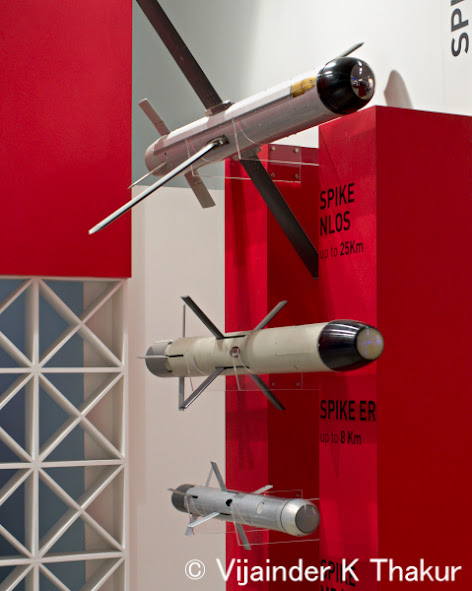
Spike Family of ATGMs on display at DefExpo 2014. The bottom missile is the one that India is all set to purchase.

Israel's Rafael Does a Rafale on Spike ATGM Sales


On June 5, 2015 TNIE reported that contract negotiations between Israel's Rafael and MoD for purchase of Spike ATGMs are stalled over the exorbitant price tag that has now been stuck on the missile.

MoD and the Army have raised several objections to the commercial bids submitted by Rafael in the second week of May.

Besides the cost of ToT, Rafael wants India to pay an additional amount on each missile to be produced in India. As a result, the price of the missile has doubled. 

There is more. Rafael wants a 4 percent annual escalation on all supplies, including raw material to be sold to Bharat Dynamic Limited (BDL) and will take no responsibility over any quality issue of the BDL manufactured missiles.

The DAC cleared the purchase of  8,356 Spike ATGMs, 321 launchers, 15 training simulators and associated equipment from Israel's Rafael Advanced Defense Systems on Saturday, October 25, 2014. The missiles and launchers will equip 355 infantry battalions of the Indian Army.

Eventually, 1,900 launchers and 37,800 missiles will be required to equip the 382 infantry battalions and 44 mechanized infantry units of the Army. 

The deal estimated to be worth Rs 3,200 crore involves transfer of technology. 

IDP Sentinel members can read more details at the link below

India prods the US for ISTAR Sales

India has reportedly conveyed its desire to purchase 2 ISTAR aircraft to US Defense Secretary Ashton Carter during his visit to India from June 2-4, 2015. 

The joint statement released during the visit didn't mention the ISTAR aircraft because India wants to keep the purchase low key.

India solicited RFI in 2011 from Thales, Boeing, BAE, Elta and Raytheon. It selected the Raytheon system offered on a Gulfstream platform.

ISTAR aircraft are used against ground targets and for battlefield management, whereas AWACS aircraft, which India already has, are meant for air defense and aerial targeting. India also uses aerostat radars, which are mini versions of the AWACS and do not help in ground target acquisition.

The ISTAR system provides a highly effective, all weather, day and night and target acquisition capabilities.

IDP Sentinel members can read more details at the link below


Two Approved 'Pathfinder' Project Details


India and the United States have finalized two project agreements for joint development of Mobile Electric Hybrid Power Sources and the Next Generation Protective Ensembles. 

Each project will receive 1 million in funding shared equally by the two sides. The two sides have negotiated and agreed upon the text of the contracts which will be signed at the end of this month. 

The US is developing the high-tech mobile power source for use by the Marine Corps in remote outposts. It would work on solar energy, be smaller, more portable and efficient. The use of electronic sensors by the Indian Army along the LAC and LoD is currently heavily constrained by the lack of suitable power source.

Protective Ensembles for the Army would be more lightweight and effective when used in chemical and biological hazard incidents.

IDP Sentinel members can read more details at the link below


Thursday, June 4, 2015

News Roundup: US Navy Team to Assist with INS Vishal Specs, Agreement on Two DTTI Pathfinder Projects & More


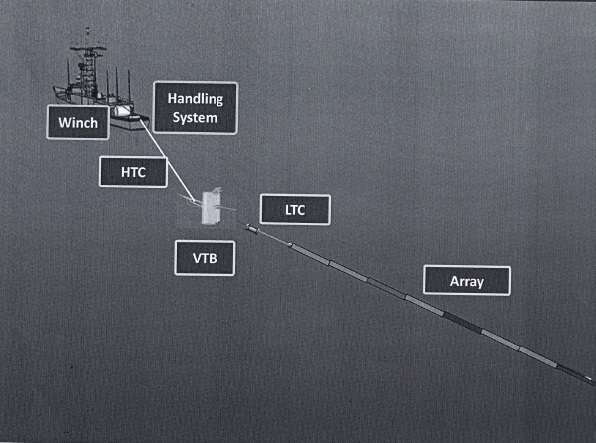
ALTAS Schematic. (HTC-Heavy Tow Cable; LTC-Light Tow Cable; VTB-Vertical Towed Body

Navy Places Order for DRDO's ALTAS


The Aroor unit of Keltron said on June 2, 2015 that it has bagged an order worth Rs.4.5 crore for the manufacture and supply of two Towed Receiver Array (TRA) for naval vessels.

Keltron, the manufacturing partner of DRDO for Sonar Arrays, has to supply the systems within six months.

The announcement indicates that the Navy has ordered ALTAS for its at least two ships.

MoD's end of year report for 2015 states ALTAS was realized with 100% indigenous capabilities with two production centers.  First technical trial on ALTAS has been conducted with satisfactory results.

IDP Sentinel members can read details at the link below

Navy Places Order for DRDO's ALTAS

US Navy Team in India to Discuss INS Vishal Specs


USNI reported on June 1, 2015 that the US Navy's Program Executive Officer for Aircraft Carriers Rear Adm. Tom Moore will lead a US Navy contingent to work with the Indian navy on designing its next indigenous aircraft carrier program.

Moore said initially his team would help India firm up the big picture and draw up the SQRs such as the size of the aircraft, the number of aircraft it would base, etc.. Later, the US Navy would engage with the Indian Navy on specifics.

The DAC on May 13, 2015 allotted Rs 30 crore for preparations for the second aircraft carrier. The funding will likely finance the US Navy team visit.

IDP Sentinel members can read details at the link below

US Navy Team in India to Discuss INS Vishal Specs

US-India Reach Agreement on Two Pilot Projects Under DTTI


India and the United States have finalized agreement on two pathfinder projects under DTTI - development of Mobile Electric Hybrid Power Sources and the Next Generation Protective Ensembles.

The two countries also agreed to expedite discussions to take forward cooperation on jet engines, aircraft carrier design and construction, and other areas.

IDP Sentinel members can read details at the link below

US-India Reach Agreement on Two Pilot Projects Under DTTI