Showing posts with label HAL. Show all posts

Tuesday, February 3, 2026

HAL Details Roadmap for SJ-100 and Il-114-300 Regional Aircraft Production

The Chairman of Hindustan Aeronautics Limited (HAL), Devasri Kutti Sunil, revealed that HAL will initially lease several SJ-100 regional airliners from Russia to get acquainted with the maintenance, reliability, and ecosystem of the aircraft. Simultaneously, it will build infrastructure for construction.

Assembly in India will start in three years.

HAL estimates a total requirement of 200 SJ-100 aircraft and a larger number of Il-114-300 turboprop regional airliners.

HAL plans to set up engine assembly and a repair facility for the TV7-117ST-01 turboprop engine that powers the Il-114-300. It may also consider local manufacture of engine parts and the engine itself.

Russia is open to HAL’s aspirations, says Ekaterina Rukhlova, Head of the Civil Aviation Engine Sales Department at UEC.

The Il-114-300 has completed flight certification tests with TV7-117ST-01 engines. Engine prototypes have flown almost 3,000 hours during more than 400 flights.

The TV7-117ST-01 belongs to a family of engines built with the TV7-117SM as the base.

The TV7-117ST-01 has a takeoff power of up to 3,100 hp and, in comparison with the base engine (TV7-117SM), differs in design features and higher power in takeoff and cruise modes. The power plant includes a new high-thrust AV-112-114 propeller and a new ACS using a combined modernized engine control unit and a BARK-65SM propeller, providing a thrust of up to 4 tons.

Copyright © Vijainder K Thakur. First published on Thumkar.

Friday, January 30, 2026

Why HAL’s Tie-Up with Russia’s Yakovlev Makes Sense

Yak-42 Photo Credit: Konstantin Nikiforov 


According to The Economic Times, Russian aerospace company and aircraft manufacturer Yakovlev has signed a preliminary agreement with Hindustan Aeronautics Limited (HAL).


Commenting on the development, Alexander Dolotovsky, Deputy General Director of Yakovlev, declined to share specific details but noted that the agreement marks the beginning of a significant collaboration.


HAL’s tie-up with Yakovlev may appear perplexing to many. The following background helps put it into perspective.


Historically, Yakovlev has developed both military and commercial aircraft. Military aircraft developed since its founding in 1930 include:


Yak-38 “Forger”: A VTOL, carrier-based fighter inducted in 1975, and the Soviet Navy’s first operational VTOL jet.


Yak-38 Forger Photo Credit: Wikipedia


Yak-130: A modern advanced jet trainer/light attack aircraft introduced in 2002. Developed jointly with Italy’s Aermacchi, the Yak-130 is a lead-in fighter trainer and has been widely exported.


On the commercial side, Yakovlev developed the Yak-40, the world’s first regional turbojet airliner, which entered service in 1966. This three-engine short-haul aircraft could carry 32 passengers and was certified to Western standards. Over 1,000 units were built, and the aircraft was widely exported.


The Yak-40 was followed by the Yak-42, a short-haul trijet airliner introduced in 1976 with seating for up to 120 passengers.


In recent months, Russian media and aviation outlets have reported that some Russian airlines are considering resuming operations of “mothballed” Soviet-era Yak-42 aircraft to cope with a severe shortage of airliners, following the grounding of Western-made aircraft due to sanctions.


Today, Yakovlev is actively involved in the development of both the MS-21 medium-haul airliner and the SJ-100 regional airliner.


As widely reported, on January 28, 2026, Russia’s United Aircraft Corporation (UAC) and India’s Hindustan Aeronautics Limited (HAL) signed a joint agreement governing cooperation in the production of the Superjet 100 (SJ-100) in India. Under this agreement, UAC will grant HAL a license to manufacture and sell the SJ-100, including components, parts, and spare parts required for maintenance and repair.


The Superjet Design Bureau that developed the SJ-100 was integrated into Yakovlev in 2020.


Yakovlev is also likely overseeing the substitution of imported components with domestic analogues for both the MS-21 and SJ-100. Consequently, Yakovlev’s technical and programmatic inputs will be critical to the success of HAL’s local production efforts.


Copyright © Vijainder K Thakur. First published on Thumkar.


Saturday, January 24, 2026

HAL Bets on Locally Produced Russian SJ-100 as Udan Workhorse


Ahead of the Wings India 2026 air show in Hyderabad from January 28 to 31, HAL has released a video promoting the Russian short-haul airliner SJ-100 as a game changer for short-haul connectivity under India's UDAN scheme.


HAL intends to locally manufacture the complete aircraft in India in partnership with Public Joint Stock Company United Aircraft Corporation (PJSC-UAC). The two companies signed an MoU for production of the aircraft in Moscow, Russia, on October 27, 2025.


The partnership is intended to be a landmark event in the civil aviation sector, fulfilling India’s ambition to build commercial aircraft.


The SJ-100 is a twin-engine, narrow-body aircraft. As of date, more than 200 aircraft have been produced and are being operated by more than 16 commercial airline operators.


According to the HAL video, the SJ-100 features state-of-the-art avionics, fly-by-wire controls, unmatched aerodynamics, a new PD-8 engine, wingtip vertical winglets, and lower fuel burn.


SJ-100 Development History


In 2000, Russia’s Sukhoi started development of the country’s first airliner—the Sukhoi Superjet SJ-100. The pace of development of the regional jet was impressive: the SJ-100 made its maiden flight on May 19, 2008, and its first commercial flight on April 21, 2011.


The aircraft was powered by two 77–79 kN PowerJet SaM146 turbofans developed by a joint venture between French Safran and Russian NPO Saturn. It typically seated 87 to 98 passengers.


Western Sanctions


In early 2022, the US and its Western allies imposed sanctions that brought collaboration between Russian and Western commercial aviation entities to a complete halt. The intent was to derail Russian commercial aviation. It didn’t work.


Russia’s partly revived industry immediately hunkered down to continue development and production of the SJ-100 regional airliner and the MS-21 medium-haul airliner. An immediate decision was taken to substitute Western engines and airframe components in the two aircraft with domestically developed analogs.


On April 7, 2022, Russia’s Prime Minister, Mikhail Mishustin, directed that the substitution of domestic assemblies be completed within 2–3 years, with the percentage of domestic components in the MS-21 reaching 97% by 2022–2024, making it independent of imported equipment.


Domestic Power Plant


With considerable foresight, the Russian leadership had already initiated development of state-of-the-art commercial aircraft engines.


In 2010, Russia’s Aviadvigatel started development of the PD-14 high-bypass turbofan engine to power the MS-21 airliner. The PD-14 was conceived as a successor to the PS-90 (which powers IAF Il-76 airlifters), and Aviadvigatel developed it as an “engine core” around which it would build other lower- or higher-thrust engines for use by Russia’s new-generation commercial airliners.


The “engine core” alludes to critical hot parts such as the high-pressure compressor, combustor, and turbine.


The letters “PD” stand for forward-looking engine, while the number 14 represents the 14-ton thrust of the engine in its basic configuration. PD-14 variants will feature thrust ranging from 8 to 18 tons.


The PD-14 is the first engine in Russia created digitally from scratch, using paperless 3D design modelling. Aviadvigatel first developed a digital twin of the engine, based on an electronic database of engineering calculations and material characteristics. The digital twin supports engine production, bench and flight tests, as well as the development of operational documents.


The PD-8 variant of the PD family was developed to power the SJ-100, replacing the PowerJet SaM146.


The imposition of Western sanctions prompted Russia to accelerate development of the PD-14 and PD-8 engines.


The airframe of the SJ-100 had to be tweaked to accommodate the PD-8 engine.


The SJ-100 made its first flight with the Russian PD-8 engine in the city of Komsomolsk-on-Amur on March 17, 2025.


The MS-21 with PD-14 engines and the SJ-100 with PD-8 engines are both currently undergoing certification trials. Series production for both, with the new all-Russian engines, is expected to start in 2026.


The PD-14 powered variant of the MS-21 is referred to as MS-21-310, and the SJ-100 with the PD-8 engine is sometimes referred to as SSJ-NEW.


Conclusion


The revival of the Russian commercial aviation industry presents Make-in-India tie-up opportunities for India. New Russian airliners are now completely Russian and technologically at par with Western analogs.


Domestic air travel in India is surging. The time is ripe for the Indian civil aviation manufacturing industry to venture into production of domestic airliners.


Under its tie-up with UAC, HAL will have the rights to manufacture SJ-100 aircraft for domestic customers.


UAC is confident that HAL will be off to a flying start with local production of the SJ-100 because of its experience producing the Su-30MKI aircraft.


In August 2023, United Aircraft Corporation (UAC) CEO Yuri Slyusar spoke with the “Russia-24” television channel about the proposed tie-up.


“We still believe that under the import licence at the HAL factory, which produces combat aircraft for the Indian Air Force—where they manufacture Su-30 aircraft, with over 270 aircraft made there—it is indeed a significant base with trained personnel, equipment, and refined processes. We could start producing SJ-100 aircraft for the Indian market there in a fairly short period of time.”


This will also be the second instance in which a complete passenger aircraft will be produced in India. The last such project was HAL’s production of the Avro HS-748, which started in 1961 and ended in 1988.


Copyright © Vijainder K Thakur. First published on Thumkar.

Thursday, January 22, 2026

HAL Pursuing Su-57 Joint Production Offer with Sukhoi


The Indian Express reported on January 19, 2026, that Hindustan Aeronautics Limited (HAL) has tasked a Russian team with calculating the costs HAL would incur if it were to participate in a joint venture with Sukhoi to locally manufacture the Su-57. While calculating the total cost, the team will include expenses related to technology transfer (ToT), infrastructure, supply-chain development, and human resources.


Two months earlier, representatives from the Sukhoi Design Bureau and other Russian defence entities stated in a proposal to HAL that the company already possesses roughly half of the infrastructure required for the local production of the Su-57. This assessment is based on the fact that HAL has been locally manufacturing the Su-30MKI at Nashik, Maharashtra (airframe); Koraput, Odisha (engine); and Kasaragod, Kerala (avionics).


The Russian team is expected to submit its report later this month.


Indian Express sources have clarified that the Government of India (GoI) has yet to take a decision on which stealth fighter to acquire to meet the Indian Air Force’s (IAF’s) projected operational requirement of two to three squadrons of an interim stealth fighter, intended to bridge the projected 10-year gap until the induction of the AMCA.


Copyright © Vijainder K Thakur. First published on Thumkar.

Friday, December 12, 2025

The Engine Delay Euphemism: HAL’s Go-To Explanation for Missed Deadlines


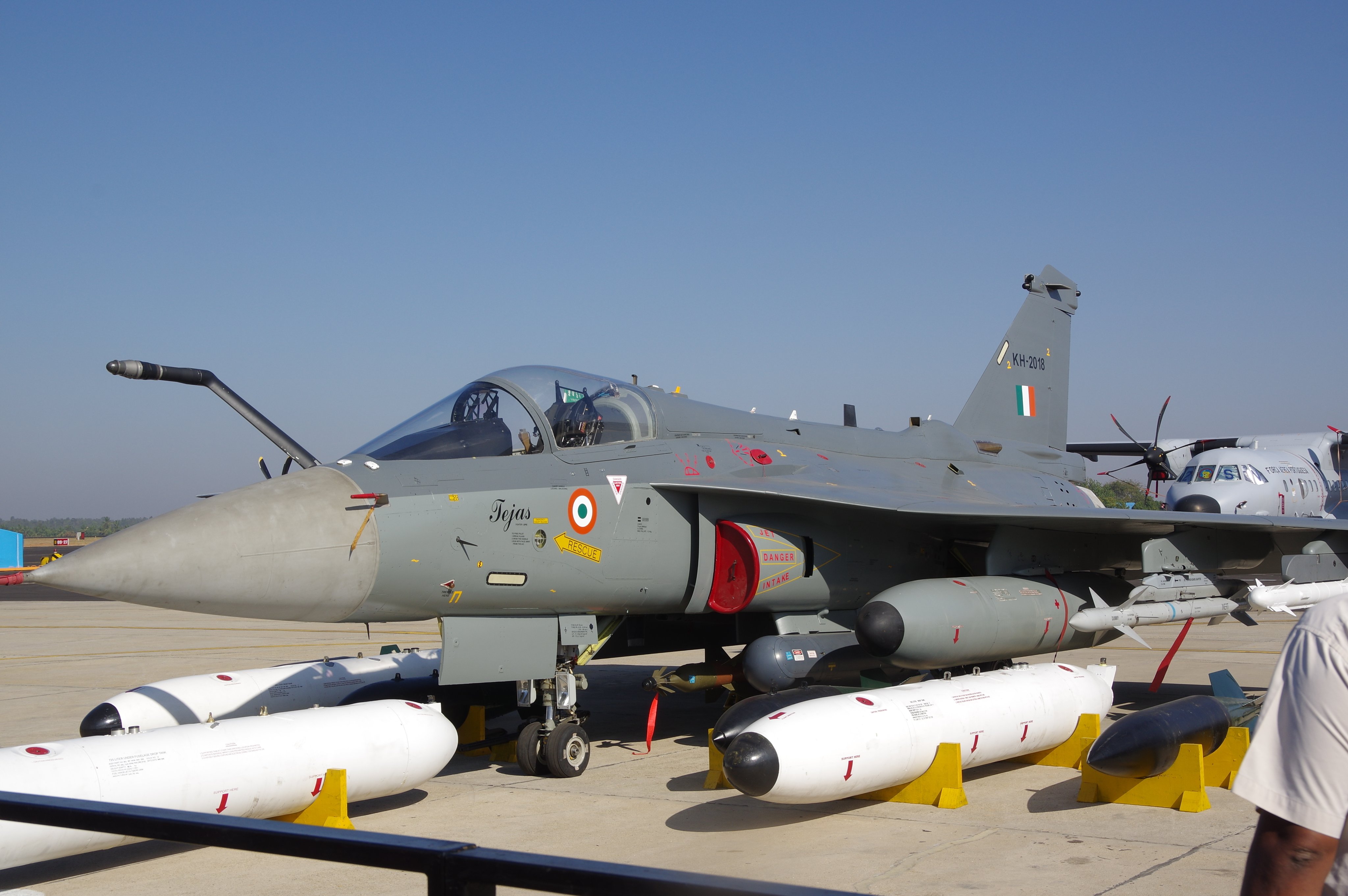
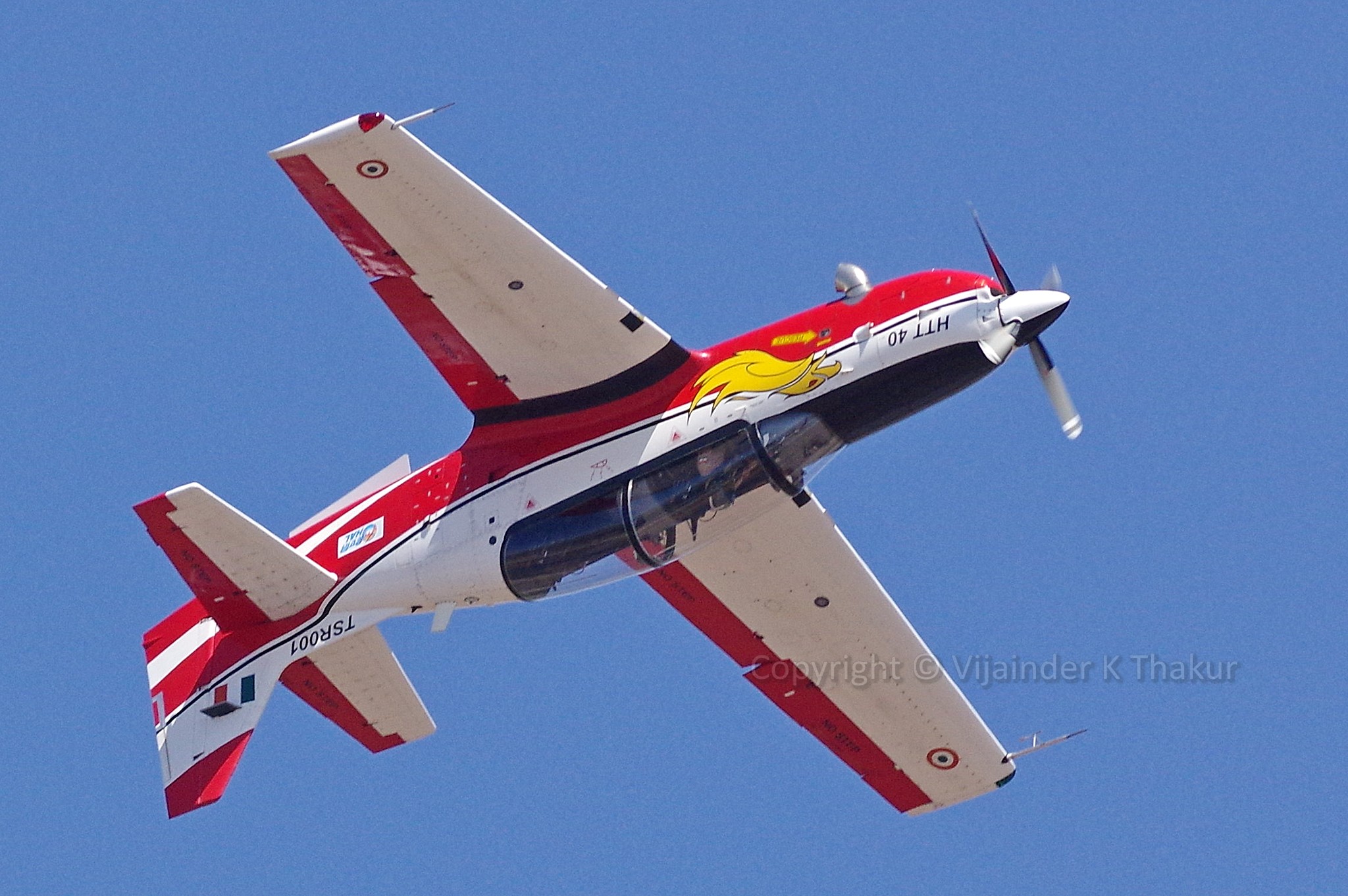
The HT, quoting PTI, reported on December 12, 2025, that HAL has revised the delivery schedule for the LCA Mk-1A and HTT-40. It now aims to deliver 5 LCA Mk-1A jets and 3 HTT-40 trainers by March 2026.

HAL had earlier committed to deliver 10 LCA Mk-1A fighters and 12 HTT-40 trainers by March 2026.

HAL attributes the timeline revision for the LCA Mk-1A to delays in the completion of weapons trials and the delivery of GE F404 engines, and for the HTT-40 to delays in delivery of the Honeywell TPE331-12B turboprop engine.

LCA Mk-1A Orders

A total of 180 Tejas Mk-1A fighters are on order with HAL — 83 against an initial order placed in February 2021 and 97 under a follow-up order placed in September 2025.

HAL has created three production lines for the aircraft.

GE-F404-IN20 Delivery

Based on the initial LCA Mk-1A order, HAL placed an order for 99 GE F404 engines with General Electric (GE) Aerospace on August 17, 2021.

Ironically, when HAL placed this order, GE Aerospace had already shut down the F404-IN20 production line after fulfilling prior commitments by delivering 65 engines for the Tejas LCA by 2016, with no further orders anticipated at that time.

HAL’s August 2021 order for an additional 99 engines required reactivation of the dormant line and vendor supply chain after a five-year hiatus. The reactivation faced further challenges because of the COVID-19 pandemic. As a result, there was a significant delay, and the first engine arrived only in March 2025.

Having resumed production in 2024, GE is now producing just a few F404 engines per month.

HAL likes to attribute LCA Mk-1A delivery timeline slippages entirely to “supply chain constraints” in the production of GE F404 engines. In reality, the slippages are largely attributable to delays in developing the Tejas Mk-1A, which led to the shutdown of the GE F404 production line. The truth is, HAL is still not ready to deliver LCA Mk-1A aircraft because of pending weapons trials.

Additional Order

The MoD, on September 26, 2025, signed a ₹62,370 crore contract with HAL for the procurement of 97 LCA Mk-1A aircraft for the Indian Air Force (IAF), including 68 fighters and 29 twin-seaters, along with associated equipment.

Delivery of these aircraft will commence during 2027–28 and be completed over a period of six years. The aircraft will have an indigenous content of over 64%, with 67 additional items incorporated over and above the previous LCA Mk-1A contract.

To fulfil the additional order, HAL announced on November 7, 2025, that it had signed a deal with GE Aerospace for 113 F404-IN20 engines. The deal, estimated to be worth $1 billion, includes a support package for execution of the programme.

The engine deliveries will take place between 2027 and 2032, HAL said in a statement on X.

According to the HT report, HAL is confident of making good on the timeline slippages in the years ahead.


HTT-40 Orders

During DefExpo 2022, HAL and the IAF signed an agreement for the supply of 70 HTT-40 trainers to the IAF for basic training.

The Ministry of Defence, on March 7, 2023, signed a contract with HAL for the supply of 70 HTT-40 Basic Trainer Aircraft.

Reportedly, HAL was to deliver the first trainer by September 2025 and a total of 12 trainers by March 2026. Supply of all 70 aircraft on order was to be completed over a period of six years.

TPE331-12B Engines

In July 2022, HAL signed a $100 million contract with Honeywell for 88 engines to power the HTT-40. Under the contract, Honeywell would deliver 32 engines, with the rest to be built at HAL through technology transfer.

Notably, HAL placed the order on Honeywell based on its DefExpo 2022 agreement with the IAF, without waiting for a formal contract from the MoD.

According to the HT report, the first engine is expected to arrive in January 2026, another four by March 31, and the rest at the rate of two per month.

HT also reports that two series-production HTT-40s are already flying with “Category B” (used) TPE331-12B engines, earlier fitted on prototype aircraft.

Copyright © Vijainder K Thakur. First published on Thumkar.

Friday, December 5, 2025

Revived Flight Trials of Il-114-300 Renew HAL’s Interest in Regional Airliner Program


Sputnik India has reported, quoting the Rostec Chief, that India and Russia have begun talks on the joint production of the Il-114-300 aircraft.

The Il-114-300 is a modernised variant of the Il-114. Powered by the newly developed Klimov TV7-117ST turboprop engine, the aircraft is a 52-64-seat regional airliner, an analog of the ATR-42, intended to meet the requirements of regional civil aviation carriers.

Development History

The Il-114 was created in the eighties, taking into account the needs of civil aviation of that time and the capabilities of the Soviet aviation industry. It was a regional liner with a payload of several tons. The first flight took place on March 20, 1990. However, fewer than 20 aircraft were built. Production was halted due to industrial difficulties and lack of customer interest.

In 2014, the Russian leadership ordered the launch of the Il-114-300 variant.

The Il-114-300 variant retains the original airframe but features an improved power plant, high-performance propellers, and avionics, resulting in improved flight performance and operational economic characteristics.

The maiden flight of the aircraft took place at the Zhukovsky airfield on December 16, 2020.

Certification was expected to be completed in 2022, with serial production and deliveries expected to commence in 2023.

Indian Interest

In November 2019, ET reported that HAL is contemplating local assembly of the aircraft for Indian regional commercial flights.

HAL planned to start offering maintenance services for this aircraft in India and later progress to local assembly.

Development Setback

However, flight testing of the airliner was suspended in 2021 due to a problem with the engine. An under-development Il-112V light airlifter, which also uses a TV7-117ST engine, crashed during flight testing due to an engine fire.

The suspension of flight testing enabled the engine manufacturer, UEC-Klimov, not only to correct the fault in the engine but also to significantly expand its operational parameters, including temperature range, altitude, and service life.

At the same time, the design of the Il-114-300 itself underwent some changes. The wings were tweaked to “raise” the engine and thereby increase the distance from the propeller blade tips to the ground surface. Now, according to the designers, the aircraft will be able to land not only on concrete runways but also on unpaved surfaces. In addition, the wing modification provides a larger flap angle and, accordingly, a lower landing speed.

Development Resumption

Flight testing has since resumed. As of September 4, 2024, the aircraft had made more than 30 flights, some of which lasted more than seven hours.

As of February 2025, the aircraft had completed more than 70 flights, including more than 20 certification flights, and had flown more than 200 hours. Serial aircraft planned for delivery to operators are already in production.

Copyright © Vijainder K Thakur. First published on Thumkar.

Tuesday, July 19, 2016

HAL Seeking Private Sector Partner to Manufacture its 320 daN turbojet for missiles / drones

HAL developed 425 Kgf Manik turbojet for Nirbhay cruise missile

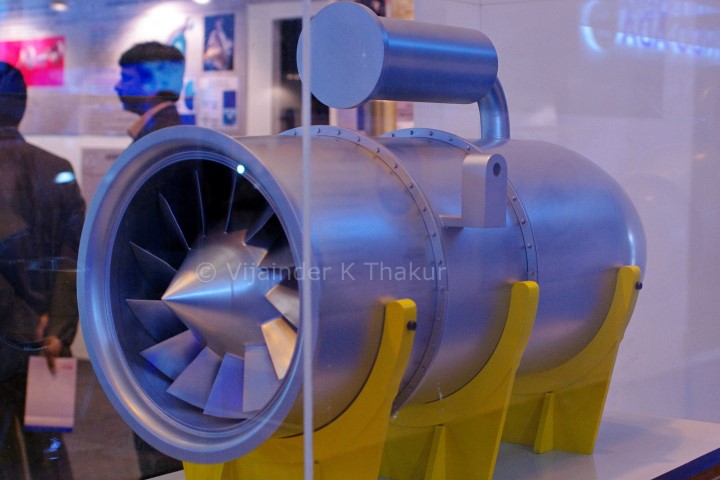
HAL intends to design and develop a 320 daN (326 kgf) thrust class jet engine for various applications.

The single spool turbo jet engine would have an envelope diameter of 310 mm and length of 740 mm.

It would be capable of operating in altitude range of Sea Level to 8.5 km.

The engine would have a SFC of 1.175 kg/daN-h, a starting envelop of 8.5 km to SL @ 0.4 to 0.8M, endurance of 1,000 sec

Physical Parameters and Weight


Length <= 740mm (Excluding LRUs)
Diameter <= 310mm
Dry weight < 44-kg (Excluding LRUs and cartridge Starter)

Initial Requirement

2 engines for Technology Demonstrator (TD)
10 prototype engines for various certifications / qualification trials
5 deliverable engines for limited series production

Private Sector Manufacturing Partnership


HAL on May 31, 2016 released a RFI for 'Selection of an Indian partner to manufacture aero engine in India.'

The due date for submission of a response to the RFI is August 10, 2016

HAL has invited interested Indian partners to undertake the manufacture of the engine by establishing all the required facilities including test rigs and engine test bed. HAL will manufacture 2 technology demonstrators and 3 qualification test units.

In the proposed partnership arrangement, the marketing of end product will be in the scope of HAL.

The current projection is to produce about 12 engines over 2 years time frame after initial development phase. The engine under development is likely to undergo changes during the productionisation. Once the development phase is completed, it is anticipated that the total no of engines required would be around 250 over 5 to 6 year period.

***

You can support my efforts aimed at sharing information on Indian Defense and Space Research by purchasing my maiden novel 'Triumph in Surrender,' a thriller romance set in contemporary IAF.


Saturday, February 6, 2016

Why HAL Would be Debilitating the IAF with its Combat Hawk

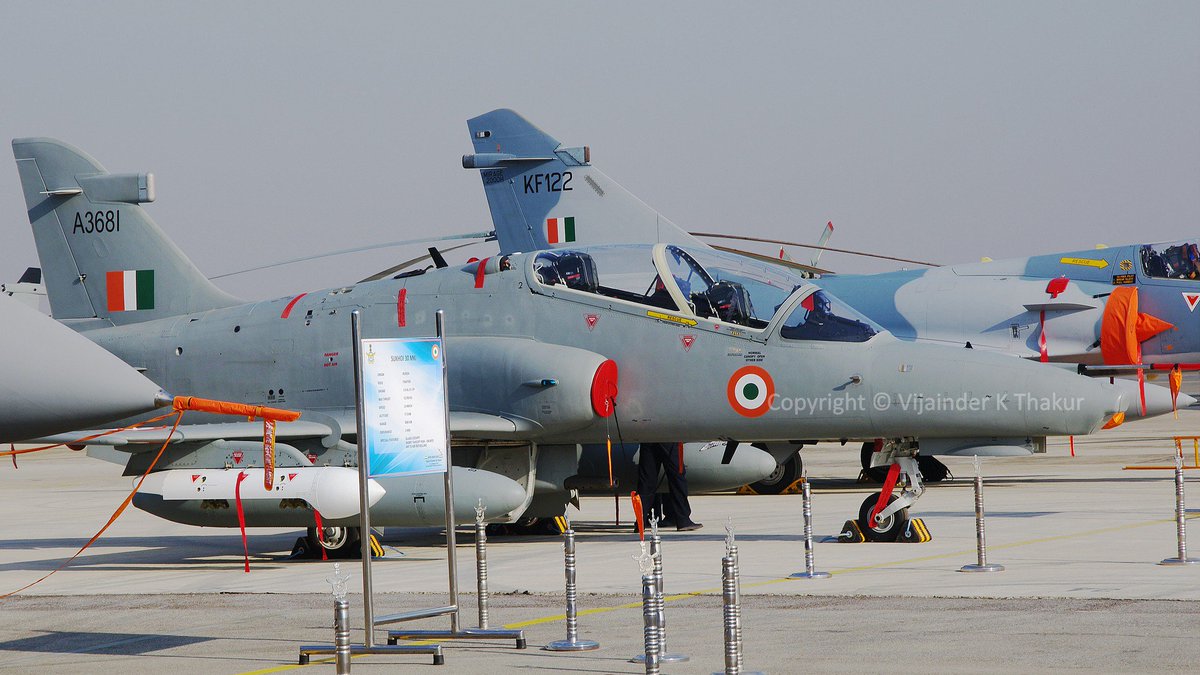
Hawk Mk.132 AJT at Aero India 2015 with CBLS (Carrier Bomb Light Stores) on outer pylons.
HAL and BAE have plans to co-develop in India a combat variant of the Hawk AJT for use by the Indian Air Force, as also for export to friendly countries.

In May 2015 HAL and BAE Systems UK signed a MoU that included development of Combat Hawk besides upgrade of Hawk Mk132 and maintenance solutions for supporting Jaguar and Hawk fleet.

HAL and BAE Systems discussed the Combat Hawk in London during Prime Minister Narendra Modi's visit to the UK in November 2015.

A BAE Systems' Director of Hawk Aircraft Programs, Alun Fishburne, recently told Janes.com that his company is negotiating sale of additional batches of Hawk training aircraft to India, beyond the order for 20 Hawk Mk.132s for the IAF's Surya Kiran team currently being finalized.

The BAE official's reference to additional batches suggests that Indian procurement would go beyond attrition replacements.

HAL and BAE's enthusiasm notwithstanding, the project to co-develop the Combat Hawk makes no operational sense.

As a Lead In Fighter Trainer (LIFT), the Hawk Mk132 is already capable of carrying a wide variety of external stores for weapon release training. The aircraft reportedly has 7 hard points to carry external stores with a possible 12 types of combinations to carry the stores.

The proposed Combat Hawk will likely feature:


  1. An advanced weapon aiming subsystem
  2. Tighter integration of the weapons and cockpit avionics
  3. An integral gun


Other possible feature could include:


  1. A laser rangefinder for more accurate weapon delivery
  2. A TV camera for easier identification of targets
  3. Close Combat Missiles
  4. A refueling probe


Considering that the Hawk is a single engine aircraft with a low thrust to weight ratio (0.65) the Combat Hawk would at best be a counter insurgency (CI) aircraft.

The problem is, the IAF has no need for a CI aircraft! The IAF is not tasked for CI ops and has shied away from the role in past and ongoing insurgencies, with good reason.

What the IAF needs is a dedicated Close Air Support (CAS) aircraft capable of operating in the mountains along the LoC and LAC. A dedicated CAS aircraft needs the safety of two engines, a design optimized for absorbing punishing ground fire, a titanium bathtub to ensure crew safety, a high T/W ratio to ensure good maneuverability in narrow valleys at high altitudes, and adequate Suppression of Enemy Defense (SEAD) capability. The Combat Hawk will have none of these features.

Yes, the IAF has no need for the Combat Hawk. As to export...really?

Clearly, the Combat Hawk is being pushed by HAL for self serving reasons. HAL has stabilized local assembly of the Hawk after a lot of struggle. Additional IAF Hawk orders would ensure easy profits for the very inefficient public sector behemoth for many years running. Despite having struggled with just the local assembly of Hawk Mk132, HAL is disingenuously projecting Combat Hawk as the next big Make-in-India success story.

Mislead by the HAL, the government may well go along with the Combat Hawk project, since it would also keep the UK happy. If that happens, it would be a case of diplomacy dictating defense capability, not the other way around, as it should be!