Showing posts with label AIP. Show all posts

Tuesday, March 10, 2026

DRDO AIP Plug: Late, But a Leap for Project-76 Indigenous Submarine Design

AIP Energy Module & Submarine Plug Diagram by Gemini


DRDO is reportedly poised to deliver its indigenously developed Air Independent Propulsion (AIP) plug in time for integration with INS Khanderi during its scheduled refit in 2026–27.


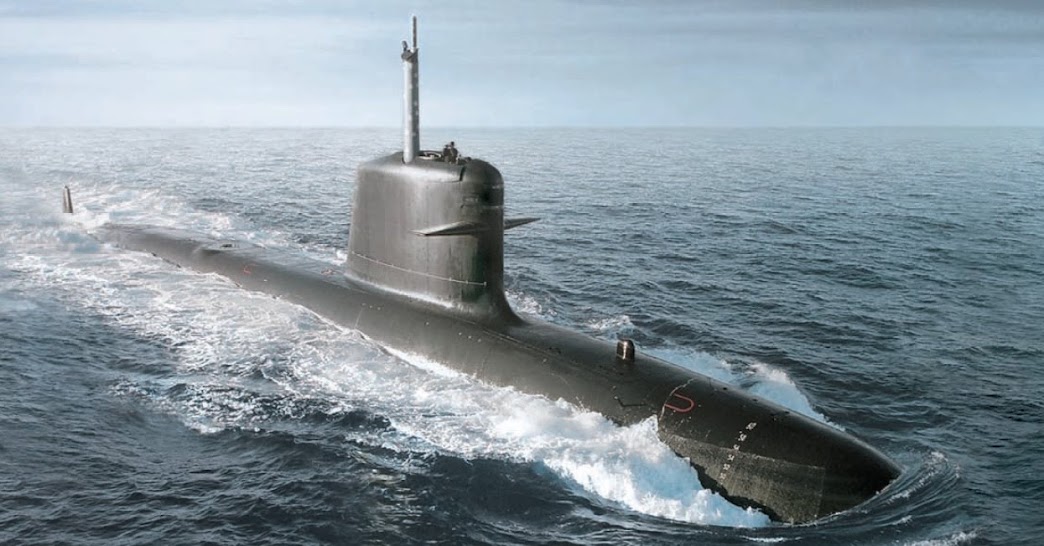
INS Khanderi is the second Kalvari-class (Project-75, Scorpene) submarine inducted into the Indian Navy (IN). It was commissioned on September 28, 2019.


The Indian Navy inducted six Kalvari-class Scorpene submarines under Project-75 between 2017 and 2024. Originally, it was planned to integrate DRDO-developed AIP plugs—designed to facilitate extended submerged endurance—into all Kalvari-class boats. However, the DRDO plug was not ready in time for installation on the first boat, INS Kalvari.


AIP Development Landmarks and Timeline


In June 2023, DRDO signed a contract with L&T to provide two AIP system modules for Kalvari-class submarines.


Under the contract, the Naval Materials Research Laboratory (NMRL), a DRDO laboratory, transferred AIP technology to L&T. The AIP modules are manufactured, integrated, and undergo factory acceptance trials at L&T’s AM Naik Heavy Engineering Complex in Surat.


The AIP modules, also called Energy Modules (EMs), are integrated into the AIP plug, which is then retrofitted into the submarine during refit. The refit will also include equipping the boat to launch DRDO-developed heavyweight torpedoes.


In December 2025, DRDO was expected to deliver the EM for integration with the plug that will be inserted into INS Khanderi during its refit.


“The system has undergone extensive shore-based trials and has met the required benchmarks. Integration work on the second submarine is expected to be completed before December 2026,” Times Now reported, quoting sources.


The submarine will need to undergo extensive trials following installation of the AIP plug, since the dimensions and buoyancy characteristics of the boat will change.


Sea trials are reportedly expected to commence between July and August 2027, with the full refit process expected to conclude by early 2028, the sources added.


Characteristics of the DRDO-Developed AIP


The DRDO-developed AIP uses phosphoric acid fuel cell (PAFC) technology.


A fuel cell converts chemical energy from a fuel into electricity through a chemical reaction between positively charged hydrogen ions and oxygen (or another oxidizing agent).


  1. Several fuel cell types exist, including:
  2. Alkaline Fuel Cell (AFC)
  3. Proton Exchange Membrane Fuel Cell (PEMFC)
  4. Direct Methanol Fuel Cell (DMFC)
  5. Molten Carbonate Fuel Cell (MCFC)
  6. Phosphoric Acid Fuel Cell (PAFC)
  7. Solid Oxide Fuel Cell (SOFC)


A PAFC uses phosphoric acid (H₃PO₄) as the electrolyte. Hydrogen gas (H₂) is used as the fuel at the anode, while oxygen (O₂) from air is supplied at the cathode.


PAFC fuel cells offer several advantages over other fuel cell types. They provide greater fuel flexibility and are more tolerant of fuel impurities. They can operate using reformed hydrocarbon fuels such as methanol or even biogas.


PAFC operating temperatures (150–200°C) are relatively high. As a result, they generate steam as a byproduct in addition to electrical power for propulsion. The steam can be utilized for other onboard heating requirements, raising overall operating efficiency to as high as 70%.


INS Khanderi


DRDO AIP Critical for Project-76 Submarines


Successful integration of the DRDO AIP plug will not only augment the capabilities of Project-75 submarines but will also facilitate finalization of the design of Project-76 submarines.


Under Project-76, India has embarked on an ambitious design, development, and manufacturing program to deliver 12 next-generation diesel-electric attack submarines (SSKs) to the Indian Navy.


Project-76 is envisaged as the logical successor to the foreign-designed Project-75 (French Scorpène) and the upcoming Project-75I (Most likely German Type-214) programs.


Project-76 was initiated in late 2023 when the Indian Navy’s Warship Design Bureau (WDB) received formal authorization to begin the preliminary design phase.


In early 2024, the MoD allocated initial funding for the indigenous development of two pivotal enabling technologies for modern submarines: AIP systems and advanced lithium-ion batteries. As noted earlier, AIP offers increased submerged endurance, while lithium-ion batteries provide higher discharge rates and faster charging compared with traditional lead-acid batteries.


Project-76 aims for an unprecedented 90–95% indigenous content, including the Combat Management System (CMS), sonar suites, and periscopes.


Development Timeline


L&T is confirmed to be part of the design process along with the Navy’s Directorate of Naval Design (Submarine Design Group) (DND-SDG).


L&T’s credentials in submarine construction are impressive and extend beyond the development of the AIP plug for Project-75 submarines. The company previously carried out detailed engineering and hull construction for the Arihant-class SSBNs. It also designed and developed the SOV-400 Midget Submarine, a 400-tonne special operations vessel for commandos.


Additionally, L&T designed and built the Submarine Escape Training Tower (SETT) facility in Visakhapatnam, which is used to train naval crews in emergency escape procedures.


P-76 Progress


In September 2025, a senior L&T official reportedly stated that the design phase of the submarine could be completed by 2026–27.


As of March 2026, the project has moved into the detailed design phase. The Indian Navy is currently finalizing the Staff Requirements to ensure the P-76 can act as a bridge between conventional SSKs and nuclear-powered attack submarines (SSNs) being built under Project-77.


Initially, six submarines are proposed to be built. The first submarine could be delivered in six to seven years, with all six delivered within ten years.


As mentioned earlier, follow-on orders are likely to meet the Indian Navy’s expanding requirements.


P-76 Specifications


The P-76 submarine is envisioned as a 3,000-tonne class vessel, roughly 50% larger than the current Kalvari class.


It will feature a fully indigenous AIP system and incorporate advanced lithium-ion batteries, both designed and developed by DRDO in collaboration with L&T.


The submarine will be armed with indigenously developed torpedoes as well as torpedo-tube-launched anti-ship and land-attack cruise missiles.

 Copyright © Vijainder K Thakur. First published on Thumkar.

Tuesday, July 21, 2015

Indian Navy Sticks with DRDO Developed AIP, for Better or Worse!

Scorpene cutaway scale model with DCNS AIP plug at DefExpo 2014

The Business Standard reported on July 20, 2015 that because of delay in DRDO's Air Independent Propulsion (AIP) project, which is almost 4 yr behind schedule, only the sixth Project-75 Scorpene would be fitted with an AIP plug. It is also possible that all six Scorpenes would be built without AIP.

The Indian Navy had earlier asked Mazagon Docks Limited (MDL) to equip the fifth and sixth boats with AIP by fitting an additional 300-t section on the last two Scorpene submarines built at MDL under Project 75.

MDL and French firm DCNS, which developed the Scorpene, are responsible for fitting the new hull section and safely integrating the DRDO-developed AIP plug to the submarine.

DCNS initially offered its first generation MESMA AIP with the Scorpene, but the Indian Navy opted to go with a second generation DRDO developed 300-t AIP based on fuel cell technology.

DCNS has since developed and demonstrated to Indian journalists a fully tested second generation operational-scale fuel cell AIP that would allow the Scorpene to stay submerged for 3 weeks, but the Indian Navy hasn't been swayed from its decision to go with the DRDO AIP.

(Without AIP, Scorpene can stay submerged for 4 days. With a  MESMA AIP, it would be able to stay submerged for 2 weeks.)

DRDO has demonstrated its AIP technology on a land based prototype. Trials on a land based submarine section were to commence from March 2015 and full scale operations of a AIP System was to be demonstrated within 2015.

One good reason why the Navy has stuck with the  DRDO AIP is because it could later be reconfigured for the submarines to be acquired under Project 75I. Also, the four Scorpenes launched earlier could be retrofitted under an upgrade program.

The Navy's penchant for sourcing its systems from within India is well appreciated in the country, but there can be no denying the risk that the Navy is taking by adding to its fleet, in this day and age, new submarines without AIP! India's adversaries, China and Pakistan, have been operating AIP subs for years now!

The following comparison may help readers assess the risk for themselves. Please feel free to your your views through the comments section.

DCNS and DRDO AIPs Compared


The MESMA AIP from DCNS mimcs nuclear propulsion. It uses heat generated through combustion of ethanol (grain alcohol) and stored oxygen at a pressure of 60 atmospheres to power a conventional steam turbine power plant. It doesn't use fuel cells.

The DRDO AIP uses fuel cell technology. A fuel cell converts chemical energy from a fuel into electricity through a chemical reaction of positively charged hydrogen ions with oxygen or another oxidizing agent.

There are many fuel cell types, but the principal ones include the alkaline fuel cell (AFC), proton exchange membrane (PEM) fuel cell, direct methanol fuel cell (DMFC), molten carbonate fuel cell (MCFC), phosphoric acid fuel cell (PAFC), and solid oxide fuel cell (SOFC).

DRDO's AIP uses PAFC, which has some advantages over other fuel cell types. PAFCs offer a broader choice of fuel being more tolerant of fuel impurities. It can operate using reformed hydrocarbon fuels (Methanol) or biogas.

PAFC operating temperatures (150 to 200 °C) are higher and as a result they generate steam as byproduct, besides electric power for propulsion. The steam can be used to meet other heating requirements, pushing up operating efficiency to as high as 70%.

PAFC fuel cells were one of the earliest to be developed and are commercially available of the shelf (COTS).

The only downside of PAFCs is the use of phosphoric acid as electrolyte. However, use of modern materials makes PAFC safe enough for commercial use at hospitals, schools, office buildings, and grocery stores.

It's likely that the DRDO plug uses commercially available PAFCs.

The second generation fuel-cell AIP developed by DCNS usees hydrogen produced from diesel fuel by hydrocarbon reforming.

One obvious advantage of the DCNS AIP is the easy availability of diesel at any port around the globe. The absence of pure-oxygen in the cells allows longer life cycle. DCNS claims that the life cycle of its new AIP plug roughly matches the life-cycle of the submarine, which isn't the case with other fuel cell types.

There is no doubting the sophistication of the DCNS 2nd generation AIP, which has to be weighed against the higher initial cost, high recurring cost from the need to use AIP is all future conventional subs, and the continued dependence on foreign technology. But then DRDO has a well earned notoriety of delays!


Monday, November 3, 2014

Trials of DRDO Developed AIP Plug for the 4th & 5th Project 75 Scorpenes to Start in Feb 2015


Scorpene Sub

November 3, 2014: The fifth and sixth Project 75 Scorpene submarines to be built at Mazagon docks will feature DRDO developed Air Independent Propulsion (AIP), which will be ready for sea trials by February 2015

Without AIP, a Scorpene sub can stay underwater for a maximum of four days; thereafter it needs to surface and re-charge its batteries using diesel gensets. French firm DCNS, which developed the Scorpene, has its own 300-t, second generation AIP plug that can allow the boat to stay under water for as much as three weeks,  but the Indian Navy has opted to go with a DRDO developed AIP which has been proven on a land-based prototype.

DRDO DG (Naval Systems & Materials), V. Bhujanga Rao told The Hindu that the French MESMA AIP being offered for the Scorpenes is an old system with a steam turbine.

According to Rao, the DRDO AIP could later be reconfigured for the submarines to be acquired under Project 75I .

Earlier, the Indian Navy asked MDL to equip the fifth and sixth boats with Air Independent Propulsion by fitting an additional section.

The four Scorpenes launched earlier could be retrofitted under an upgrade program.

Philippe Berger, former submariner and submarines operational marketing manager of DCNS, told Indian journalists in October 2014 that DRDO will be fully responsible for its AIP plug.

"Our scheme is limited to integrating safely the DRDO-developed AIP plug to the submarine. We are working on designing the hull section in detail for this,” Mr. Berger told Indian journalists at the DCNS facility, which houses the “fully tested operational-scale fuel cell AIP.”

IDP Sentinel members can read more about Indian Navy's Project 75 Scorpene subs at the link below

Project 75 Scorpene Submarines (IDP Sentinel)