Showing posts with label Navy. Show all posts

Sunday, March 5, 2017

Should ADA Push LCA Navy Mk.2 Against IN Wishes, or Focus on the AMCA?


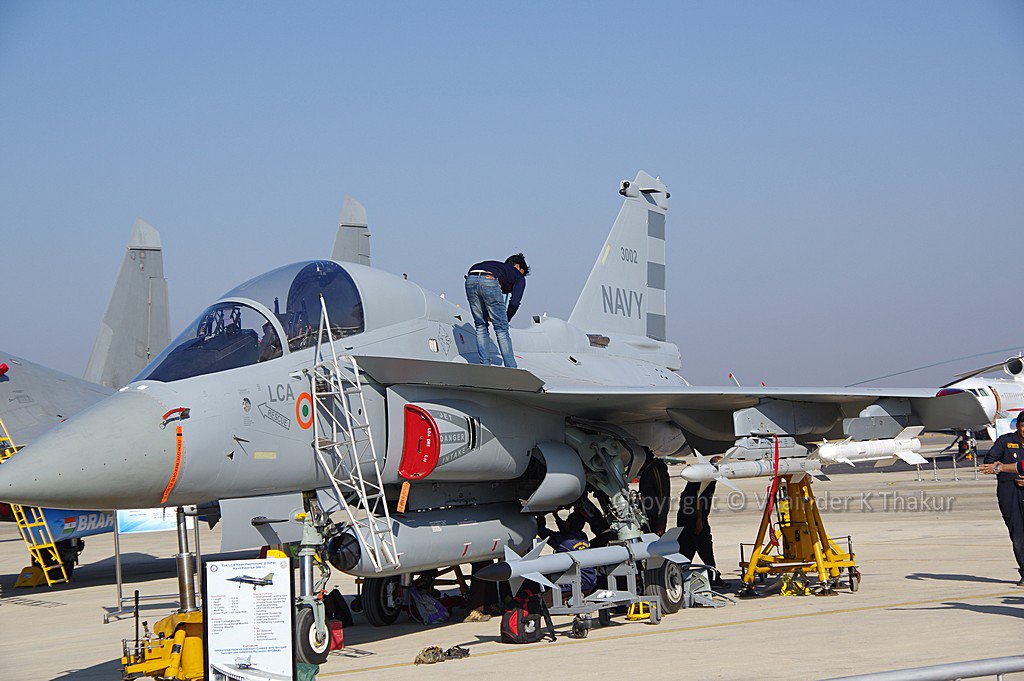
LCA Navy Mk.1 at Aero India 2017

On December 2, 2017, the Chief of Naval Staff Admiral Sunil Lanba told the press that the Indian Navy is scouting for another carrier operations compatible fighter besides the MiG-29, since LCA Navy lacks the payload required to be effective when operating from a carrier.

“The present LCA Navy does not meet the carrier capability which is required by the Navy. We will continue to support the Defense Research and Development Organization (DRDO) and Aeronautical Development Agency (ADA) in their efforts to develop a carrier-based fighter aircraft. At the same time we will seek aircraft elsewhere which can operate on the aircraft carrier,” said Admiral Lanba.

On January 24, 2017 the Indian Navy went ahead and released a RFI for procurement of approximately 57 Multi role carrier borne fighters (MRCBF) for aircraft carriers of the Indian Navy (IN).

However, speaking to the press in February 2017, ADA Director Commodore C D Balaji (Retd.) said that the Navy Chief's December remark that the LCA Navy lacked adequate payload was restricted to LCA Navy Mark I.

"...We knew (it) was a heavier platform upfront and it was basically a technology demonstrator and that is how it is intended," he said.

Recalling the development testing underway since 2016, Balaji said "....we will convert this project into a product and that will happen once we do an arrested recovery (by mid of this year), the moment we do that we will carry the learning into Mark II which has already been designed."

Clearly, the IN and ADA are not on the same page on the future of LCA Navy. The Navy wants to support LCA Navy as a technology development project, but ADA wants to see LCA Navy Mk.2 operationally embarked on IN aircraft carriers.

ADA is reported to have vigorously lobbied with RM Manohar Parrikar to keep the LCA Navy Mk.2 project alive. ADA's desire is well intentioned and widely supported by defense enthusiasts who believe that in order to become a great power India must equip its forces with home made weapon systems.

However ADA's attempt to arm twist the IN through the RM to eventually accept LCA Navy Mk.2 for embarkation makes little sense because despite a more powerful engine (LCA Mk.2's F414 has 10% greater thrust than the Mk.1's F404 engine) and optimized design, LCA Navy Mk.2 will fall woefully short of IN requirements specified in its MRCBF RFI.
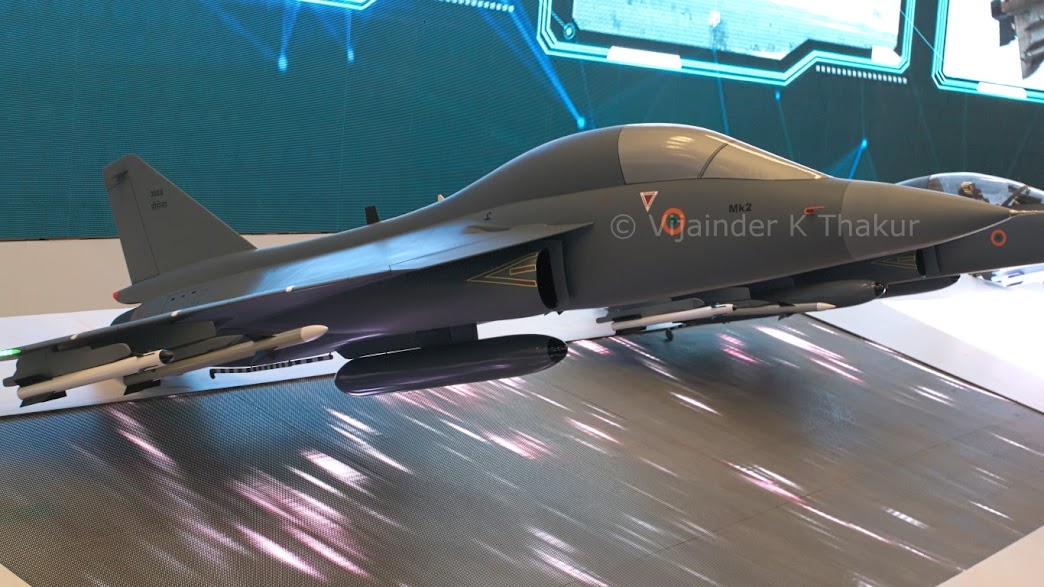
Scale model of LCA Navy Mk.2 armed with 4 air-to-air missiles at Aero India 2015


LCA Navy Mk.2 Limitations

ADA's aggressive plugging of LCA Navy Mk.2 suggests that the Mk.2 is as capable as the MRCBF that the navy is seeking. This is far from the truth. The extra thrust of the F414 engine would make the LCA Navy Mk.2 more maneuverable but will not significantly increase its weapon load, which the IN considers inadequate. The extra thrust would come at the cost of higher fuel consumption, particularly close to max power setting, negating some of the benefits accruing from the 700 liter extra fuel that the Mk.2 would carry.

LCA Navy Mk.2 will be a more capable air defense (AD) fighter than the Mk.1 but will continue to lack credibility as a strike aircraft. It's range and weapon load carrying capacity would be limited even when operating from 3000m runways, let alone when conducting STOBAR operations from a 200m carrier deck.

It's worth noting that the ADA itself plugs LCA Navy Mk.2 as an AD fighter that would provide cover to a carrier group against fighter and cruise missile threats, not as a strike fighter. Scale models of LCA Navy Mk.2 displayed at Aero India 2015 and Aero India 2017 were shown carrying just four air to air missiles (two on each wing) with a center-line drop tank.

Ironically, the IN RFI defines operationally clean configuration (OCC) for the MRCBF to imply that it's carrying four Beyond Visual Range (BVR) missiles and two All Aspect Air-to-Air Missiles (A4M). A total of six missiles, two more than the LCA Navy Mk.2 would carry!
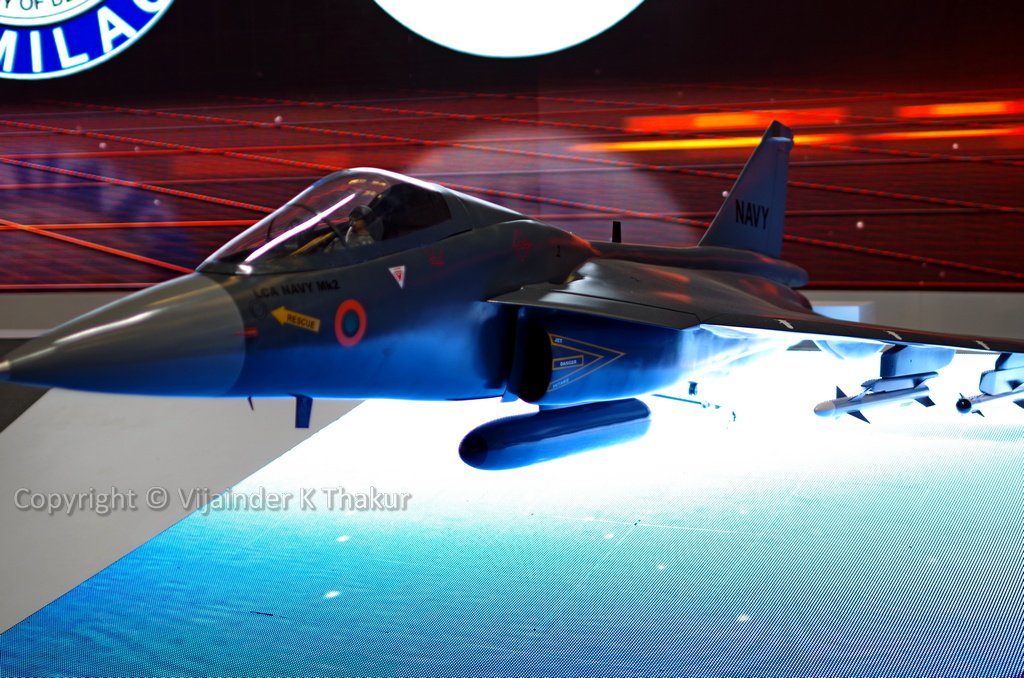
Scale model of LCA Navy Mk.2 at Aero India 2017


Understanding IN Requirement

Carrier groups are primarily strike groups, capable of delivering sustained fire power while operating at considerable distance from home shores. Typically, an aircraft carrier embarks only one fighter type to minimize logistics and maintenance overheads. The primary role of the embarked fighter is strike, so it must features good weapon load and range. Since strike missions often require escort fighters and escort jammers, embarked fighters must also be capable of undertaking these roles.

An embarked multi-role fighter allows mission planners to change the force mix - strike, escorts, jammer - based on how heavily adversary airspace is contested. The single embarked aircraft type is reconfigured for its assigned task.

The US F/A-18E/F, the French Rafale-M, and the Chinese J-11 are examples reconfigurable, multi-role carrier borne fighters with good weapon load and range.

The IN wants a MRCBF - Multi Role Carrier Borne Fighter, and the LCA Navy Mk.2's credentials as a multi-role fighter are weak.

It would not be a good idea to embark LCA Navy Mk.2 aircraft on INS Vikramaditya or INS Vikrant alongside MiG-29Ks, as ADA seems to suggest in its brochures and presentations. Having two fighter types on board, would dramatically push up maintenance and logistics infrastructure requirements. More importantly, it would constraint mission planners, deprive them of the flexibility in selecting force mix. Mission force mix would become dependent on embarked force mix! For example, when operating in uncontested airspace LCA Navy Mk.2s would have little to do.

The USN does not embark two fighter types on its super carriers capable of hosting 60 fighters. IN carriers are much smaller and embark around 20 fighters. Operating constraints will become severe. With 60% serviceability and even split of embarked types - INS Vikramaditya would be able to field just 6 MiG-29Ks and 6 LCA Navy Mk.2s at a time, hardly a credible strike force!

Other RFI Shortfalls

Besides limited range and weapon load, LCA Navy Mk.2 would fall short on many other requirements specified in the Navy RFI.

Radar and EW Suite

The RFI specifies a radar capable of engaging airborne and surface target, preferably in a interleaved mode. The aircraft should be equipped with a Radar Warning Receiver (RWR) capable cuing an on-board Airborne Self Protection Jammer (ASPJ), Counter measures dispensing suite (CMDS), Missile Approach Warning System (MAWS) and towed decoy for handling threats?

Interchangeability / Modularity

The Navy RFI also stipulates high degree of interchangeability / modularity - all major airframes components / parts / panels, sub-assemblies, including the canopy should be fully interchangeable between aircraft. Hot and cold engine sections should swapable. It should be possible to change the engine of an aircraft on the carrier itself.

These requirements are easily understood considering that an aircraft carrier could be operating hundreds of miles from home shores. Interchangeability allows recourse to cannibalization to keep more aircraft airworthy. To achieve interchangeability, ADA as the design agency and HAL as the production agency would need to achieve better design and production standards.

Conclusion

Clearly, when drafting the RFI the IN was visualizing Chinese carriers and nuclear submarines in the Indian Oceans, perhaps adversary beachheads on several Andaman and Nicobar group islands. The Navy was probably thinking Super Hornet and Rafale-M, both twin engined medium fighters. Competing against the Super Hornet, the LCA Navy Mk.2 with just one of the two engines fitted on the US Navy fighter would be clearly out of league.

LCA Navy equipped IN carriers aren't going to be enough to deter PLAN forays into the Indian Ocean, so should the IN still procure them to help India achieve self sufficiency in arms production?

Rather than pushing the LCA Navy Mk.2 as the right MRCBF for the IN, ADA would better serve the nation's interest by focusing on AMCA development. ADA certainly doesn't have the infrastructure and talent to pursue both projects simultaneously.

But ADA should continue to pursue LCA Navy as a technology demonstrator, something the Navy wants it to do. After ADA masters arrested landing, as it plans to do later this year, the agency should pursue auto-landing on deck and other relevant technologies, so that when the AMCA project gets a green light, ADA has all that it needs to develop the AMCA Naval variant.

Monday, September 26, 2016

Uri Attacks: India doesn't have a military option! Really?

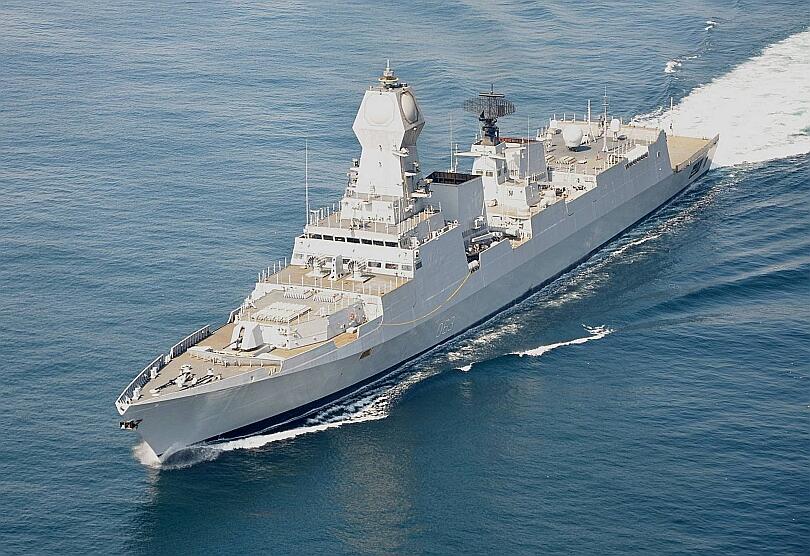
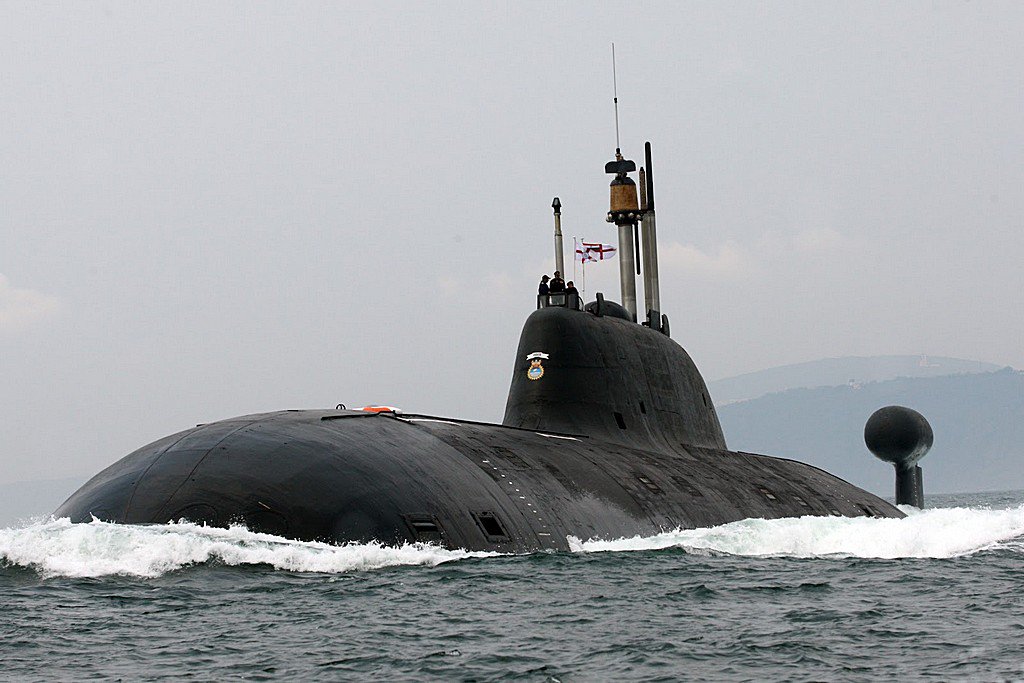
INS Chakra


Reputed military analysts have asserted that India needs to impose a military cost on Pakistan for its cross border attacks such as in Pathankot and Uri.

In a just published article titled Lessons from the Uri Attack Lt Gen Philip Campose, former Vice Chief of Army Staff, suggests:

"Militarily, the cost of terror attacks for Pakistan should be raised to unacceptable levels by exploiting Indian military strengths to target Pakistan’s weak points. Concurrently, own vulnerabilities should be secured."

The option has been repeatedly put on the table, only to be rejected as being unviable by our political leadership. Most of the arguments against this option are specious. Here are my thoughts on one of them

Some defense analysts point out that India will not be able to leverage it military quantitative and qualitative advantage over Pakistan in a short conflagration limited to the LoC because our forces are evenly matched. As a result, Indian military options are severely limited.

The conclusion is flawed because the supporting logic is presumptive and ignores vital facets of the asymmetry that exists in war
fighting potential. For example, India has military assets unmatched by Pakistan. A nuclear submarine that can wreak havoc in the Arabian sea against the Pakistan Navy. IAF Su-30MKI fighters can dominate vast stretches of the Arabian Ocean along the Pakistani coast. Our Brahmos equipped warships, in coordination with INS Chakra and IAF BVR equipped Su-30MKI and AWACS, would put Pakistani warships at grave risk.

The logic for confining an Indian military response to the LoC is dubious in military terms, as the extent of the military asymmetry varies sharply along the Indo-Pak border and the Arabian sea. The asymmetric is very pronounced in the Arabian sea, quite pronounced along the IB, and marginal along the LoC. Why on earth would we want to confine our military response to the LoC?

Any military action must have a clear and easily achievable aim. In order to ensure success, we should respond in sectors with high asymmetry.

Targeting Pakistani warships or Maritime Reconnaissance aircraft over the Arabian sea under the fig-leaf pretext that they were maneuvering in a hostile fashion is a low hanging fruit. The adversary just does not have the assets to take on the India Navy. He would be forced to either respond over land or run to the UN and International Court of Justice. A military response on land would put Pakistan on step one of the nuclear escalatory ladder, a long climb away from the nuclear threshold, allowing India to punish it some more.

There are other possibilities. The Indian Army has the capability to seize Pakistan territory along the International Border in a cold start sharp military action with the aim of humiliating Pakistan. Those who may question the legality of such an action need to be told that our  military response needs to be effective, not legal, just as Pakistan's provocation at Pathankot and Uri were effective, but not legal.

Thursday, July 14, 2016

Russia's Project 23000E Shtorm (Storm) Aircraft Carrier Design: A Strong Contender

Photo credit: Artem Tkachenko / Wikipedia


Russia has offered its "Shtorm" nuclear aircraft carrier design to India for purchase, the Defense News reported on July 12, 2016. A diplomat with the Russian Embassy confirmed that a Russian team visiting India last week made the offer. The Deccan Herald confirmed the visit today reporting that the Russian team had met Defense Secretary G Mohan Kumar. MoD is likely to seek opinion of the Navy and undertake a detailed cost-benefit analysis before taking a call on the offer. In March 2016 the Izvestia newspaper had reported that Russia's Krylovsky State Research Center (KRSC) would be offering its new multipurpose heavy aircraft carrier design called Project 23000E Shtorm (Storm) for the Indian Aircraft Carrier-2 (IAC-2) project. The Shtorm project was first revealed to the public in June at the Army-2015 show near Moscow, where a scale model of the ship was exhibited. The model featured a split air wing comprising navalized T-50 PAKFAs and MiG-29Ks, as well as jet-powered naval early warning aircraft and Ka-27 naval helicopters. The presence of AEW&CS models on the deck suggested the carrier would be able to operate heavy aircraft, perhaps using a Russian developed EMALS analog. The Shtorm design has a displacement of up to 100,000 tons, is 330 meters long, 40 meters wide, and has a draft of 11 meters. It has a nuclear power plant, although initial plans state a conventional one may also be used. The ship is designed to sail at up to 30 knots (around 55 km/h) and withstand sea state 6-7 (characterized by waves up to 9 meters high).

Navy Seeing Design Finalization by 2016 End

The Hindu reported on January 22, 2016 that design of the carrier would be frozen by the end of 2016. Feasibility study has started and would be completed in 8-10 months leading to a design freeze. Design consultancy will be sought from foreign companies with expertise in carrier design and construction. Five countries have been identified for the purpose — the U.S., Russia, France, the U.K. and Italy — all of which currently operate carriers. With the December 2016 deadline looming, the Shtorm would be a strong contender with an already finalized design.

Design Cooperation with the US

India and the US are exploring the feasibility of co-designing INS Vishal under DTTI. That may prove to be too little too late.

Nuclear Propulsion

EMALS based carrier operations require lot of electrical power, mandating nuclear propulsion (NP). Russia has built and operated nuclear powered heavy cruisers. It earlier helped India develop NP for Arihant class SSBN. It's likely that Russian NP ToT for a super carrier would come with less strings attached than US ToT. Additional details on the IAC-2 (INS Vishal) project are available on my paid (Rs 500/- per year) access site IDP Sentinel.
Access to the site is free for one year for those who purchase my maiden novel 'Triumph in Surrender'. Click hereto purchase the book from Amazon.

The reason for the small access fee are explained at this link.

Wednesday, August 26, 2015

HSL - Hyundai Tie Up for Construction of Fleet Support Ship (FSS)

INS Shakti Sattahip, Thailand on June 23, 2015
The Hindu reported on August 25, 2015 that Hindustan Shipyard Ltd. and Hyundai Heavy Industries (HHI) are likely to undertake joint construction of Fleet Support Ship (FSS) for the Indian Navy (IN).

“Our plan is to construct one FSS at Hyundai by sending a team from our yard to South Korea to enable them to gain expertise. Later with the guidance of Hyundai, we want to build four FSS here,” HSL Chairman and Managing Director Rear Admiral N.K. Mishra told The Hindu.

The DAC on July 19, 2014 cleared the acquisition of 5 FSS by the Indian Navy at a cost of Rs 9,000 crores.

The vessels would be used by the Navy to support the operations of carrier groups planned for the future.

Capabilities


The Navy wants ships to be capable of following:


  1. Transfer of FOLS to all Naval Surface Units while underway at sea using abeam and astern transfer methods.
  2. Transfer all types of stores, victuals and personnel to naval units while underway at sea.
  3. Ships should be capable of handling multirole helicopter at sea.


Specifications


The principal dimensions of the ships should be:


  1. Length Overall - About 200 m. 
  2. Beam Max - About 25 m. 
  3. Displacement (Fully Loaded) 40,000-t


Performance


FSS would  have a speed of 16 knots, range of 12,000 nautical miles and a service of 30 years with capability to carry ballistic weapons.

The ship should have Diesel propulsion (CODAD), with a single shaft configuration with CPP and must be equipped with a Helo deck and support facilities to handle Multi Role Helicopter.

It must be crewed by 190 sailors, including 24 officers.

Navantia and L&T Joint Proposal


It was earlier reported that Spain's state-run Navantia has tied up with L&T for the project to offer the Fleet Replenishment Ship ESPS Cantabria of the Spanish Navy.

Navantia collaborated with the French DCNS to build six Scorpene submarines at Mazagon Dock Ltd. (MDL).

Navantia and L&T are working jointly on building four LPDs like INS Jalashwa for amphibious military operations and disaster relief for the Indian Navy.

IDP Sentinel members can track progress on the project at Fleet Support Ships (FSS) (IDP Sentinel)

Tuesday, July 21, 2015

Indian Navy Sticks with DRDO Developed AIP, for Better or Worse!

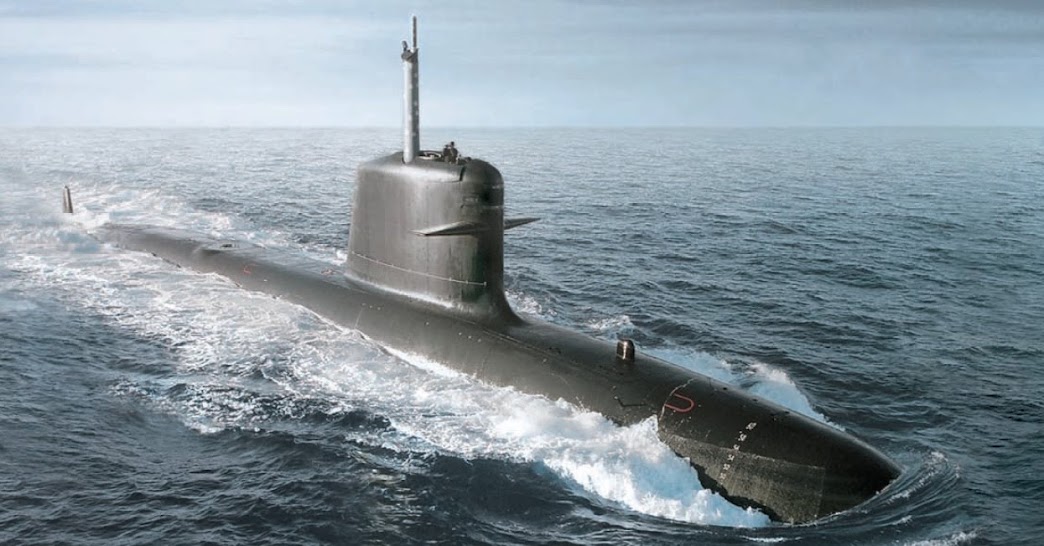
Scorpene cutaway scale model with DCNS AIP plug at DefExpo 2014

The Business Standard reported on July 20, 2015 that because of delay in DRDO's Air Independent Propulsion (AIP) project, which is almost 4 yr behind schedule, only the sixth Project-75 Scorpene would be fitted with an AIP plug. It is also possible that all six Scorpenes would be built without AIP.

The Indian Navy had earlier asked Mazagon Docks Limited (MDL) to equip the fifth and sixth boats with AIP by fitting an additional 300-t section on the last two Scorpene submarines built at MDL under Project 75.

MDL and French firm DCNS, which developed the Scorpene, are responsible for fitting the new hull section and safely integrating the DRDO-developed AIP plug to the submarine.

DCNS initially offered its first generation MESMA AIP with the Scorpene, but the Indian Navy opted to go with a second generation DRDO developed 300-t AIP based on fuel cell technology.

DCNS has since developed and demonstrated to Indian journalists a fully tested second generation operational-scale fuel cell AIP that would allow the Scorpene to stay submerged for 3 weeks, but the Indian Navy hasn't been swayed from its decision to go with the DRDO AIP.

(Without AIP, Scorpene can stay submerged for 4 days. With a  MESMA AIP, it would be able to stay submerged for 2 weeks.)

DRDO has demonstrated its AIP technology on a land based prototype. Trials on a land based submarine section were to commence from March 2015 and full scale operations of a AIP System was to be demonstrated within 2015.

One good reason why the Navy has stuck with the  DRDO AIP is because it could later be reconfigured for the submarines to be acquired under Project 75I. Also, the four Scorpenes launched earlier could be retrofitted under an upgrade program.

The Navy's penchant for sourcing its systems from within India is well appreciated in the country, but there can be no denying the risk that the Navy is taking by adding to its fleet, in this day and age, new submarines without AIP! India's adversaries, China and Pakistan, have been operating AIP subs for years now!

The following comparison may help readers assess the risk for themselves. Please feel free to your your views through the comments section.

DCNS and DRDO AIPs Compared


The MESMA AIP from DCNS mimcs nuclear propulsion. It uses heat generated through combustion of ethanol (grain alcohol) and stored oxygen at a pressure of 60 atmospheres to power a conventional steam turbine power plant. It doesn't use fuel cells.

The DRDO AIP uses fuel cell technology. A fuel cell converts chemical energy from a fuel into electricity through a chemical reaction of positively charged hydrogen ions with oxygen or another oxidizing agent.

There are many fuel cell types, but the principal ones include the alkaline fuel cell (AFC), proton exchange membrane (PEM) fuel cell, direct methanol fuel cell (DMFC), molten carbonate fuel cell (MCFC), phosphoric acid fuel cell (PAFC), and solid oxide fuel cell (SOFC).

DRDO's AIP uses PAFC, which has some advantages over other fuel cell types. PAFCs offer a broader choice of fuel being more tolerant of fuel impurities. It can operate using reformed hydrocarbon fuels (Methanol) or biogas.

PAFC operating temperatures (150 to 200 °C) are higher and as a result they generate steam as byproduct, besides electric power for propulsion. The steam can be used to meet other heating requirements, pushing up operating efficiency to as high as 70%.

PAFC fuel cells were one of the earliest to be developed and are commercially available of the shelf (COTS).

The only downside of PAFCs is the use of phosphoric acid as electrolyte. However, use of modern materials makes PAFC safe enough for commercial use at hospitals, schools, office buildings, and grocery stores.

It's likely that the DRDO plug uses commercially available PAFCs.

The second generation fuel-cell AIP developed by DCNS usees hydrogen produced from diesel fuel by hydrocarbon reforming.

One obvious advantage of the DCNS AIP is the easy availability of diesel at any port around the globe. The absence of pure-oxygen in the cells allows longer life cycle. DCNS claims that the life cycle of its new AIP plug roughly matches the life-cycle of the submarine, which isn't the case with other fuel cell types.

There is no doubting the sophistication of the DCNS 2nd generation AIP, which has to be weighed against the higher initial cost, high recurring cost from the need to use AIP is all future conventional subs, and the continued dependence on foreign technology. But then DRDO has a well earned notoriety of delays!


Wednesday, June 10, 2015

News Roundup: Navy Procuring 5 Diving Support Vessels, 3rd & Final EMB-145 AEW&CS to Arrive July 4, 2015


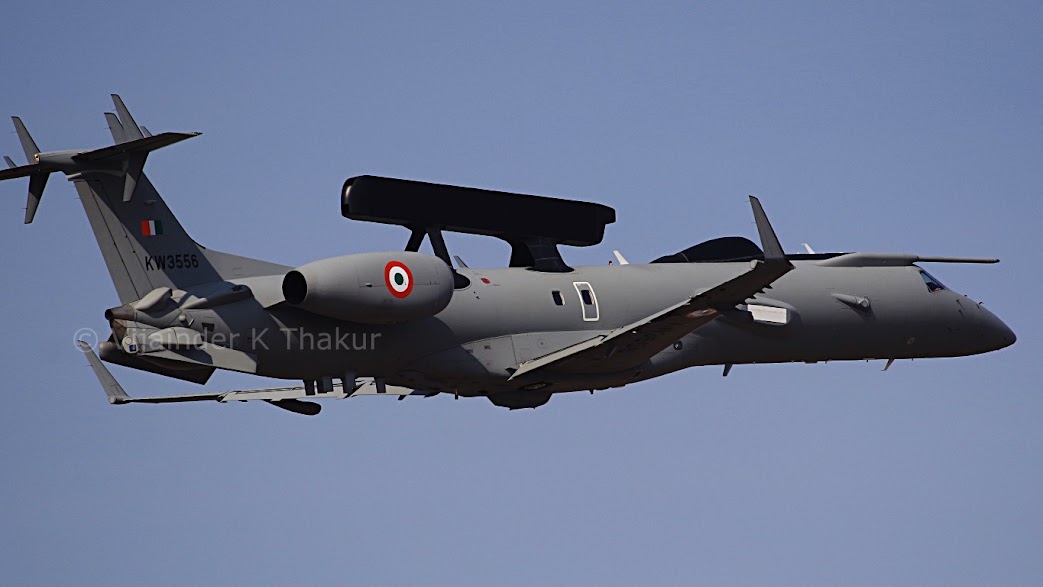
EMB-145 AEW&CS at Aero India 2015

Third & final Embraer EMB-145 for AEW&CS Project to Arrive in India July 4, 2015


The 3rd & final Embraer EMB-145 (KW-3554) for AEW&CS project is to arrive in Ahmedabad on July 4, 2015. The aircraft was earlier scheduled to be delivered in December 2014.

Embraer has so far delivered 2 EMB-145I aircraft to India. The first EMB-145 to be delivered to India under the contract ceremonially rolled out in Brazil on February 21, 2011.

Two EMB-145 aircraft fully configured in the AEW&CS role - fitted with CABS developed actual AESA radar antenna in the dorsal units, operator workstations (five), avionics racks, rest crew seating, seats and cabling -  are undergoing acceptance tests by an IAF technical evaluation team.

DRDO will deliver the first AEW&CS aircraft to the IAF within six months, DRDO Chief Avinash Chander told The Hindu on August 2, 2014.

IDP Sentinel members can read more at

AEW&CS Project - IDP Sentinel

Indian Navy Procuring 5 Diving Support Vessels


The Indian Navy on June 8, 2015 released a RFI for construction and delivery of  5 Diving Support Craft.

The Navy is seeking self propelled Diving Support Craft, capable of fully supporting operational/training dives in harbors and coastal waters.

The vessel, to be manned by 2 officers and 20 sailors, should be less than 30-m in length with draught not exceeding 2.5 m. It should be capable of operating in sea State 3 and be seaworthy up to Sea State 4.

The vessel should be capable of operating in tropical conditions and have an expected life of 20 years with annual usage of approx 800 hrs. The Main and auxiliary machinery should permit continuous mission time of 48 hours.

Max speed of 16 Kt is required at upto 85% MCR of Main Engine. Endurance should be 72 Hrs at economical speed with 25% reserve fuel capacity.

Onboard diving equipment is detailed in the RFI.

IDP Sentinel members can view recent Navy RFIs at

Recent Navy RFIs - IDP Sentinel

Tuesday, June 9, 2015

LR-SAM / Barak-8: Deadly End Game!

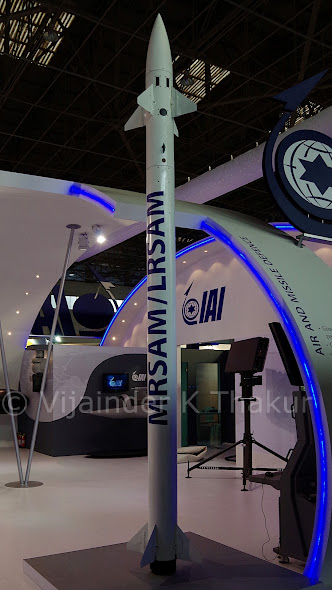
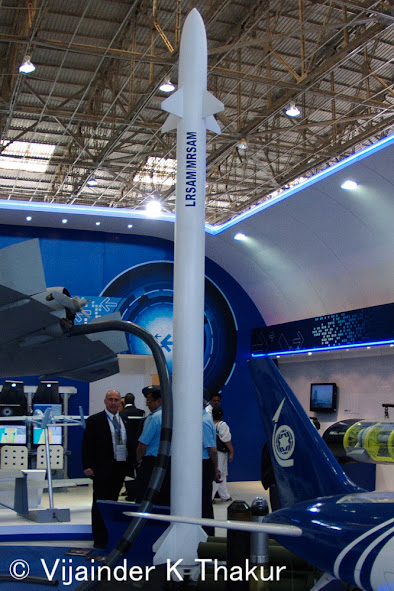
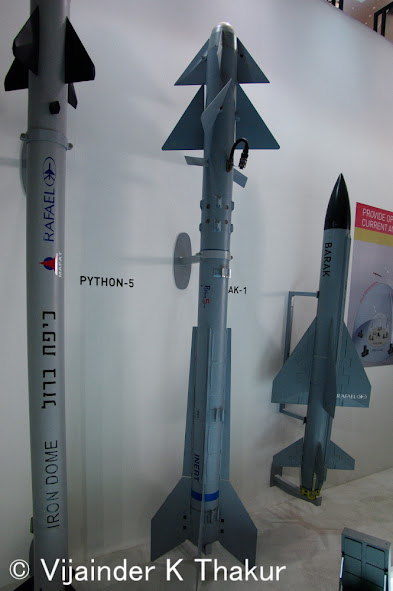
LR-SAM at Aero India 2013

The Barak-8 and its DRDO variant LR-SAM, the chosen Point Defense System for large Indian warships, features a smokeless dual pulse motor that makes the missile highly maneuverable and fast at target interception range throughout the missile's wide envelope. This is evident from the video of the missile test in November 2014.


The missile is moving so fast during the end game that the target RPV appears to stand still in the air!

Note how the smokeless, but not entirely smokeless, rocket motor is still burning at impact.

Pulsed Rocket Motor


A pulsed rocket motor has multiple propellant segments, with a barrier that stops ignition separating any two segments. When one segment burns out the missile coasts till another segment is ignited.

A shortcoming of conventional solid propellant rocket motors is that they cannot be switched off and reignited, as is the case with liquid propellant rocket motors. A pulsed rocket motor addresses the shortcoming.

Without a pulsed motor, an air-to-air or surface-to-air missile rapidly loses speed and maneuverability after motor burnout. Such missiles are unable to engage hard maneuvering targets nearing the limit of their engagement range.

A pulsed rocket motor allows the missile to coast and then reignite its motor after seeker lock making it difficult for the target to throw off the missile.

Each pulse can have different thrust level, burn time, and achieved specific impulse depending on the type of propellant used, its burn rate, its grain design, and the current nozzle throat diameter.

IDP Sentinel members can read more about Barak-8/LRSM/MRSAM at the link below

Barak-8 / MRSAM / LRSAM - IDP Sentinel

Monday, December 22, 2014

Reconnaissance and Surveillance Helicopters (RSH) RFI Response Date Extension Makes Ka-226 Front Runner

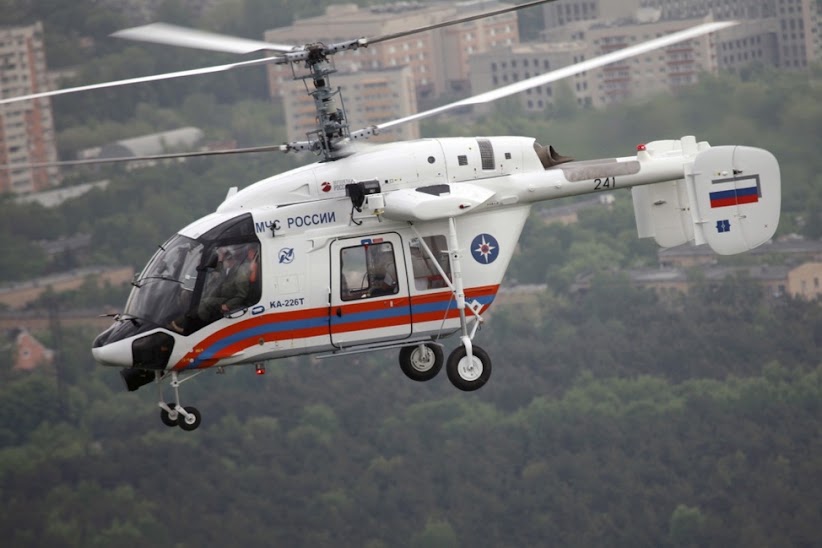
Photo Courtesy Russian Helicopters

India and Russia agreed in principle to assemble around 400 Kamov-226T helicopters a year in India,during Russian President Vladamir Pution's visit to India on December 11, 2014.

At a joint media interaction with President Putin, PM Modi said, "I am pleased that Russia has offered to fully manufacture in India one of its most advanced helicopters. It includes the possibility of exports from India. It can be used for both military and civilian use. We will follow up on this quickly." [via PTI]

The Kamov-226 was a contender in the July 2008 RFP for 197 military Light Utility Helicopters (LUH) to replace the existing fleet of Chetak and Cheetah helicopters in the three service. The RFP has since been scrapped.

Procurement has been re-initiated through a MoD RFI dated September 29, 2014 aimed at identifying probable INDIAN VENDORS (including an Indian company forming joint venture/ establishing production arrangement with OEM) who can provide Reconnaissance and Surveillance (RSH) Helicopters for use by the Indian Army (IA) and Indian Air Force (IAF), followed by licensed production / indigenous manufacture in the country.

The Kamov-226 is likely to become the leading contender for the RSH helicopter if India and Russia can quickly settle on the terms of joint manufacture.

It may be noted that the last date of acceptance of response against the RFI was initially November 11, 2014, but was later extended through a corrigendum to December 23, 2014. A second corrigendum extended the last date to February 17, 2015!

The Hindu on December 22, 2014 reported citing an unnamed source that no partner has been identified from the Indian side for partnering with Russia on the Kamov-226 project.

“Hindustan Aeronautics Limited is a major player but private sector is also part of the negotiations” sources told The Hindu.

MQ-4C Triton Broad Area Maritime Surveillance (BAMS) UAS Deal Likely During Obama Visit

Northrop Grumman MQ-4C Triton Broad Area Maritime Surveillance (BAMS) UAS first flight on May 22, 2013. Photo Credit: Northrop Grumman

The Hindu reported on December 22, 2014 that an agreement on the Northrop Grumman MQ-4C Triton Broad Area Maritime Surveillance (BAMS) UAS deal is likely during U.S. President Barack Obama's visit to India as the chief guest for Republic Day 2015.

In October 2010, India floated a Request for Information for a high-altitude, long-endurance UAS for use by the Indian Navy.

Northrop Grumman responded to the RFI pitching its MQ-4C Broad Area Maritime Surveillance (BAMS) unmanned aircraft system.

During DefExpo 2012 (March 29 to April 1), a Northrop Grumman official told Flightglobal that India would need six to eight BAMS to ensure continuous coverage of its coastline.

This number would allow India to keep a BAMS airborne all day, every day for 365 days a year.

The official pointed out that BAMS can network with Boeing P-8I Neptune LRMR aircraft acquired by the Indian Navy.

Northrop displayed a model of the MQ-4C at Aero India 2011

A potential stumbling block in the deal has been the international Missile Technology Control Regime, although India is not a signatory.

IDP Sentinel members can read more about the project at the link below.

Northrop Grumman MQ-4C Broad Area Maritime Surveillance (BAMS) Triton (IDP Sentinel)

Sunday, December 21, 2014

LCA Navy Maiden Ski Jump Details & Analysis

LCA Navy NP1 moments before lift off during maiden ski-jump take-off at SBTF at INS Hansa in Goa on December 20, 2014.


LCA Navy's maiden ski jump take-off at SBTF at INS Hansa on December 20, 2014 was a milestone event, not because it happened (Ski jump take-off are as old as the Harriers!), but because it happened in hands-off automated take-off mode!

Yes, LCA Navy feature hands-off take-off using ski-jump to ensure smooth transition to stable flight, and hands-off landing with steady AOA, autothrottle approach, flareless touchdown, and arrester hook engagement. During take-off and landing the pilot is required to only give steering inputs to stay on the center line.

According to a DRDO press release on the test flight, Naval Prototype 1 (NP-1) - piloted by Commodore Jaideep Maolankar, the Chief Test Pilot of National Flight Test Center - had a perfect flight with results matching the predicted ones to the letter. The flight validated the hands-off take-off algorithm of the Flight Control Software (FCS).

NP-1 attempted the ski-jump after a 300-m roll in clean configuration presumably with full internal fuel.

A safe take-off required 150 knot at a climb rate of 6.4 degrees. But, the aircraft achieved higher acceleration with a climb rate of around 11 degrees.

In the tests ahead, NP1 will progressively reduce the length of its take-off roll and increase payload. INS Vikramaditya, which could one day base LCA Navy, has a total deck length of 273-m. The maximum take off length available is between 160-180 metres.

The ultimate goal for the LCA Navy program is to demonstrate a full load take-off with 90-m roll.

Five more ski-jump take-offs are planned in the current series of tests.

"Based on the test points achieved, we will schedule the next leg of trials," DRDO Director-General (Aero) Dr K Tamilmani told OneIndia.com.

According to Tamilmani, NP-1 will start arrester hook landing trials within 6-8 months.

It's pertinent to remember that LCA Navy is in Phase-1 of its development, which involves using a LCA Mk-1 modified to take off using a ski jump and perform arrested landing. Phase 1 is a technology development and demonstration phase.

In Phase 2, LCA Navy will be certified for carrier operations using aircraft built in the Tejas Mk2 configuration, powered by GE-414-INS6 engine with a max thrust of 22,000 lbs.

Only Phase 2 aircraft will participate in carrier operation certification, with Phase 1 aircraft being reserved exclusively for SBTF operations.

IDP Sentinel Members can read more about the LCA Navy project at the link below.

LCA Navy (IDP Sentinel)

Wednesday, December 10, 2014

INS Vikramaditya Post Warranty Support


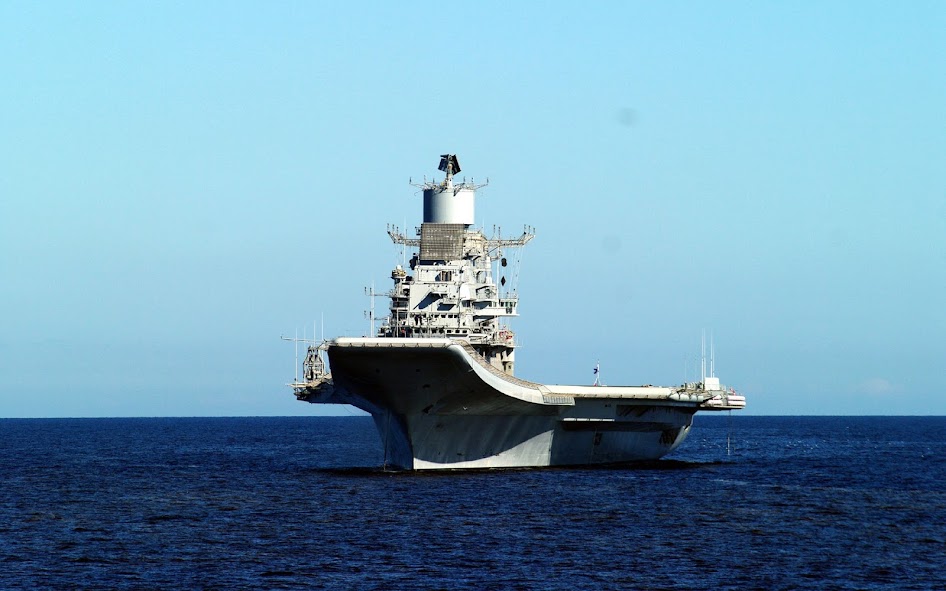
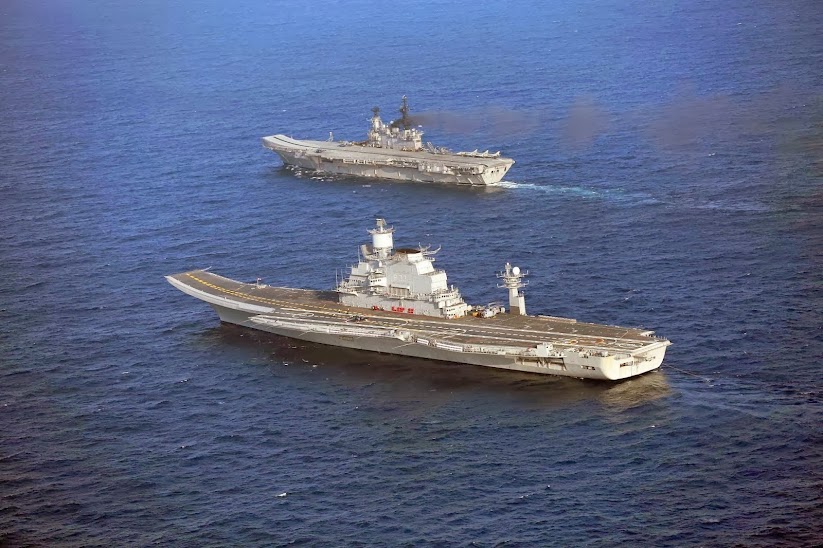
INS Vikramaditya

The warranty period for Russian built INS Vikramaditya expired on November 16, 2014.

MoD has signed a post warranty support contract for the aircraft carrier with Rosoboronexport, United Shipbuilding Corporation (USC) and Shipyard Sevmash.

Under the contract, a group of 23 specialists from Sevmash in Severodvinsk, Russia will be permanently stationed  at Karwar to address day-to-day issues, such as supplies of spare parts and equipment requiring maintenance or repairs. Also, the shipyard will make arrangements for the annual overhaul together with a maintenance group from Russia.

Other than providing maintenance support and spare parts for the ship, Sevmash will also maintain onshore facilities in four shipyards in India.

In January 2014, India proposed to Russia's Sevmash an extension of INS Vikramaditya's warranty period from the current 20 years to 40.

“Our Indian partners have proposed to conduct all service work on the ship together with Sevmash,” Sevmash said.

IDP Sentinel members can read more at the link below

INS Vikramaditya - IDP Sentinel

Monday, November 3, 2014

Trials of DRDO Developed AIP Plug for the 4th & 5th Project 75 Scorpenes to Start in Feb 2015


Scorpene Sub

November 3, 2014: The fifth and sixth Project 75 Scorpene submarines to be built at Mazagon docks will feature DRDO developed Air Independent Propulsion (AIP), which will be ready for sea trials by February 2015

Without AIP, a Scorpene sub can stay underwater for a maximum of four days; thereafter it needs to surface and re-charge its batteries using diesel gensets. French firm DCNS, which developed the Scorpene, has its own 300-t, second generation AIP plug that can allow the boat to stay under water for as much as three weeks,  but the Indian Navy has opted to go with a DRDO developed AIP which has been proven on a land-based prototype.

DRDO DG (Naval Systems & Materials), V. Bhujanga Rao told The Hindu that the French MESMA AIP being offered for the Scorpenes is an old system with a steam turbine.

According to Rao, the DRDO AIP could later be reconfigured for the submarines to be acquired under Project 75I .

Earlier, the Indian Navy asked MDL to equip the fifth and sixth boats with Air Independent Propulsion by fitting an additional section.

The four Scorpenes launched earlier could be retrofitted under an upgrade program.

Philippe Berger, former submariner and submarines operational marketing manager of DCNS, told Indian journalists in October 2014 that DRDO will be fully responsible for its AIP plug.

"Our scheme is limited to integrating safely the DRDO-developed AIP plug to the submarine. We are working on designing the hull section in detail for this,” Mr. Berger told Indian journalists at the DCNS facility, which houses the “fully tested operational-scale fuel cell AIP.”

IDP Sentinel members can read more about Indian Navy's Project 75 Scorpene subs at the link below

Project 75 Scorpene Submarines (IDP Sentinel)

Thursday, October 9, 2014

Naval Utility Helicopter (NUH) Procurement Moved Under Buy and Make (Indian) Category

Eruocopter  AS565 MB Naval Panther, a military variant of the Dauphin, is a likely contender for the IN's Naval Utility Helicopter project. Photo Credit: Eurocopter
MoD on October 8, 2014 released a RFI for procuring more than 100 Naval Utility Helicopters (NUH) under Buy and Make (Indian) category of the Defense Procurement Policy.

The NUHs will replace the ageing Chetak helicopters in service with the IN and be used for


  1. Search and Rescue.
  2. Medical Evacuation (MEDEVAC).
  3. Communication Duties.
  4. Anti-Piracy and Anti-terrorism.
  5. Humanitarian Assistance and Disaster Relief (HADR).
  6. Limited Maritime Reconnaissance and Targeting.


The NUH would be procured along with Full Mission Simulators and other associated support equipment.

It may be recalled that on August 7, 2012  MoD had invited tenders 56 Naval Utility Helicopters to replace its fleet of ageing Chetak helicopters.

The RFP was issued to several major helicopter, firms including AgustaWestland, Bell Helicopter, Eurocopter and Russian Helicopters.

Two companies responded to the RFP - Eurocopter AS565 MB Naval Panther, a military variant of the popular Dauphin, and the AgustaWestland AW139.

The earlier procurement has now been halted, with the MoD opting for a fresh round of tendering under the category of 'Buy & Make (Indian)' as stipulated at Para 4(c) and 25 (a) of Chapter I of DPP-2013.

The Buy and Make (India) category involves initial off the shelf purchase from an Indian vendor (including an Indian company forming joint venture/ establishing production arrangement with OEM), followed by licensed production/ indigenous manufacture in the country.

Items supplied off the shelf under the category may not have any indigenous components, but locally manufactured systems are required to have minimum 30% indigenous content on cost basis to begin with,  and eventually 50% indigenous content. (Indigenous content in the total of (i) Basic Cost of Equipment; (ii) Cost of Manufacturers’ Recommended List of Spares; and (iii) Cost of Special Maintenance Tools and Special Test Equipment must be at least 50% of the total contract value. (Reference parts 1(a), 1(c) and 1(d) of “Commercial Offer”, Appendix G to Schedule I of DPP 2013)

Qualitative Requirements


The NUH is required to be twin-engined  with wheeled landing gear and folding rotor blades. It should be capable of operating from ship and ashore and be able to carry weapons in support of its maritime surveillance and targeting capability.

Earlier, HAL expressed its inability to bid against the requirement citing challenges in modifying its Dhruv to feature folding rotor blades.

Recent Navy RFIs (IDP Sentinel Members Only)

Sunday, September 28, 2014

Navy Seeks Anti Missile Decoy for Naval Warships


INS Kolkata D63 during commissioning trials.

The Indian Navy has sent out a RFI for an Anti Missile Decoy system that would give warships 360-deg in azimuth protection against anti-shipping missiles.

The system would comprise of one or more of the following elements

(a) Chaff dipoles dispenser.
(b) Active Off-board Decoy.
(c) Inflatable Floating (waterborne) Decoy with corner reflectors.
(d) IR Decoy

The decoy is intended for fitment on warships of various sizes as follows

(i) Missile Boats 200 T
(ii) Missile Corvettes 1,500 T
(iii) Patrol vessels and Frigates 3,000 T
(iv) Destroyers 6000 T
(v) Fleet Tankers / Support Ships 20,000 T
(vi) Aircraft Carriers 50,000 T

The decoy should be capable of being deployed in the following modes:

(a) Confusion Mode – Deployment of the decoy prior launch of the missile by hostile force.
(b) Distraction Mode – Deployment of the decoy prior commencement of transmission by the inbound missile radar seeker.
(c) Seduction Mode – Deployment of the decoy after commencement of transmission by the inbound missile radar seeker

Besides other details, vendors have been asked to specify the 'Bloom Time' of the system and the probability of success. 

Bloom Time or activation time is the time between launch of the decoy from operating platform and activation of decoy at the designated position post launch.

The Fire Control System (FCS) for the decoy system should be capable of 

(a) Accepting requisite input data both manually (fed by operator) and automatically (based on data being provided from ship sensors in a standard format).
(b) Computing mission parameters for accurate deployment of decoy(s).

Kavach

DRDO developed Kavach is a ship based decoy system deployed on several Navy ships to counter radar guided antii-shipping missiles by dispensing chaff using rockets, but compared to the system being sought the protection provided by Kavach is very limited in scope.

The 'Kavach' system releases chaff made of silver coated glass fiber. Suspended in the air. The radar reflecting chaff presents an incoming guided threat an alternative target with stronger radar signature than the ship, confusing the missile and causing it veer off the target towards the chaff.

The chaff dispensing rockets used by the Kavach system are made at Ammunition Factory Khadki (AFK).

AFK has developed three versions of Kavach chaff dispensing decoy rockets with ranges of 12 km (long range); 5 km (medium range) and 1 km (short range) chaff rockets.

Monday, September 22, 2014

GoI to Scrap Current Naval Multi-Role Helicopter (NMRH) Procurement in Favor of Buy and Make Indian? Advantage HAL!

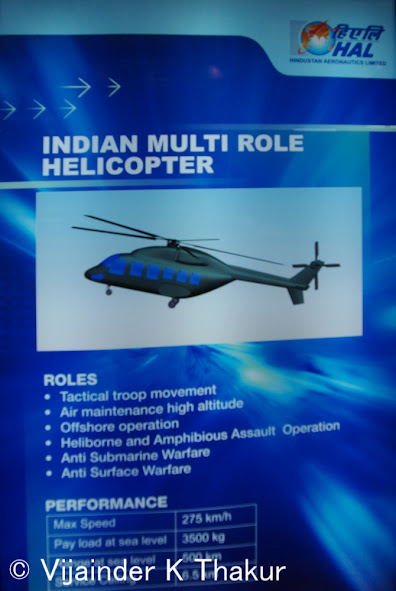
HAL's Multi Role Helicopter could now become the leading contender to fulfill IN's NMRH requirement

The Financial Express reported on September 20, 2014 that GoI is likely to scrap the currently underway procurement of 16 NMRH and requests fresh proposals under "Buy and Make in India" category of defense procurement. The Indian Navy plans to eventually acquire 91 NMRH. (As in September 2014, the Navy had 11 Kamov-28 and 17 Sea King ASW helicopters. The Sea Kings are over 20 years old, the Kamov-28s are due for mid-life upgrade.)

Eighty percent of the cost of development and prototyping under "Buy and Make in India" would be borne by the government, with the developing agency (DA) footing the residual 20%.

Scrapping of the ongoing procurement of 16 NMRH from global vendors would be formally announced after the next meeting of the Defense Acquisition Council (DAC) at the end of this month, official sources told FE.

The change in policy would make HAL's Multi-Role Helicopter project a front runner to meet the Navy's long term requirement.

IDP Sentinel members can view additional details at the links below.

Naval Multi-Role Helicopters (NMRH) (IDP Sentinel)
Indian Multi Role Helicopter (IDP Sentinel)

Sunday, August 24, 2014

LR-SAM - Why it's Worth the Wait!

LR-SAM at Aero India 2011

One of the reasons why the Navy isn't as worried as the defense journos that INS Kolkata was commissioned with 48 empty cells of vertically launched Long Range Surface to Air Missiles (LR-SAM) that are to shield it against an attack by anti-shipping missiles, is because the missile system, when it's finally installed, would give the warship the best protection money can buy  in the world today! You can cross check that claim with any Navy man - he will agree!  What is confounding is the missile hasn't been tested even once! The confidence reposed in the missile system stems from its pedigree. It's basically an Israeli missile.

Former Navy Chief, Admiral Arun Prakash gives an interesting insight in today's Business Standard as to how the missile came to be the most coveted AD weapon system on Indian warships.

He recalls how the Israeli Navy, on behalf of its defense industry, offered the Indian Navy the long-range SAM with "superior anti-aircraft and anti-missile defense capabilities" in 2004-05.

"The 'cherry on the cake' was to be the new multi-function phased-array radar that accompanied it. There was no altruism behind this offer; the small numbers required by the Israelis made the project economically unviable for them, and there were not many nations they could trust with such sensitive technology. Driving a hard bargain, the IN obtained Israeli agreement for joint development and co-production of systems.

"Showing eminent good sense and pragmatism, the DRDO leadership agreed to the navy's proposal for a path-breaking tripartite collaborative arrangement with the Israelis for the development of the LR-SAM. The funding as well as manpower liabilities were shared by the IN and DRDO. The project, involving DRDO scientists, naval engineers and the defense-industry has rendered tremendous benefits to all three participants and, notwithstanding development delays, will bring the IN to front rank of navies technologically."

DRDO Chief, Avinash Chander, in a recent interview gave his own insight into the project. He said, "The Armed forces had actually tried to buy such a system from abroad, but nothing was really available that would come with satisfactory terms. And that is how we got into a joint venture with Israel, the system had to be developed ab initio. So there were issues with respect to radar development, issues with respect to the actuation system as well which was initially supposed to be pneumatic but then had to be changed to electromechanical. Then there was the two pulse motor which was being done for the first time and that got into certain combustion stability problems. But the good news is that all those problems have now been overcome. We launched a massive program on the rocket motor and today we have a motor which is stable and will be tested shortly."

There is a lot more to the LR-SAM project, only for IDP Sentinel members, at the link below:

Barak-8 / MR-SAM / LR-SAM - IDP Sentinel


DRDO Developing Long Range Anti-Shipping Ballistic Missile to Counter China's DF-21D

When sailing in the Bay of Bengal Indian aircraft carriers can be easily targeted by Chinese DF-21D missile

DRDO is working on a Chinese DF-21D missile analog.

August 24, 2014 - DRDO Chief Avinash Chander told the press recently that the DRDO is developing a long range anti-shipping ballistic missile capable of striking enemy aircraft carriers 1500-2000 km from our shores.

"The long range anti-ship missile is on the drawing board, and we are confident that in about six years we would be able to get it ready," Chander said.

Somewhat similar to the Chinese DF-21D, the missile would follow a ballistic trajectory to evade ship based radars and use its seeker to locate and strike an aircraft carrier. Chander didn't say how the initial targeting information would be obtained. 

Warships comprising a carrier group are honed to detect and engage low to medium level threats, such as fighter aircraft and anti-shipping missiles launched from stand-off ranges. Their radar beams don't look up beyond around 60-deg exposing the carrier to ballistic missiles attack. 

The challenge in developing an anti-shipping ballistic missile lies in obtaining initial targeting information and end-game tracking of a carrier moving at around 30-kts (60 kph). Airborne ISR assets employed to obtain targeting information can be easily engaged and neutralized by carrier group warships in a protective cordon around the aircraft carrier. Low level satellite coverage can do the job if it's persistent, which requires a a large satellite constellation of low orbit satellites to be deployed, a very expensive proposition.

IDP Sentinel members may also like to read updates on the following projects

Wednesday, August 6, 2014

Navy Initiates Procurement of Short Range Surface-to-Air Missile (SRSAM) System for Naval Surface Platform: IDP Exclusive!

Bara missile, a possible SRSAM contender, on display at Aero India 2011
The Indian Navy on August 6, 2014 initiated procurement of a Short Range Surface to Air Missile (SRSAM) System for Indian Naval ships.

The Navy appears open to both vertical launch, canister based missile system; or over the deck, mechanical, rail launched system featuring automating loading from below deck missile storage compartments. The former are better suited to stealthy warships.

The system is required to be capable of engaging targets traveling at up to Mach 3.

The type of initial guidance is not stipulated but the missile is required to feature active RF seeker for the terminal guidance.

A minimum service life of 10-years is mandated, with provision to extend the life based on periodic inspection. The entire system should be easily transportable from ashore to a ship in containers mounted on vehicles.

The Navy's willingness to accept an over the deck rail launch could mean the immediate requirement is for a non stealthy warship.

It maybe noted that INS Vikramaditya currently does not have a Close-In Warfare System (CIWS) to neutralize anti-shipping missiles, or a long range Point Defense Missile System (PDMS) system to defend against fighter and bomber threats.

The CIWS is slated to be fitted in April-June 2015 at the Karwar naval base. On June 18, 2014, Indian Express reported that the an AK 630 system manufactured in India would be fitted.

Navy sources told The Tribune in June 2014 that the PDMS would be either the Israeli Barak or Russian Shitil missiles.

IDP Sentinel members can access more information at the link below

Short Range Surface to Air Missile(SRSAM) System for Naval Surface Platform (IDP Sentinel)


Saturday, July 26, 2014

India Pushes Ahead with Kilo Class Submarine Upgrades

IN Kilo class submarine after overhaul in Russia. Photo Courtesy Indian Embassy in Russia, credit: KR Deepak

India has asked Russia to upgrade another two Russian Kilo Class submarines (Type 877EKM) submarines, RIR reported on July 25, 2014.

The director-general of the Rubin Central Maritime Design Bureau Igor Vilnit told the website, "The Indian governments filed a request to the Russian Federal Service for Military-Technical Cooperation to extend the life of two Russian Kilo Class submarines."

Specialists of the Zvyozdochka ship repair center and the Rubin design bureau are expected to leave for India to inspect the first submarine.

Earlier on December 3, 2013, Vice-Admiral Satish Soni, Flag Officer Commanding-in-Chief of the Southern Naval Command, told the press that the Indian Navy (IN) intends to get four of its Kilo class subs overhauled in Zvezdochka shipyard in North Russia to extend their lives by another 10 years.

Also, the General Director of the Russian submarine repair yard Zvyozdochka in north Russia, Vladimir S. Nikitin, told The Hindu that the shipyard was close to signing a contract for life-extension refit of two Indian Kilo-class submarines in 2015.

In January 2013, the Indian Navy (IN) completed the overhaul and upgrade of its Kilo class (Project 887EKM) submarines in Russia under a deal signed in 2001.

Each upgrade cost $80 million and involved complete overhaul of the submarine and its hull structures; installation of an improved control system, sonar, electronic warfare system, and an integrated weapon control system. Additionally the subs were equipped to launch Club-S missiles from its torpedo tubes.

The refit included support for the new version of Klub-S (3M54E1 anti-ship and 3M14E land attack) cruise missiles and over ten Indian and foreign-made systems including the Ushus hydro-acoustic (sonar) system and CSS-MK-2 radio communications system.

In addition, the boat's cooling system was modified, the Porpoise radar fitted and other work carried out "increasing the boat's military capacity and safety."

Two submarines - INS Sindhuvir and INS Sindhuraj - were modernized at the Admiralty Shipyard in St. Petersburg.

Later, five subs - INS Sindhukesari, INS Sindhuratna, INS Sindhugosh and INS Sindhuvijay and INS Sindhurakshak - were modernized at  - Zvyozdochka Shipyard in Severodvinsk.

Of the remaining 3 subs, one has already been overhauled in India, and another two are in the process of being overhauled.

Kilo class submarines were developed by the Rubin Central Design Bureau (St. Petersburg).

IDP Sentinel members can read more about the Kilo Class submarine overhaul project at the link below.

Kilo Class submarines upgrade (IDP Sentinel)


Wednesday, July 2, 2014

Indian Navy's First Time Participation in RIMPAC with INS Sahyadri

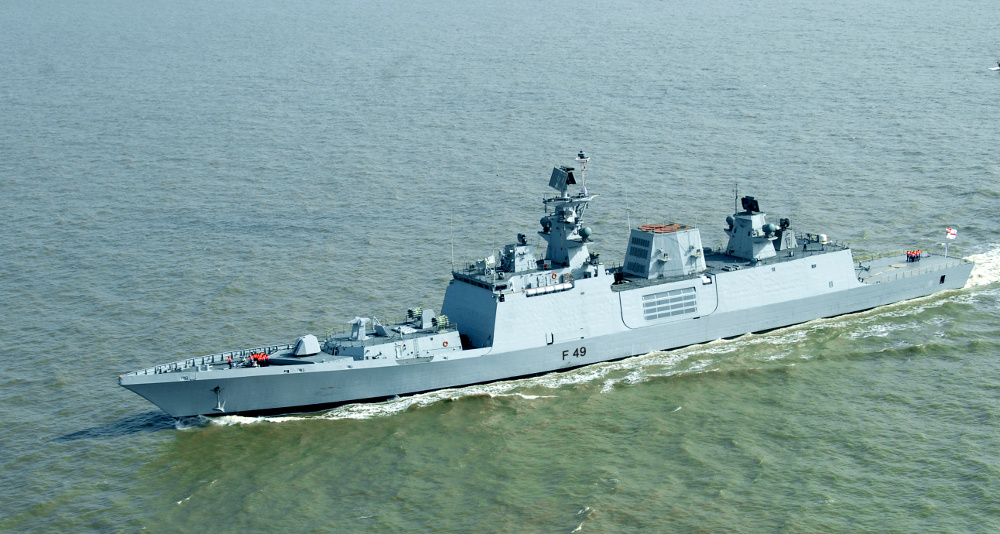
INS Sahyadri

Indian Navy's INS Sahyadri, a Shivalik class guided missile stealth frigate with 6,200-t displacement arrived in Honolulu recently to participate in RIMPAC-14, which kicked off today and will wind up on August 2, 2014.

The Indian Navy is participating in the exercise for the first time with one ship.

Other countries participating are Australia, Brunei, Canada, Chile, China, Colombia, France,Indonesia, Japan, Malaysia, Mexico, Netherlands, New Zealand, Norway, Peru, the Philippines, Singapore, South Korea, Tonga, the United Kingdom, and the United States.

China is participating with four ships - a destroyer, frigate, supply ship, & hospital ship

INS Sahyadri arrived at Pearl Harbor after sailing over 5,000-nm, stopping en-route at Darwin, Australia on June 13 and 14.

Rim of Pacific (RIMPAC) is a US led exercise held biennially during June and July of even-numbered years from Honolulu, Hawaii. RIMPAC has 23 member countries from the Pacific Rim and beyond, and 3 observer nations.

The exercise consists of a harbor phase involving professional interactions, military symposiums, sports events and social fixtures; followed by a Sea Phase, that covers the entire gamut of maritime operations including anti-surface, anti-submarine, anti-air and Carrier Strike Group operations.

IDP Sentinel members can read more about Shivalik Class frigates at the link below

Project 17 Stealth Frigates: INS Shivalik, INS Satpura, INS Sahyadri - IDP Sentinel