Showing posts with label Air Force. Show all posts

Monday, December 22, 2014

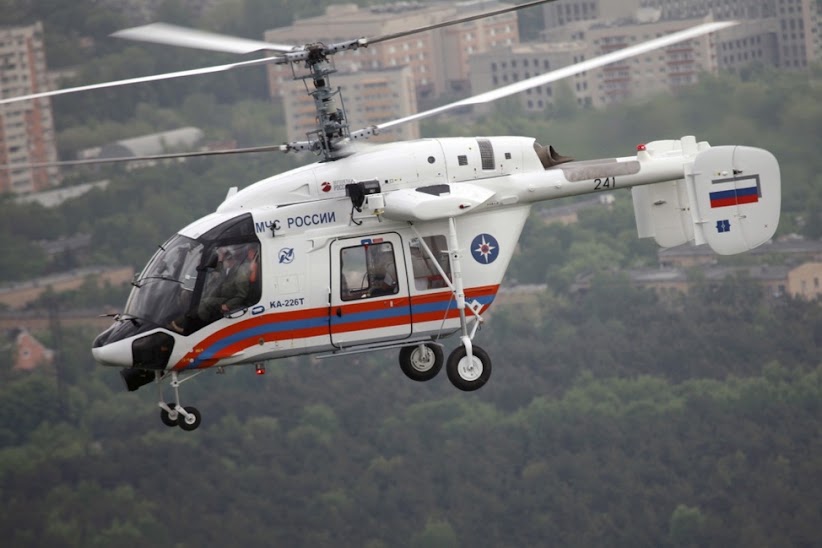
Reconnaissance and Surveillance Helicopters (RSH) RFI Response Date Extension Makes Ka-226 Front Runner

Photo Courtesy Russian Helicopters

India and Russia agreed in principle to assemble around 400 Kamov-226T helicopters a year in India,during Russian President Vladamir Pution's visit to India on December 11, 2014.

At a joint media interaction with President Putin, PM Modi said, "I am pleased that Russia has offered to fully manufacture in India one of its most advanced helicopters. It includes the possibility of exports from India. It can be used for both military and civilian use. We will follow up on this quickly." [via PTI]

The Kamov-226 was a contender in the July 2008 RFP for 197 military Light Utility Helicopters (LUH) to replace the existing fleet of Chetak and Cheetah helicopters in the three service. The RFP has since been scrapped.

Procurement has been re-initiated through a MoD RFI dated September 29, 2014 aimed at identifying probable INDIAN VENDORS (including an Indian company forming joint venture/ establishing production arrangement with OEM) who can provide Reconnaissance and Surveillance (RSH) Helicopters for use by the Indian Army (IA) and Indian Air Force (IAF), followed by licensed production / indigenous manufacture in the country.

The Kamov-226 is likely to become the leading contender for the RSH helicopter if India and Russia can quickly settle on the terms of joint manufacture.

It may be noted that the last date of acceptance of response against the RFI was initially November 11, 2014, but was later extended through a corrigendum to December 23, 2014. A second corrigendum extended the last date to February 17, 2015!

The Hindu on December 22, 2014 reported citing an unnamed source that no partner has been identified from the Indian side for partnering with Russia on the Kamov-226 project.

“Hindustan Aeronautics Limited is a major player but private sector is also part of the negotiations” sources told The Hindu.

Wednesday, November 12, 2014

FGFA License Production Preferable, Hints Russian Official?

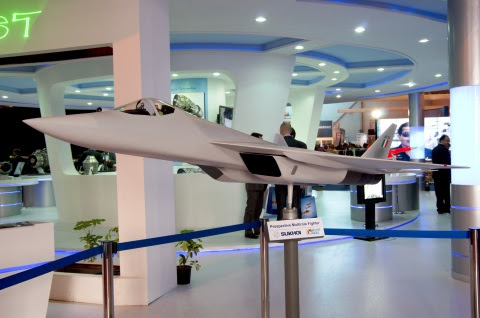
FGFA scale model at Aero India 2013.

An official of Russia's UAC, the group that owns Sukhoi, hinted that license production of FGFA maybe a better option for India than co-production. He cited the success of the Su-30MKI program.

UAC's Mikhail Pogosyan told Russian news agency TASS on Tuesday that no timeline could be projected for finalization of the FGFA contract between India and Russia because of differences.

"There are several issues related to the organization of the work, the terms, the cost and technical details. This requires certain time and the corresponding coordination procedure at the level of governments of both countries,” Pogosyan said.

He then referred to the licensed production of the Su-30MKI in India and said, “In general, the program of licensed production of the aircraft develops successfully.”

It could be the translation. Or it could be a hint!.

Anyway, as is the case with Brahmos, labeling FGFA as co-development is a farce. It's unreasonable for India to expect Russia to part with stealth technology for just $5.5 billion. Paying them more would not help either.

What would really help is stepping up funding for the AMCA!

Friday, November 7, 2014

IAF's Avro Replacement Program: Tata Advanced Systems (TASL) Details Joint Bid with Airbus for C295

Spanish Air Force C295. Photo Courtesy Airbus Industries.
November 7, 2014 - Tata Advanced Systems (TASL) in a press release today confirmed that it has teamed up with Airbus Defense and Space to plug the Airbus C295 as Avro replacement for the IAF.

Airbus Defense and Space is a division of Airbus Group responsible for defense and aerospace products and services.

The MoD on May 8, 2013 sent out requests for proposal (RFPs) to eight leading aircraft manufacturers for the supply of 56 transport aircraft to replace the IAF's aging Avro fleet, at an estimated cost of Rs 13,000 crore. As stipulated by the MoD RFP, Airbus Defense and Space has offered to supply the first 16 aircraft in ‘fly-away’ condition from its own final assembly line. The subsequent 40 aircraft would be manufactured and assembled by Tata Advanced Systems in India as exclusive Indian Production Agency (IPA) for Airbus.

Airbus says in the press release

"We firmly believe that, in the C295, we have clearly the best aircraft to replace the IAF Avro fleet and, in Tata Advanced Systems, we have secured the cream of the Indian private aerospace sector as our partner for this project.

"The C295 is a superbly reliable and tough aircraft with outstanding economics which is proven in the most difficult operating conditions all over the world. It has already been ordered by 19 countries, many of which have placed repeat orders. And just this year it has dominated the market with orders for no fewer than 20 aircraft from five countries."

The Business Standard reported on November 1, 2014 that only Airbus Defense and Space, and Tata Advanced Systems Ltd (TASL) consortium has submitted a bid the Medium Transport (Avro Replacement) Aircraft tender that closed on October 28, 2014. As such, MoD is likely to issue a fresh RFP since single tender procurement would require special sanction under the DPP.

Tata - Ruag Tie Up

It maybe recalled that on June 30, 2014 TASL and Switzerland's RUAG Aviation signed an agreement to set up a manufacturing unit in Hyderabad to make fuselages and wings for Dornier 228 New Generation (NG) aircraft. Speaking on the occasion TASL Chairman, S Ramadorai, said, "Our vision is to work with RUAG in having a full aircraft, equipped with all systems, flying out from a Tata Final Assembly. This will be of significant importance to the Indian armed forces in their desire to produce products locally.”

Do 228 NG is an improved version of the venerable Dornier Do 228  which has been in production since 1981. (HAL license manufactured the Do 228 at HAL Kanpur from 1983 onwards.)

If TASL's joint bid with Airbus for the Avro replacement program succeeds, TASL would become a credible supplier of civil transport aircraft for the Indian and Global markets with two aircraft types under production. Move over HAL!

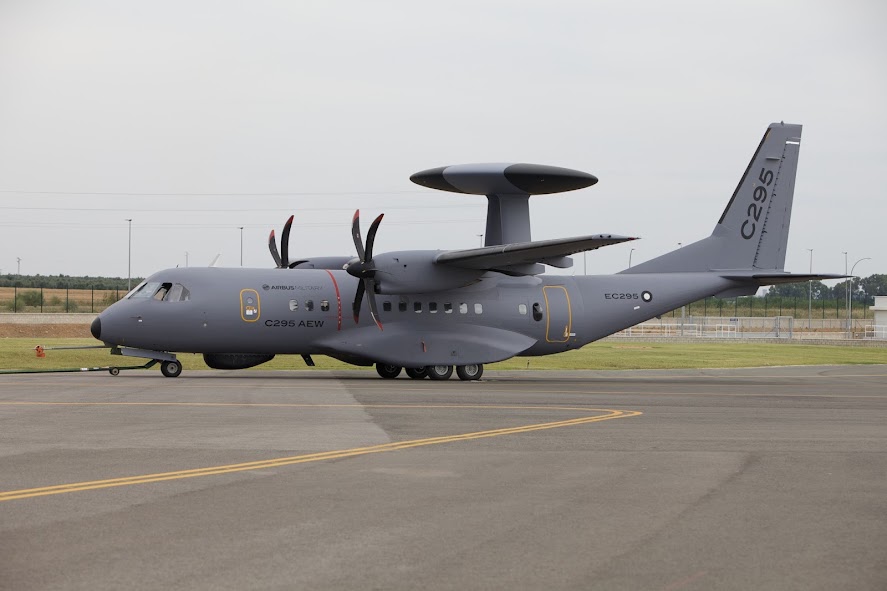
C295 AEW Variant

Airbus C295

The Airbus Military C295 can carry up to nine tonnes of payload or up to 71 personnel, at a maximum cruise speed of 260 kt / 480 kph. The aircraft is capable of short take-off & landing (STOL) from unprepared, soft and rough airstrips and features good low level flight characteristics.

Powered by two Pratt & Whitney Canada PW127G turboprop engines, it features good maneuverability, good hot and high performance, low fuel consumption, and nearly eleven hours endurance.

The C295 can be equipped as a air-to-air refueling tanker, AEW platform or a missile launch platform.

First delivered in 2001, the C295 was developed from the CN235.

IDP Sentinel members can read a lot more about the Avro replacement project at the link below.

Medium Transport Aircraft to Replace Avro-748s (IDP Sentinel)

Wednesday, October 1, 2014

DRDO Developing Gagan DGPS Based Automatic Take Off and Landing (ATOL) System


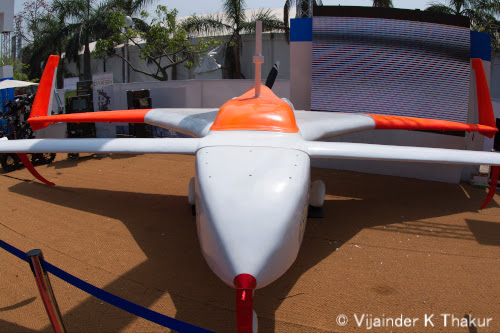
Rustom-1 MALE at DefExpo-2012

DRDO plans to carry out flight trials of a DGPS based Automatic Take Off and Landing  (ATOL) System.

Differential Global Positioning System (DGPS) is an enhancement to Global Positioning System that improves GPS location accuracy from the 15-meter nominal to an incredible 10 cm in a well implemented system!

The DRDO developed ATOL system would use Gagan DGPS developed by ISRO and DGCA which is now operational countrywide.

DRDO has equipped a Rutan Long Ez Manned Aircraft (YN7501) with Accord Technologies NexNav GPS-SBAS receiver and a GPS receiver with antenna for the trials which would be conducted at HAL Airport and Kolar Runway.

The Rustom-1 MALE developed by DRDO is basically an unmanned version of the Rutan Long Ez, a home built aircraft with a canard layout designed by Burt Rutan's Rutan Aircraft Factory.

Rustom-1 MALE has roughly the same performance as the Israeli Searcher UAV which is widely used by the Indian Army (IA) and the Indian Air Force (IAF). The IA has told DRDO that it will place orders for Rustom-1 only if the UAV is equipped with an ATOL system, as take-off and landing using an external pilot are accident prone.

DRDO's Aeronautical Development Establishment (ADE) has initiated procurement of the Cassidian MDR-NES (MLDRF) for fitment on the Rustom-1 to facilitate automated flare-out and landings. The GAGAN DGPS based system will facilitate taxying, take-off and alignment with the runway center line during approach.

ADE has sought vendor assistance in conducting the flight trials spanning around 10 hours through a recently released RFI. The selected vendor will conduct and manage the manned flights so that ADE can focus on the ATOL system performance.

Additional Reading


Sunday, April 27, 2014

IAF Akash Missile Twin Tests on April 26, 2014: Photos & Additional Details

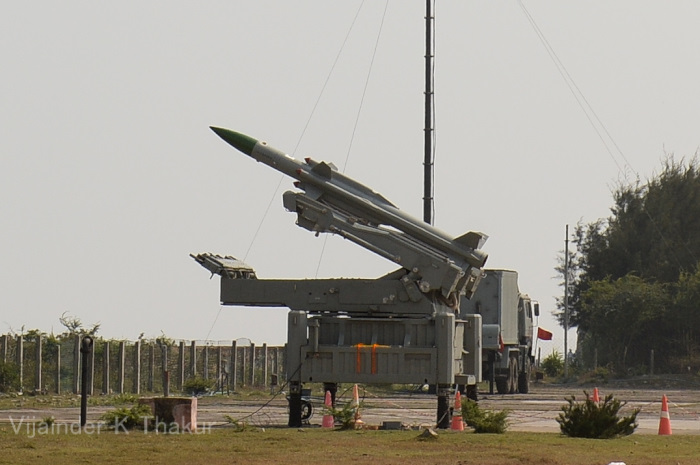
The second IAF Akash poised for launch during the twin missile test. Photo Credit: DRDO
DRDO has released additional details about the IAF's successful multiple launch test of the Akash missile at the ITR in Chandipur, Odisha on April 26, 2014.

Both the tests involved high speed maneuvering targets towed by Pilotless Target Aircraft (PTA), simulating enemy fighters. One missile engaged its target in the incoming mode and the other in the receding mode.

The Akash missile systems as well as the PTAs were operated by Indian Air Force personnel to simulate a realistic engagement to verify the missile's capability in different envelops.


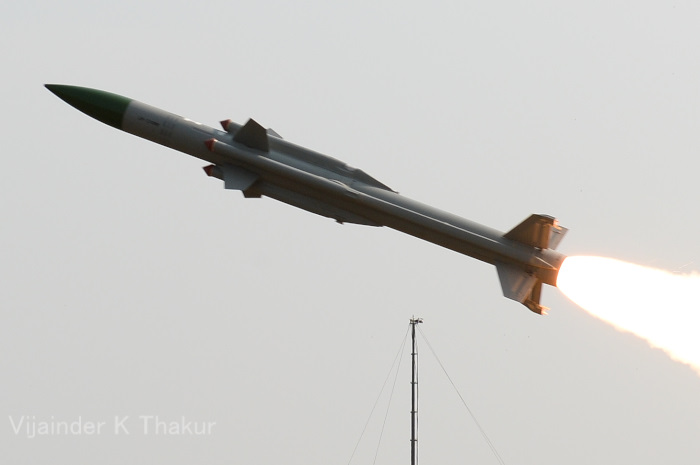
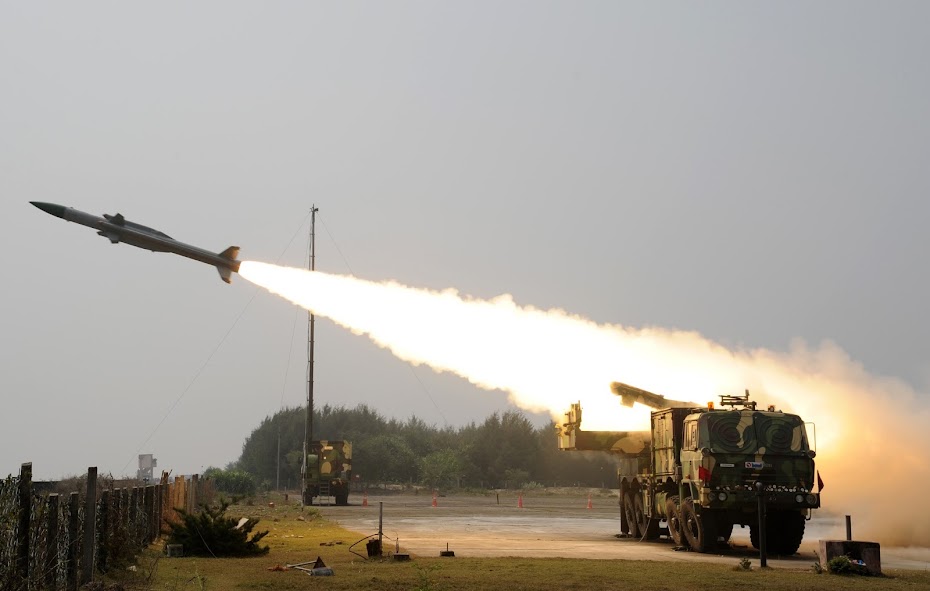
The first missile leaves its launcher during the April 26, 2014 test. Photo Credit: DRDO

Akash Missile Orders

The IAF has placed orders for a total of 8 Akash missile squadrons - An initial order for 2 squadrons in 2008 and a follow-up order for 6 squadrons in 2010. The Army has placed orders for two Akash regiments.

Akash missile is manufactured at Bharat Dynamics Limited (BDL). It's associated radars are produced by BEL, which  is the nodal production agency for the IAF order. (Interestingly, BDL is the nodal production agency for the Army order.)

Total production orders placed by Services (IAF and Indian Army) for Akash missile system roughly amounts to Rs 23,000 Cr. DRDO has so far delivered missile systems worth Rs 3,500 Cr to the services. 

In addition, the 3D-Central acquisition radar (3D-CARs) of the missile system. is being delivered to the three services against differeing requirements and is in continuous production.

A close up of the missile as it leaves its launcher. Note the guards on the four intakes of the ramjet second stage are still in place. Photo Credit: DRDO

IAF Order Fulfillment

The IAF has already inducted the two Akash missile squadrons delivered against its initial order. 

DRDO's press release for the April 26, 2014 tests suggests that the IAF asked for the missile tests on April 26, 2014 to reassure itself that production lot missiles would perform to their claimed specifications.

The press release also quotes Akash missile Project Director, Shri G Chandramouli as saying:

It is a notable achievement that the entire equipment of sophisticated radars, control centers, launchers & ground support systems for Indian Air Force have been realized and produced in less than two years indicating the integrated capability of DRDO, DDP, Inspection agency MSQAA and Indian Industry. A path has been created for continuous production of sophisticated surface to air missile systems in the country through this program. 

The statement suggests that though the IAF placed its initial order for two Akash missile squadrons in 2008, production didn't start till 2011 or 2012.

IDP Sentinel members can read more about the Akash missile at the link below

Friday, April 25, 2014

Akash Missile Test Failure Exposes Limitations? Maybe Not


Akash Missile Test on February 24, 2014. Photo Credit: DRDO

An official at the Integrated Test Range (ITR) at Chandipur in Odisha told the New Indian Express on Thursday, April 24, 2014 that the Akash missile test on April 23 by IAF personnel failed.

"The missile was to destroy the PTA at an altitude of nearly 2-km as per the pre-designated coordination. But the mission failed as the weapon could not destroy the target. Though it attained the desired altitude, it failed to pass through missed-distance proximity," said the official.

The proximity fuse of the missile can be variously set to explode within 10, 20 or 100 meters of the missile, according to the official.

Earlier in February 2014, DROD conducted a series of successful tests on the production models of the Akash being delivered to the Indian Army to equip two regiments. During the first test was on February 21, 2014 the missile successfully intercepted an approaching target being towed by a Laskhya PTA. In the second test on February 24, 2014, the missile scored a hit  on a receding target towed by a Lakshya PTA. A third test was carried out on February 26, 2014.

Following the February tests, DRDO said in a press release that mission objectives had been met. A "few more trials are planned in different engagement modes."

It is possible that the Thursday failure of the missile occurred during an engagement mode other than approaching or receding.

According to the DRDO, the fully-automated Akash has an 88% kill probability within a specified kill zone. In other words, if the PTA aircraft was maneuvering a single miss would not be alarming. If the PTA was not maneuvering the failure would certainly be disturbing.

Two more tests of the missile are reportedly planned as a part of the current series. If the failure on Wednesday was out of the ordinary, we could see an cancellation of the upcoming tests.

IDP Sentinel members can peruse additional information on the Akash at the link below.

Akash Missile (IDP Sentinel)


Monday, March 31, 2014

Ukraine Delivers 7th Batch of Upgraded An-32s

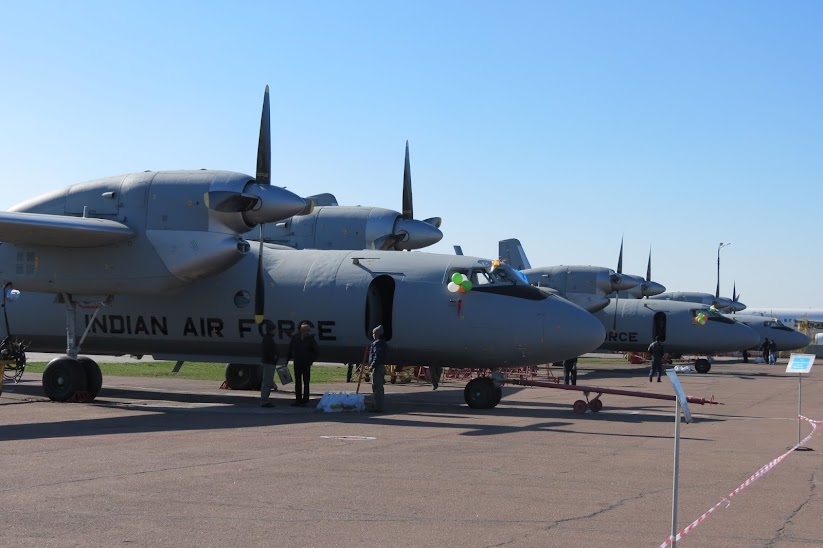
Seventh batch of upgraded An-32 aircraft delivered by Ukraine.
On March 29, 2014 Ukraine delivered the seventh and penultimate batch of five upgraded An-32 to India. The aircraft were flown from Kyiv in Ukraine to Kanpur in India under special arrangements made with Ukraine's European partners to permit the military aircraft to fly out of the country which is at loggerheads with Russia.

In July 2009, India and Ukraine signed a contract worth around $400 million for deep upgrade to the IAF's fleet of 105 An-32 aircraft.

Under the contract, 40 aircraft are to be modernized in Ukraine and the rest of the aircraft at the BRD-1, Kanpur.

Ukraine’s Antonov Plant and Civil Aviation Plant 410 are executing the contract.

The upgrade will make the An-32 lighter and more fuel efficient, and includes fitting of collision warning equipment, ground proximity early warning equipment, satellite navigation system, aircraft rangefinders, modernized height finders, new radar set with two MFDs, new oxygen equipment, and modernized crew seats.

Upgraded An-32 will be able to land making an ICAO category II approach.

In December 2009, India signed a separate three-year contract worth $110 million with Motor Sich OJSC (Zaporizhia) for upgrade of the AI-20 engines fitted on the Indian An-32s.

Ukraine delivered 10 upgraded aircraft to India in 2011, 2012 and 2013 each. The last batch of 5 upgraded An-32s was delivered in August 2013.

As of today, 35 aircraft, out of the 40 to be upgraded in Kyiv have been delivered.

The supply of the final batch of 5 aircraft is scheduled for the summer.

Antonov An-32 Upgrade (IDP Sentinel)

Friday, March 14, 2014

HAL and NAL Regional Transport Aircraft (RTA) Draws US Industry Interest?

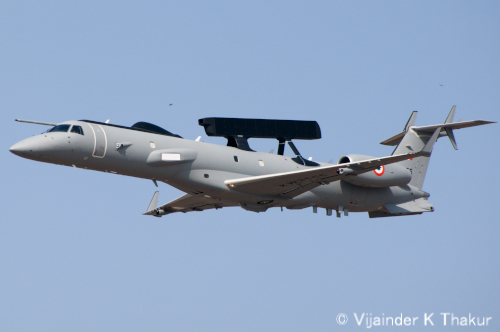
The Indian AEW&CS project is based on the Embraer EMB-145 regional jet


HAL and NAL, who have been hallucinating about developing planning to develop a 70-100 Seat Regional Transport Aircraft (RTA) since at least 2008, have claimed in a HAL press release that captains of American industry have shown interest in the project at the India Aviation show at Hyderabad (March 12-16) and are ready to collaborate on the project.

The assertion is surprising since in the past, speculation has centered on a RTA developed in collaboration with Canadian Bombardier or Brazil's Embraer. (Why Bombardier or Embraer would help HAL become a competitor in the limited market is anybody's guess.)

Technically, Bombardier is an American company, so maybe there is no reason to be surprised. More so since Boeing doesn't make RTAs.

Anyway, HAL and NAL propose to setup a joint venture with initial funding of Rs 20 crore to produce the RTA. The project has government backing despite serious doubts about the viability of a RTA in the Indian commercial aviation sector.

If the Indian RTA ever rolls out of a HAL manufacturing plant, it's likely to be lapped up only by Air India not any private airline;  with politics, not profits, as the imperative. And if the grossly mismanaged Air India ceases to exist by the time the HAL-NAL RTA rolls out, there is always IAF to dump the aircraft on.

Tuesday, March 4, 2014

Rafale: HAL, Dassault Agree on Workshare for Local Manufacture

Rafale at Aero India 2011. Photo Credit: Vijainder K Thakur

NDTV on March 3, 2014 reported that India and France have agreed on a work share agreement for the manufacture of 108 Rafales in India. HAL will do 70 per cent of the work on the 108 planes that will be manufactured in India. Dassault would do the rest of the work.

The first 18 aircraft ( 12 single-seaters and 6 tandem seaters) would be delivered to India by Dassault in fly-away condition. The IAF will raise its first Rafale squadron in Ambala using the 18 aircraft.

HAL will license manufacture the remaining 108 Rafales comprising 74 single-seaters and 34 tanden-seaters - 11 using semi-knocked down (SKD) kits, 31 using completely knocked down (CKD) kits, and 66 made from indigenously manufactured kits (IMK).

Rafale's radar would be manufactured by Bharat-Electronics Ltd (BEL) in Bangalore, and its radome at a new HAL facility close the BEL facility in Bangalore. 
India is negotiating a sovereign guarantee from France that Dassault will supply, service and maintain the Rafales over the next 40 years. 

In addition to the aircraft, the contract includes supply of two Rafale-specific full-motion tactical simulators, two fixed-base cockpit procedures trainers, two avionics part-task trainers, one aircraft systems maintenance simulator, one navigation-and-attack system maintenance simulator, and one engine maintenance simulator.

IDP Sentinel can view more details at the link Rafale (IDP Sentinel)

Saturday, February 15, 2014

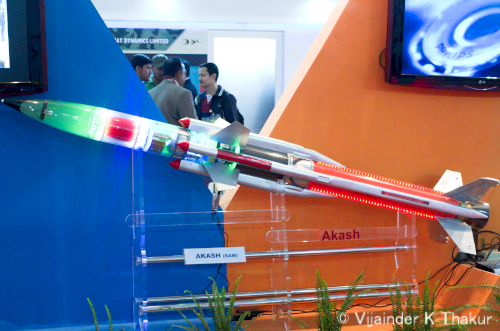
Akash Missile Model at DefExpo 2014 Showing Missile's Integrated Ramjet Rocket Propulsion

Akash Missile Model at DefExpo 2014 Showing the Missile's Integrated Ramjet Rocket Propulsion 
Bharat Dynamic Limited (BDL) displayed a model of the Akash showing the missile's unique propulsion system based on what was employed by the Russians for the SA-6 missile.

The ramjet-rocket propulsion combination provides thrust to the missile right through to target engagement, ensuring the missile can maneuver at high G till impact. The missile is initially propelled by its solid fuel rocket motor. When the solid fuel burns out completely its containers serves as the combustion chamber for the ramjet engine.

Most other surface-to-air missiles, including the U.S. Patriot and the Russian S-300 series, use solid-fuel rocket propulsion.

The all weather Akash features a digitally-coded command guidance system and a 60-kg warhead.

The fully-automated Akash has an 88% kill probability within a specified kill zone and DRDO claims it has intercepted a target with a 0.02 sqm radar cross-section (a fighter has a 2 sqm)

According to DRDO, the missile is capable of engaging cruise missiles.

Akash is supported by multi-target and multi-function phased array fire control radar called 'Rajendra' that has a range of about 60 km.

The Akash missile system is mobile, with the missile launcher, radar and  command center all mounted on T-72 chassis.

Those will access to IDP Sentinel can read more about the Akash system at the link below.

Akash Missile (IDP Sentinel)

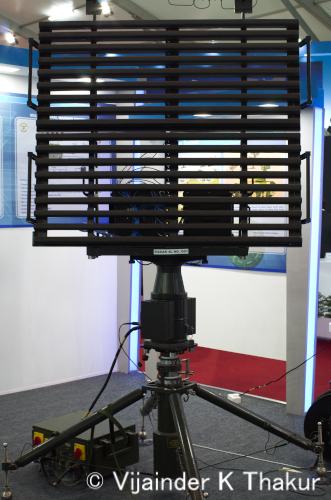
Aleesha Low Level Light Weight Radar

BEL Developed Aleesha Low Level Light Weight Radar (LLLR) at DefExpo 2014

BEL displayed the first production version of its Aleesha Low Level Light Weight Radar (LLLR) at DefExpo 2014. The radar is on order by the IAF, which is aiming to achieve gap free surveillance of Indian airspace.

Aleesha is a S-Band, 3D, light weight, battery powered radar with a compact sensor which provides 3D surveillance. This PESA radar uses multiple beams with electronic scanning to automatically detect and track threats - fighter aircraft, UAVs and helicopters (even if hovering) - at low and medium altitudes.

Being light weight, compact and rugged, Aleesha can be rapidly deployed at vantage points such as mountain tops and high rise buildings in urban areas

Low power consumption allows the radar to be battery operated, while mechanical ruggedness facilitate operation in extreme climatic conditions.

The easily transportable radar integrates IFF and can be remotely operated from as far away as 750m to ensure operator safety. The radar can be networked with air defense assets or other radars.

Friday, February 14, 2014

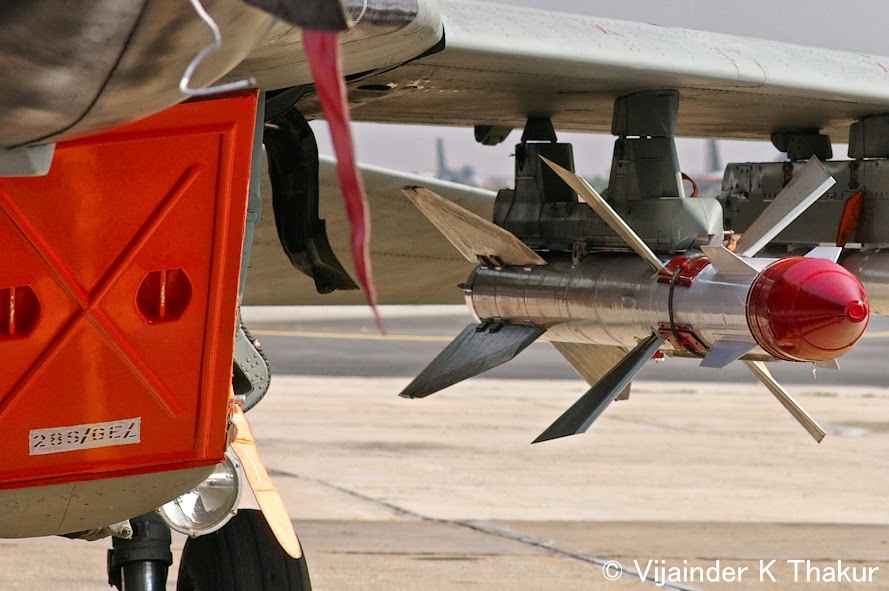
Large Indian R-27 (AA-10) Missile Purchase in 2013 Increased Ukraine's Artem's Profits 7 Fold!

A R-27 missile on a MiG-29 at Aero India 2009
In 2013, Ukraine's State Joint Stock Holding Company "Artem" completed the supply of a large consignment of R-27 air-to-air missiles to India.

The number of missiles involved was large enough to have pushed Artem's turnover 7 fold, from UAH 323 million to UAH 2.3 billion.

The semi-active home medium range R-27 series are analogs of late model US AIM-7 Sparrow series BVR missiles.

Those with access to IDP Sentinel can read more about the R-27 here.


Monday, February 10, 2014

HTT-40 Powerplant and Other Details

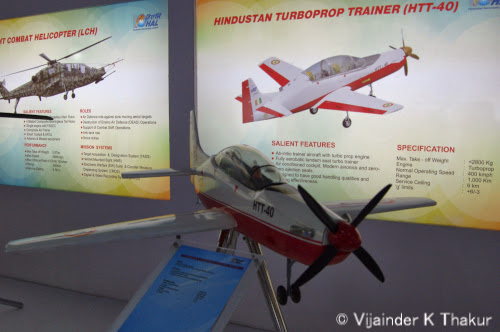
A model of the HTT-40 on display at HAL pavilion at DefExpo 2014
Far from being rattled by the IAF's lack of enthusiasm for the HTT-40 as a Pilatus PC-7 Mk-2 replacement, HAL is pushing ahead with the development of the turboprop powered tandem twin seat basic trainer.

An HAL rep told IDP Sentinel at the DefExpo that HAL is committed to obtain certification for the aircraft within 3-year of project sanction.

The aircraft will be powered by a Garret TPE 331-12 turboprop. HAL in 2009 tied up with Honeywell to manufacture the engine in India for international markets.

HAL has been manufacturing, repairing and overhauling the Garret TPE-5 for international clients under license from Honeywell since 1988. Besides many other aircraft, the engine also powers HAL manufactured Dornier DO-228 aircraft.

The TPE-331-12B powers the Short Tucano basic trainer of the RAF. The engine has a power output of 1,100 shp (820 kW).

HTT-40 at Aero India 2013

The Max T/O weight of the HTT-40 is < 2,800-kg, It has a range of 1,000-km, service ceiling of 6-km, G limit of +6 to -3 and a normal operating speed of 400 kph. The aircraft will feature modern avionics and zero-zero ejection seats.

Assuming that the TPE 331-12 engine is only marginally different from the 331-12B, HTT-40 performance figures don't compare well with those of the Short Tucano.

HAL proposes to develop a weaponized version of the HTT-40, which may tip the scales in favor of the aircraft over Pilatus PC-7 Mk-2 in MOD, the IAF's skepticism not withstanding.

The GOI sanctioned the purchase of 181 basic trainers to replace HPT-32's following their grounding in July 2009. Following global bidding, GOI approved procurement of 75 Pilatus PC-7 Mk-2 aircraft in May 2012. Pilattus on May 24, 2012 announced that it had signed a 500 million Swiss Franc contract with the IAF to supply 75 PC-7 Mk-2.

HAL wants to meet the residual order of 106 basic trainers with its HTT-40 aircraft, instead of locally producing more Pilatu PC-7 Mk-2 at its facilities in India, but the IAF doesn't want to strain its resources by inducting another aircraft type. It is also wary of HAL's ability to deliver, following the HPT-32 experience. In view of HAL's reluctance to manufacture the aircraft, the IAF in early 2014 proposed manufacturing the Pilatus at its own facilities.

HTT-40 Basic Flying Trainer (IDP Sentinel)

Friday, January 24, 2014

Rafale's Heavily Armed Configuration in Indian Context


Rafale in its heavily armed configuration. Photo Credit: Dassault

The Rafale was recently tested for the first time in its heavily-armed configuration, comprising six air-to-ground precision AASM Hammer missiles, four medium and long range air-to-air missiles from the MICA family, two very long range METEOR missiles, as well as three 2,000 liter fuel tanks.

Rafale has 14 hard-points, including 8 under the wings, and is the only fighter capable of carrying a load that is 1.5 times its own weight.

Two Rafale aircraft represent the same potential as six Mirage 2000 aircraft.

Its payload capacity and the mix of weapons that it can carry, give the Rafale a lot of versatility and firepower. From the outset, Dassault pitched the Rafale as a swing role fighter to India capable of performing interdiction and interception during the same sortie.

The question is - How relevant is a swing role fighter to the Indian context. Launching an aircraft heavily armed with air-to-ground and air-to-air weapons is most effective when the airspace is uncontested, as was the case for allies in Libya and Iraq. In a conventional Indian war against Pakistan or China, airspace on both sides of the border is likely to be heavily contested. Attacking aircraft are very likely to be challenged by enemy fighters. A heavily armed swing role aircraft would be forced to jettison its weapon load frequently in such an environment resulting in a lot of wasted missions.

However, a swing role aircraft would come in pretty handy in a Kargil like situation, where the airspace in the area of operation is uncontested, because there is no conventional war underway.

The fact that the IAF has opted for the Rafale could be a pointer to the types of wars that it expects to fight in the future.

Kargil did happen and could happen again. Indeed, another Kargil is more likely to happen than a conventional war across the international border. This is true even in the context of China. Swing role fighters could well save the day in case large portions of Arunachal Pradesh were to fall to the PLA following quick mobilization and attack.


Sunday, January 12, 2014

Tejas LCA: Brilliant, but not cheap!


Tejas LCA at Aero India 2013

HAL has reportedly priced the first 20 Tejas LCA, now under production in Bengaluru, at Rs 162 crore each. ($25 million at current exchange rate.) The price tag looks very impressive when compared with the reported price tags for the upgrades of IAF Mirage 2000 ($45 million ea.) and MiG-29 (Rs 87 crore ea.) per aircraft.

One reason why the Tejas is priced so low is because HAL is not including development costs in the price tag. HAL didn't develop the aircraft, ADA did and the Indian government footed the development costs. On the contrary, Mirage 2000 and MiG-29 manufacturers are upgrading the aircraft on India's request and exclusively for India; the unit price of the upgrades reflects a hefty development cost.

Considering India's limited industrial base and consequent need to import many of the critical components featured on a fighter like the Tejas, lower production cost for Indian developed weapon systems is a myth; it defies logic.

At comparable skill levels, the cost of an employee in India isn't significantly lower than in developed western countries. If you factor in the inefficiency and the perks associated with employees working in the public sector, employee cost is likely at par.

Also, foreign help in developing a weapon system like the Tejas (ADA sought foreign assistance for overcoming slow speed handling issues, obtaining IOC and strengthening the undercarriage for the Naval variant.) doesn't come cheap even after the pound of flesh implicit in such assistance.

Friday, November 1, 2013

Canard by Bharat Karnad?


Rafale at Aero India 2013


The Op-Ed - Stop wasteful military deals - The New Indian Express - by the venerable Bharat Karnad, painting the IAF in bad light, is riddled with so many grievous errors that I am compelled to respond. 

The following are some examples of statements by Karnad that need to be corrected.

"[IAF] bought PC-7s for $1.5 billion, an amount the Chinese Air Force spent to secure the entire production line from Russia of the latest, most advanced, Tu-22M3M strategic bomber!"

China has an industrial base to support production of Tu-22M3M. India doesn't. China perceives a need for a supersonic bomber to counter the US. India doesn't.

"This Pilatus purchase, moreover, was approved by defence minister A K Antony at a time when Hindustan Aeronautics Limited (HAL), Bangalore, had its new HJT-44 turboprop trainer up and ready. Brazening out such mindless splurges, Air Chief Marshal N A K Browne advised closure of the HJT-44 line to enable purchase of more PC-7s!"

The HJT-44 exists as a mock-up only - It is not "up and ready." The IAF was compelled to acquire the Pilatus because HAL couldn't make the HPT-32 safe to fly even decades after the IAF accepted it. As a Flying Instructor at the Air Force Academy, I have had the misfortune of attending funerals of Army and Air Force officers and IAF cadets killed as a result of HPT-32 accidents. (I saw as many wailing wives and mothers at funerals during my short stay at the Academy, than I did during my entire career as a fighter pilot.)

HAL is struggling with the development of the HJT-36, Sitara, which the IAF is in desperate need of. My guess is that the IAF would eventually be forced to buy an intermediate trainer from abroad because HAL will fail to deliver. With all due respect to Bharat Karnad, I think his attack on the IAF Chief is quixotic and very unfortunate. (He got paid for the article in which he took a wild potshot at the IAF Chief.)

"IAF has at most tolerated licence-manufactured foreign fighter planes but sought stubbornly to kill off indigenous combat aircraft projects. In the past, it buried the Marut Mk-II, the low-level strike variant designed in the 1970s by the highly talented Dr Raj Mahindra, who won his spurs under Kurt Tank, designer of the Focke-Wulfe fighter-bombers for the Nazi Luftwaffe and of the original HF-24 at HAL, buying the Jaguar from the UK instead. History repeats itself."

The Marut Mk-II was a dream, not a project. The HF-24 Marut powered by two Orpheus 703 engines, which I flew extensively, was an underpowered fighter incapable of holding its own in a dogfight against any Pakistani fighter. The IAF inducted the fighter into service in the belief that a more suitable engine for the aircraft would be eventually procured. When India failed in its attempts to get a better engine, the IAF heartily supported an HAL project to develop a reheated version of the Orpheus 703. Alas! The reheated version of the 703 fell way short of the ASR thrust goals. The project ended when a senior IAF test pilot on deputation to HAL was killed in an accident while testing the reheated engine.

"French and Israeli pilots who have unofficially flown the Tejas Light Combat Aircraft (LCA) have gone gaga over its flying attributes."

IAF test pilots have heartily endorsed the flying characteristics of the Tejas. Why talk about French and Israeli pilots, unless the intent is to falsely project the IAF as being against Tejas? The truth is that the IAF, through the MOD, has been pressurizing ADA and HAL to deliver on the promise of the Tejas. The IAF desperately needs the aircraft as MiG-21 replacement. No one in the IAF doubts the fine capabilities of Tejas. What the IAF cannot do is retire its MiG-21 fleet, put its frontline pilots currently flying the MiG-21s on deskjobs, and wait for HAL to deliver the Tejas on its own sweet schedule. How difficult is that to understand?

"The larger, heavier, longer range Mark-II variant of the near all-composite Tejas, in fact, fills the bill of “MMRCA”. An LCA version of Tejas has already been flown weighted down with ballast to mimic the Mk-II plan-form. The fact that the Mk-II variant was coming along well, besides, was known to the IAF-MoD (ministry of defense) combo. So, how come the tender for MMRCA was not terminated midway?"

The LCA Mk-2 is a light weight fighter that does not meet MMRCA ASRs. Mk-2 is the light weight fighter that the IAF wanted to begin with when it backed the LCA project, not the Tejas. The IAF is inducting the Tejas after granting many critical concessions on the ASRs to encourage indigenous design and development of fighter aircraft.

"But the LCA has been prevented from entering squadron service after it obtained the Initial Operational Clearance (IOC)-1 last year, because of their insistence that IOC-2 and subsequent clearances be done by HAL rather than permitting the clearances to be obtained by the designated Tejas squadron, flying the aircraft, at the Sulur base in Tamil Nadu. The latter procedure will allow our fighter pilots to test the plane’s flight envelope and performance, and to provide feedback to designers — normal practice of advanced air forces inducting a new locally-produced aircraft."

The Tejas is in service with the IAF. It's being extensively flown by the ASTE, an IAF establishment. IAF squadron pilots are not trained to conduct IOC; they are trained for war fighting. ASTE is the IAF organization earmarked to assist HAL with IOC and FOC on an aircraft.

Finally, MMRCA is  Medium Multi Role Combat Aircraft not "multi-role, medium range combat aircraft" as Karnad states in his op-ed.

While Mr Bharat Karnad is entitled to his opinion, it would be nice if the opinion is based on facts.

Friday, October 18, 2013

India Unhappy with FGFA Research & Design Workshare

PMF / FGFA model on display at Aero India 2013. Photo Credit: Vijainder K Thakur

On October 18, 2013, The Economic Times reported that the IAF is unhappy that India, despite bankrolling 50% of the development cost of the FGFA, is being allocated just 15% of the research and development work for the aircraft by Russia.

The IAF expressed its disappointment at a CII event on energizing aerospace sector in India.

"We have a major opportunity in the FGFA program. At the moment it is not very much in favor of Indian development. We are flagging it through the Government. It should be much more focused towards indigenous development capability," IAF Deputy Chief Air Marshal S Sukumar said here.

The Raksha Mantri is expected to take up the issue during his visit to Russia starting November 15, 2013.

India and Russia are currently negotiating the Research and Development work share of the FGFA program. The negotiations are expected to take another year!

What is difficult to understand is how can India realistically expect a larger work share. The PMF / FGFA is based on the PAK-FA / T-50, an aircraft that is expected to start state acceptance trials in early 2014.

The FGFA will feature the same airframe, engines and main systems as the T-50, but differ in its avionics and weapon suite. Clearly, the residual R&D work is limited. What is it that India wants to research and develop?

Wednesday, October 2, 2013

GTRE Pushes Ahead with Kaveri as USAV Power Plant

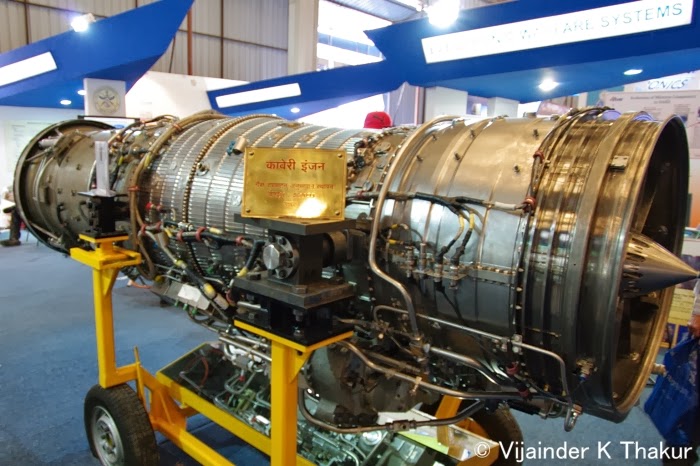
Kaveri engine at Aero India 2011. Photo © Copyright: Vijainder K Thakur
GTRE has submitted a revised proposal to the GOI to warp development of Kaveri engine.

DRDO Director General (Aero) K. Tamilmani and Director, Gas Turbine Research Establishment (GTRE) C.P. Ramanarayanan told The Hindu in October 2013 that GTRE will resolve the five issues that came up during airborne testing of the Kaveri engine in 2011 using an IL-76 testbed at Gromov Flight Research Institute (GFRI), Russia

Next year, the tweaked engine would be fitted first on an IL-76 testbed and then a MiG-29 fighter for trials and eventual certification.

“When we do that, we will have the first indigenous engine with proven and certified performance for exploitation,” Dr. Ramanarayanan said.

GTRE had earlier planned to obtain certification using an LCA testbed. (The LCA PV-1 was built to support the Kaveri engine.)

GTRE has sought sanction from MoD for developing the "dry thrust only" versions of the Kaveri engines. The money will be utilized to build two prototypes and send them to Russia for flight testing.

Dr. Ramnarayanan had earlier told the press, “We will take 48 months from the date we get clearance from the government, for completing 50 hours of testing the Kaveri on the Tejas LCA. During the last 12 months, we will actually fly the Tejas with the Kaveri.”


The testing will now presumably be done on a MiG-29.

According to Dr. Ramanarayanan, in future India would endeavor to build aircraft around a proven engine, a model followed worldwide.

During testing at the Gramov Flight Test Center, the Kaveri had demonstrated a dry thrust of 49.2 KN against a designed 51KN. With reheat the thrust deficit was substantial; 70.4 KN against the designed 81 KN.

Due to the thrust deficit with reheat, Kaveri was dropped as a prospective LCA powerplant.

Since Kaveri's dry thrust performance comes close the design values, DRDO has taken a decision to develop Kaveri as a UCAV powerplant.

UCAVs use un-reheated engines to minimize their heat and noise signatures. Also, the thrust requirement for the USAV is more modest.

DRDO has embarked on the development of a UCAV matching the capabilities of the X-47B and nEuron. The Indian analog is called Unmanned Strike Air Vehicle (USAV).

The USAV cannot use an imported engine on account of the MTCR regime which prohibits sale to another country of technology that maybe used in a missile or unmanned vehicle exceeding 300 km in range.

Removing the reheat from the Kaveri would lighten the engine considerably.

"Since the USAV will weigh less than 10 tonnes, the Kaveri’s 50 KN will suffice. And, with the afterburner removed, we would significantly reduce the weight of the Kaveri," a top DRDO scientist told the Business Standard earlier this year.

Along the way, GTRE will need to tweak the Kaveri dry for use on low RCS aircraft. Typically, stealth aircraft powerplants use shaped intakes to prevent enemy radar from reflecting off their compressor blades. Also, the engines are designed to operate with shaped exhausts to reduce stern radar and heat signature 

In addition to the Kaveri, GTRE is co-developing a powerplant for the AMCA with a foreign vendor to be selected through open tendering.

Meanwhile, HAL is independently developing aircraft engines for use on drones, helicopters and trainer aircraft by 2018.

Details about the Kaveri project are at Kaveri Jet Engine - IDP Sentinel.
You can read more about the India USAV a Unmanned Strike Air Vehicle (USAV) / AURA UCAV

Monday, September 30, 2013

Nag ATGM: No Man Portable, Mast Mounted, Tactical Aircraft Versions Planned

Nag ATGM at Aero India 2011. Photo Credit: Vijainder K Thakur


The TOI reported on September 24, 2013 that DRDO is developing a mast mounted ground launched version of the Nag ATGM with increased range of 7 km and lock on after launch capability. The TOI report didn't specify where the mast would be mounted - presumably, on the NAMICA vehicle - but said the launch pad would be hydraulically raised to a height of 5 m to enable the missile to acquire its targets up to a distance of 7-8km.

The TOI report also said that DRDO was developing

  1. A man portable version of the missile on request from the IA
  2. An air-launched, 10-km range variant of the missile for launch from tactical interdiction aircraft like the upgraded Jaguar IS. The version would feature a nose-mounted mill metric-wave active radar seeker.

DRDO has now clarified to Thumkar that the TOI report is erroneous.

According to DRDO Director of Public Interface Ravi Kumar Gupta, while DRDO is working on continually improving the Nag missile there is just one variant of the missile currently under development - Helina.

Thursday, September 26, 2013

Brahmos-M Planned Induction in 2017

Brahmos-A Mockup under the belly of a Su-30MKI at Aero India 2011. Photo Credit: Vijainder K Thakur
On September 26, 2013, Dr. Sivathanu Pillai, CEO and MD of the BrahMos Aerospace Limited, told Itar-Tass that the company is currently working on the detail design and initial configuration of a smaller variant of the Brahmos which will be called BrahMos-M; development of the missile is yet to start.

According to Dr. Pillai, since the project "is in its initial stage, it is difficult to tell when the rocket may be phased into service."

"Nevertheless, we expect that it will be adopted in the range of 2017," Dr. Pillai added.

Dr. Pillai first announced the new Brahmos version in New Delhi on March 12, 2011.

Tass reported on February 20, 2013 that the new missile would be 6 m in length and weigh 1.5 tons. It's range would be the same as Brahmos - 290 km.

The new missile would be capable of launch from standard sized submarine torpedo tube, like the submarine launched version of the Exocet missile to be fitted on Type 75 Scorpene submarines currently under production at Mazagaon Docks in Mumbai.

The smaller size and lighter weight of the Brahmos-M will also make it suitable for carriage by smaller aircraft, such as the Indian Navy's MiG-29K and the under-development FGFA.

The Su-30 MKI Super 30 variant, which is the only IAF aircraft capable of carrying the underdevelopment Brahmos-A ALCM, will be able to carry three Brahmos-M missiles instead of a one Brahmos-A.

New Ramjet Engine

Brahmos-3 will be an altogether new missile that will use technologies developed for Brahmos.

Since Brahmos-M needs to be considerably smaller, it will require a completely new, smaller sized ramjet engine.

Brahmos Aerospace has already started work on the new engine, which will be developed in Russia. (Brahmos engines continue to be manufactured in Russia, though eventually manufacture will shift to India.)