Tuesday, July 21, 2015

Indian Navy Sticks with DRDO Developed AIP, for Better or Worse!

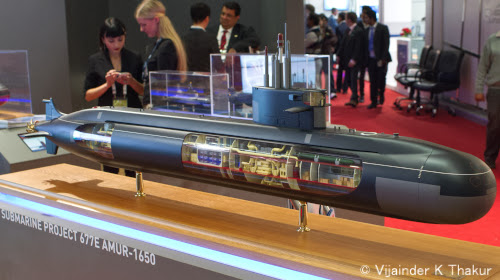
Scorpene cutaway scale model with DCNS AIP plug at DefExpo 2014

The Business Standard reported on July 20, 2015 that because of delay in DRDO's Air Independent Propulsion (AIP) project, which is almost 4 yr behind schedule, only the sixth Project-75 Scorpene would be fitted with an AIP plug. It is also possible that all six Scorpenes would be built without AIP.

The Indian Navy had earlier asked Mazagon Docks Limited (MDL) to equip the fifth and sixth boats with AIP by fitting an additional 300-t section on the last two Scorpene submarines built at MDL under Project 75.

MDL and French firm DCNS, which developed the Scorpene, are responsible for fitting the new hull section and safely integrating the DRDO-developed AIP plug to the submarine.

DCNS initially offered its first generation MESMA AIP with the Scorpene, but the Indian Navy opted to go with a second generation DRDO developed 300-t AIP based on fuel cell technology.

DCNS has since developed and demonstrated to Indian journalists a fully tested second generation operational-scale fuel cell AIP that would allow the Scorpene to stay submerged for 3 weeks, but the Indian Navy hasn't been swayed from its decision to go with the DRDO AIP.

(Without AIP, Scorpene can stay submerged for 4 days. With a  MESMA AIP, it would be able to stay submerged for 2 weeks.)

DRDO has demonstrated its AIP technology on a land based prototype. Trials on a land based submarine section were to commence from March 2015 and full scale operations of a AIP System was to be demonstrated within 2015.

One good reason why the Navy has stuck with the  DRDO AIP is because it could later be reconfigured for the submarines to be acquired under Project 75I. Also, the four Scorpenes launched earlier could be retrofitted under an upgrade program.

The Navy's penchant for sourcing its systems from within India is well appreciated in the country, but there can be no denying the risk that the Navy is taking by adding to its fleet, in this day and age, new submarines without AIP! India's adversaries, China and Pakistan, have been operating AIP subs for years now!

The following comparison may help readers assess the risk for themselves. Please feel free to your your views through the comments section.

DCNS and DRDO AIPs Compared


The MESMA AIP from DCNS mimcs nuclear propulsion. It uses heat generated through combustion of ethanol (grain alcohol) and stored oxygen at a pressure of 60 atmospheres to power a conventional steam turbine power plant. It doesn't use fuel cells.

The DRDO AIP uses fuel cell technology. A fuel cell converts chemical energy from a fuel into electricity through a chemical reaction of positively charged hydrogen ions with oxygen or another oxidizing agent.

There are many fuel cell types, but the principal ones include the alkaline fuel cell (AFC), proton exchange membrane (PEM) fuel cell, direct methanol fuel cell (DMFC), molten carbonate fuel cell (MCFC), phosphoric acid fuel cell (PAFC), and solid oxide fuel cell (SOFC).

DRDO's AIP uses PAFC, which has some advantages over other fuel cell types. PAFCs offer a broader choice of fuel being more tolerant of fuel impurities. It can operate using reformed hydrocarbon fuels (Methanol) or biogas.

PAFC operating temperatures (150 to 200 °C) are higher and as a result they generate steam as byproduct, besides electric power for propulsion. The steam can be used to meet other heating requirements, pushing up operating efficiency to as high as 70%.

PAFC fuel cells were one of the earliest to be developed and are commercially available of the shelf (COTS).

The only downside of PAFCs is the use of phosphoric acid as electrolyte. However, use of modern materials makes PAFC safe enough for commercial use at hospitals, schools, office buildings, and grocery stores.

It's likely that the DRDO plug uses commercially available PAFCs.

The second generation fuel-cell AIP developed by DCNS usees hydrogen produced from diesel fuel by hydrocarbon reforming.

One obvious advantage of the DCNS AIP is the easy availability of diesel at any port around the globe. The absence of pure-oxygen in the cells allows longer life cycle. DCNS claims that the life cycle of its new AIP plug roughly matches the life-cycle of the submarine, which isn't the case with other fuel cell types.

There is no doubting the sophistication of the DCNS 2nd generation AIP, which has to be weighed against the higher initial cost, high recurring cost from the need to use AIP is all future conventional subs, and the continued dependence on foreign technology. But then DRDO has a well earned notoriety of delays!

Monday, July 20, 2015

News Roundup: DRDO DEW for Zapping UAVs, Lakshya ToT to L&T, IAF Initiates Procurement of Additional MI-17V5

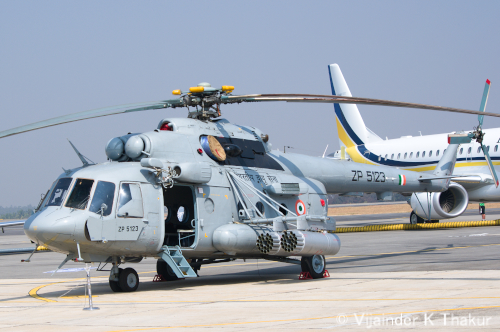
Mi-17V5 at Aero India 2013

IAF Initiates procurement of additional 48 Mi-17V5 helicopters


The ET reported on July 20, 2015 that the IAF has initiated procurement of 48 additional Mi-17V5s at a cost of $1.1b (Rs 6,980 cr).

The deal would involve 30 percent offset obligation.

On February 17, 2015 Sputnik News reported that India and Russia were discussing purchase of additional Mi-17V5 helicopters.

India has so far ordered 151 Mi-17V5 helicopters from Russia in two batches. The first order was for 80 helicopters and the second for 71.

As on February 18, 2015, Russia had delivered 121 helicopters against the order for 151 helicopters. Russia completed deliveries against the initial 80 helicopters order in 2013. Deliveries against the follow-on order for 71 helicopters are likely to be completed by end 2015.

IDP Sentinel members can read more at Mi-17V5 Purchase From Russia - IDP Sentinel

Lakshya ToT to L&T


The IE reported on July 18, 2015 that MoD has approved a DRDO proposal for transfer of technology (ToT)  of Lakshya-2 to Larsen and Toubro (L&T) for commercial production.

L&T will pay DRDO a royalty on domestic sales and exports of the PTA. Exports would require MoD approval. Potential export customers include Singapore, Malaysia and Israel.

Lakshya PTA at Aero India 2011

Lakshya ToT to private sector L&T for royalty based sales is a first involving a major defense system. In the past such ToT has been made exclusively to public sector units and with no royalty.

The landmark deal will serve as a model for private sector involvement in marketing, maintaining and upgrading DRDO developed systems, allowing DRDO to focus on R&D.

IDP Sentinel members can read more at Lakshya - 2 - IDP Sentinel

DRDO Working on Directed Energy Weapon (DEW) Systems


DRDO's CHESS (Center for High Energy Systems and Science), Hyderabad is developing Directed Energy Weapon (DEW) systems.

One of the DEW weapon systems being developed would target UAV's.

On March 2, 2015 CHESS invited tenders for Off-axis concave and convex parabolic mirrors.

The concave mirror is required to have a parent focal length of 2000mm and mirror diameter of 150mm, while the convex mirror is required to have a parent focal length of 200mm and a mirror diameter of 25mm.

In early July 2015, DRDO's IRDE (Instruments Research & Development Establishment), Dehradun invited tenders for supply of High Resolution thermal imager for CHESS platform.

The IRDE tender seeks a Thermal Imager based on Pelican-D 640x512 MWIR IDDCA with 14.5X zoom capability. The Imager is required to have recognition range capability of 5-km against a 1.5m x 3m  UAV target.

IDDCA (Interleaved Double Dynamical Clustering Analysis) is a sampling algorithm based on clustering.

It appears that the imager being sought by IRDE would be used to aim a DEW developed by CHESS for use against UAVs.

IDP Sentinel members can read more at Directed Engergy Weapon (DEW) Systems (IDP Sentinel)

Saturday, July 18, 2015

News Roundup: IAC-2, LCA Mk-2 Engine, Towed AD Guns

Glass cutaway aircraft carrier model showing EMALS installation at General Atomics stall at DefExpo 2014

India - US Pursuing Tie-up on IAC-2 and LCA Mk-2 Engine Under DTTI


The TOI reported on July 17, 2015 that India and the US have worked out the terms of reference for building India's next aircraft carrier with US technology.

India is preparing to send a team to pursue talks on the aircraft carrier and the LCA Mk-2 jet engine, ahead of the next round of strategic talks due in September 2015.

IDP Sentinel members can read more at Defense Trade and Technology Initiative (DTTI) (IDP Sentinel)

Indian Navy Seeks Letter of Intent for Construction of IAC from 9 Indian Shipyards


The ET reported on July 17, 2015 that the IN has sought Expression of Intent (EoI) from nine Indian shipyards, four of them privately owned,  to construct IAC-2. The four private shipyards invited are L&T, Pipavav, ABG and Bharti.

The public sector shipyards are Mazgaon Docks, Garden Reach, Goa Shipyard, Hindustan Shipyard and Cochin Shipyard.

The letter says the proposed carrier would have a CATOBAR flight-deck configuration but other "modern technology for launch and recovery" will also be considered.

The shipyards are required to respond by July 21, 2015.

A high-level study group, headed by Assistant Controller of Carrier Project, Rear Admiral Surinder Ahuja, will evaluate infrastructure and technical competence of responding shipyards for executing the project.

Recently the Business Standard reported that the IN has sent letters of request (LoR) seeing proposals for help in designing the carrier to Lockheed Martin (US), BAE Systems (UK), DCNS (France), and Rosoboronexport (Russia).


IDP Sentinel members can read more at Indian Aircraft Carrier-2 (IAC-2) INS Vishal (IDP Sentinel)

BEL and Punj Lloyd Shortlisted for Towed AD Gun Project


The ET reported on July 17, 2015 that MoD has shortlisted BEL and Punj Lloyd for supply of 428 towed AD guns over the next five years.

Ashok Wadhawan, president (manufacturing) at Punj Lloyd, told ET that his company was looking forward to the final round during which commercial bids would be opened to determine the winner of the contract.

 "We have gained considerable experience on the project and also have a modern 30 mm air defense gun ready for requirements of the Indian Army," Wadhawan said.

BEL also has experience in upgrading of AD guns and is currently modernizing the L 70 guns of the Army.

The DAC on July 14, 2015 approved procurement of the guns at a cost of Rs 16,900 crore.

The guns are to be procured under 'Buy and Make in India' category. A tender was issued to 6 private and public sector firms - Larsen & Toubro, Bharat Electronics, Tata Power SED, Punj Lloyd, Ordnance Factory Board and Bharat Forge.

The Indian firms are free to tie up with foreign majors holding upto 49 per cent stake.


Towed Air Defense (AD) Guns - IDP Sentinel

Friday, July 17, 2015

News Roundup: Pipavav to Construct Grigorivich Class Frigates, Fresh EoI for FICV, IN Seeks IAC-2 Design Help

Tata Motor's Kestrel wheeled FICV at DefExpo-2014

MoD Releases Fresh EoI for FICV


MoD recently released a fresh EoI for building a "Future Infantry Combat Vehicle" (FICV) to the following 10 Indian vendors. The EoI has been issued under the DPP-2008, which was operative when the AON was given in 2009.


  1. Mahindra Defense System
  2. Bharat Forge
  3. Larsen & Toubro
  4. Punj Lloyd
  5. Tata Power
  6. Tata Motors
  7. Pipavav Defence
  8. Rolta India
  9. Titagarh Wagons
  10. Ordnance Factory Board (OFB)


The vendors, who are free to tie-up with foreign firms, have been asked to submit detailed proposals within 90 days.

[via Business Standard]

IDP Sentinel members can read more at Future Infantry Combat Vehicle (FICV) - IDP Sentinel

Indian Navy Seeks Design Consultancy for IAC-2


The Indian Navy in July 2015 issued a letter of request to leading shipbuilders across the globe seeking  proposals for help in designing IAC-2, a 65,000 tonne, 300-m long aircraft carrier with CATOBAR (optionally EMALS) operations.

The letter specifies the carrier should be capable of speeds greater than 30 knots (56 km per hour), but doesn't specify the nature of propulsion - nuclear or CDOG.

The carrier will embark 30-35 fixed wing combat aircraft, and about 20 rotary wing aircraft (helicopters).

The letter has been sent to US company, Lockheed Martin; UK company, BAE Systems, French shipbuilder, DCNS, and Russian arms export agency Rosoboronexport.

The vendors are expected to respond with their proposals and costings within a week.

[via Business Standard]

IDP Sentinel members can read more at Indian Aircraft Carrier-2 (IAC-2) INS Vishal - IDP Sentinel


Russia Picks Pipavav for Project 11356 Construction against Follow-up Contract


The Russian government has picked Pipavav shipyard, on the basis of its infrastructure and capacity, as partner for building Project 11356 Grigorivich class frigates in India against an expected follow-up order worth more than $3 billion.

The ET reported on July 16, 2015 that Russia's decision was formally conveyed to MoD in a letter last week from the Federal Service for Military Technical Cooperation (FSMTC) director Alexander Fomin.

A government-to-government contract is likely to be signed within the current FY with delivery expected over the next six to eight years.

“We are ready to transfer technology to ensure the construction of these ships in India. The new ships that will be built will be different and more modern from the Talwar class that have been delivered,” Alexi Dikiy, director for military technical cooperation at USC, told ET.

IDP Sentinel members can read more at Project 11356 Talwar Class Missile Frigates - IDP Sentinel

Thursday, July 16, 2015

News Roundup: Submarine Rescue Ship, Indradhanush 2015, Tech Tie-ups for Minesweepers

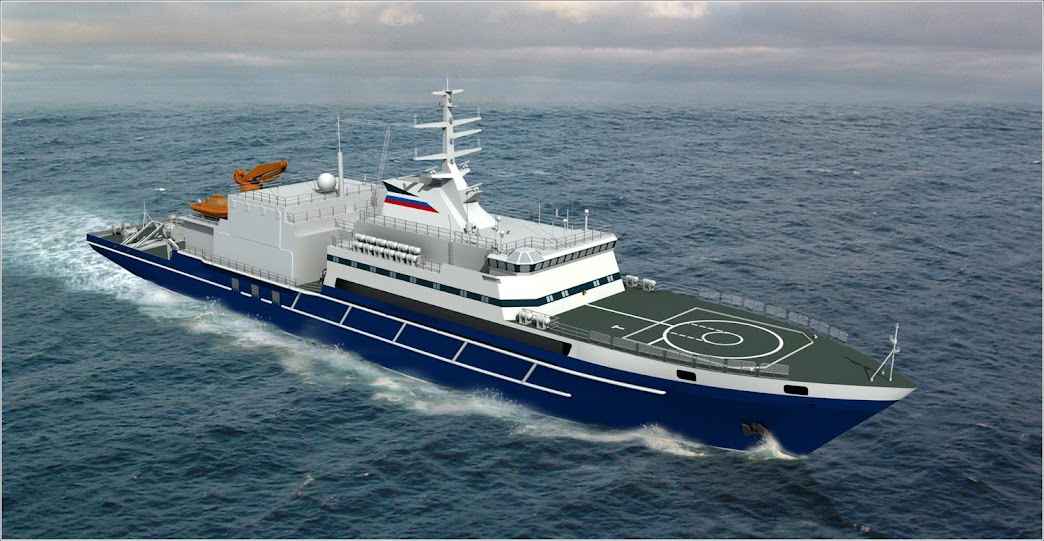
Add caption

Indian Navy Negotiating Purchase of Submarine Rescue Ship from Russia


India is reportedly negotiating with Russia for the purchase of its P 21300 class Submarine rescue ship. The Russian Navy is expected to commission the first ship of the class, Igor Belousov, later this year.

"There have been some specific requests from the Indian Navy and we are taking them in account when offering a product from our side. A presentation was also made for the Indian Navy on board the first vessel of the P 21300 class at our shipyard," Alexander Buzakov, Chief Executive Officer of Russia's Admiralty Shipyards told ET in July 2015.

IDP Sentinel members can read more at Submarine Rescue Ship - IDP Sentinel and Submarine Rescue - IDP Sentinel

Goa Shipyard Limited (GSL) Finalizing Tech Tie-ups for Minesweeper Project


Goa shipyard is negotiating technology tie-ups for building mine sweepers  with South Korean yard Kangnam Corporation and Italian shipbuilder Intermarine. The two firms competed in the 2008 global tender for supply of 8 Mine Counter Measures Vessels (MCMVs) to the IN. The contract was awarded to Kangam but the procurement process was cancelled due to alleged irregularities by Kangam. The MoD has since "nominated" GSL to build the MCMVs with foreign collaboration through a fresh tender.

GSL chairman Rear Admiral Shekhar Mital (retd) had told the press in March 2015, "We don't have the technology. That is why we are going to import it. GSL has a capacity to absorb the technology,"

"We will take minimum possible technology from abroad," he added.

GSL estimates that the minesweepers would have at least 60% indigenous content.

Mittal told HT on July 15, 2015 that the Navy is finalizing specifications for the vessels and GSL should be ready to issue a tender by September-end.

GSL estimates that it will be able to start constructing the vessels in 2018 with the first ship rolling out in 2021.

IDP Sentinel members can read more at Procurement of 12 Mine Countermeasure Vessels (MCMVs) (IDP Sentinel)

Indradhanush 2015


Indradhanush is a bilateral exercise between the Indian Air Force (IAF) and the Royal Air Force (RAF).

The fourth edition of the bilateral exercise is being held at RAF Waddington. The 10-day exercise is due to begin on July 21.

The Indian contingent comprises 190 personnel including Garud special forces, Su-30 fighters, IL-78 tankers, C-17 strategic and C-130J tactical airlift aircraft.

The IAF aims to demonstrate its power projection ability through a transcontinental deployment.

Wednesday, July 15, 2015

News Roundup: Proejct 75I submarines, P-8I LRMRASW Aircraft, Towed AD Guns, Project 11356 Griogorivich Class Frigate

Rubin Design Bureau Amur 1650 (Russia) Project 75I contender

Project-75I Submarine Acquisition Could Involve Multiple Types?


VCNS Vice Admiral P. Murugesan told the press on July 14, 2015 that Project 75I submarines could be built at more than one shipyard, suggesting that multiple types of subs maybe acquired under the project.

"It [Contracted vendor] will not be only one shipyard... there will be a competitive process, the [defense] ministry may agree to all of them, or some of them," he said.

Murugesan said award of contract would follow DPP and estimated construction would start in around 2 years.

It was earlier reported that the MoD has shortlisted 5 Indian shipyards out of the 7 that it evaluated for infrastructure and technical competence to construct Project 75I submarines.

The OEM - submarines combinations in contention are


  1. DCNS Scorpene
  2. Thyssenkrupp Marine Systems HDW Type 214 (Germany)
  3. Rubin Design Bureau Amur 1650 (Russia)
  4. Navantia S-80
  5. Saab Kockum A-26
IDP Sentinel members can read more at Project 75I Submarines (IDP Sentinel)

VCNS Confirms Negotiations to Acquire Project 11356 Grigorivich Class Frigate Construction Tech

VCNS Vice Admiral P. Murugesan confirmed on July 14, 2015 that India was negotiating with Russia to purchase technology to construct Project 11356 Grigorivich class frigates in India.

"As per the maritime perspective plan, we have to build a certain number of ships in a certain time...we are exploring the possibility to expedite (acquisition of) certain number of ships," he told reporters.

IDP Sentinel members can read more at Project 11356 Talwar Class Missile Frigates (IDP Sentinel)

Six Indian Firms to Compete for 428 Towed AD Guns

The DAC on July 14, 2015 approved procurement of 428 towed AD guns at a cost of Rs 16,900 crore.

The guns are to be procured under 'Buy and Make in India' category. A tender is to be issued to 6 private and public sector firms - Larsen & Toubro, Bharat Electronics, Tata Power SED, Punj Lloyd, Ordnance Factory Board and Bharat Forge. 

No Indian firm has yet demonstrated the capability to make the gun, but they are free to tie up with foreign majors holding up to 49 per cent stake in the bidding JV. 

The Indian Army is planning to procure towed Air Defense (AD) Guns and ammunition along with Maintenance Transfer of Technology (MToT). The project involves manufacture of 1,102 AD guns over the next 15 years to replace 1950s vintage L-70 guns acquired from Swedish firm Bofors and Zu-23mm guns acquired from USSR's Podolsky Electromechanical plant.

In the first stage, the manufacturer will have to supply the army with 428 guns over the next five years. Several lakh rounds of ammunition would need to be manufactured in India.

IDP Sentinel members can read more at Towed Air Defense (AD) Guns (IDP Sentinel)

DAC Approves Purchase of 4 Additional P-8Is

The DAC on July 14, 2015 approved a deviation from the offsets policy to exercise the option to purchase four additional P8i maritime surveillance aircraft from the US. 

Earlier, the CNC recently wrapped price negotiations with Boeing for 4 additional P-8Is.  The case will now be progressed to MoD (Finance), and then MoF. 


Tuesday, July 14, 2015

News Roundup: Yantar Shipyard Seeks Indian Partner for P 11356 Frigate Construction, Helina ATGM Trials

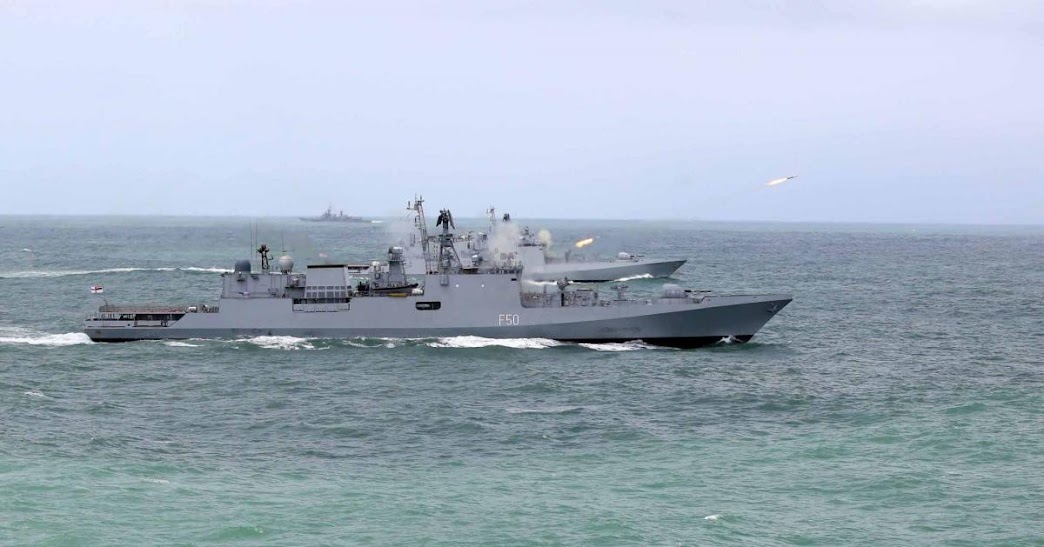
INS Tarkash during PM's day at sea on board INS Vikramaditya to  dedicate the aircraft carrier to the nation on June 15, 2014. Visible in the background is another Talwar class stealth frigate (INS Talwar or INS Teg firing its Kashtan CIWS missiles)

Russia's Yantar Shipyard Seeks Indian Partner for Make-in-India Project 11356 Frigates


India and Russia have been negotiating a third contract for supply of 3 additional Project 11356 class frigates since 2009.

India has earlier procured 6 ships of the class through two contracts for 3 ships each.

RIA Novosti reported on May 20, 2015 that the Indian government wants to jointly produce project 11356 frigates in an Indian shipyard.

Oleg Shumakov, director of the Yantar Shipyard, told RIA Novosti that the Indian Navy "needed three-four more vessels of that class. Currently, they are examining a scenario to produce such ships at home, of course, with our participation and under our guidance."

Shumakov added, "According to our plan, those ships will be of the same class, but with different weapons. Weaponry progresses non-stop, so, I think, the new vessel will be equipped with something more advanced. However, as for its seagoing capabilities, it will be the same."

According to the Business Standard Yantar shipyard is negotiating with Larsen & Toubro's Katupalli shipyard, at Ennore, Tamil Nadu; Pipavav Shipyard in Gujarat; and Cochin Shipyard Ltd (CSL) in Kochi, Kerala for building the three warships.

Once Yantar formalizes a tie-up, the Indian navy will initiate procurement by releasing a tender.

There maybe an interesting twist to the Make-in-India theme of the additional procurement on account of the Ukraine crises.

Project 11356 ships are powered by 4 x Zorya Gas Turbines in a (Combined Gas and Gas) COGAG arrangement with two FP propellers. The Zorya Gas Turbines are supplied by Ukraine.

Yantar Shipyard is in the process of building 5 Project 11356 warships for the Russian Navy. The ships are in different stages of construction. Three ships have already been fitted with the Ukrainian engines. Kiev, which is at loggerheads with Moscow over the secession of Crimea) has refused to supply engines for the fourth and fifth frigates!

Recently, there were reports in the Russian press that the two ships might be transferred to India. A source in the Defense Ministry told  Lenta.ru that once the ships are in India, Ukraine will have no problems supplying engines for them.

The Indian Navy initially acquired three Project 11356 Talwar Class stealth Missile Frigates (Russian modified Krivak III class) from Shipyards of St. Petersburg in Russia - INS Talwar (2002), Trishul (2003) and Tabar (Jul 2004).

The Navy procured three more ships of the class through a follow-up order for three more Talwar Class Missile Frigates - INS Teg (2012), INS Tarkash (2012), and INS Trikand (2013).

The new missile frigates, built by Yantar shipyard in Kaliningrad, are designed to accomplish a wide range of maritime missions, primarily hunting down and destroying large surface ships and submarines.

The ships procured against the follow-up order differ in their sensor and weapon fit. Most significantly, the new ships feature the vertical launch version of the Brahmos missile instead of Russian VLS Klub.

Negotiations are also underway for the overhaul of the first lot of three ships supplied to the Indian Navy.

IDP Sentinel members can read additional details at Project 11356 Talwar Class Missile Frigates (IDP Sentinel)

Helina ATGM Undergoing Air Launch Trials


The Helina missile is undergoing operational trials against static and moving targets at ranges varying from 4-km to 7-km. The missile has been fitted with an improved 'IIR seeker.'

The missile was operationally tested from a helicopter platform for the first time in July 2015. [via TOI]

Vara Prasad, project director for HeliNa, told the press that the missile was test launched from a HAL Rudra 3 times and it hit the target on 2 occasions.

The target range varied from 4-km to 7-km.

"The observations are yet to be evaluated," said Prasad, adding that these development trials would pave the way for the 'deliverable stage' in the near future.

MoD's end of year report for 2014 states, Helina was successfully integrated with ALH (Rudra) after successful trials.

The missile with capability to defeat futuristic armors underwent successful ground launch field trials in June 2014. It was earlier tested in September 2013

IDP Sentinel members can read additional details at Nag / Helina Anti Tank Guided Missile (ATGM) - IDP Sentinel