Monday, September 26, 2016

Uri Attacks: India doesn't have a military option! Really?

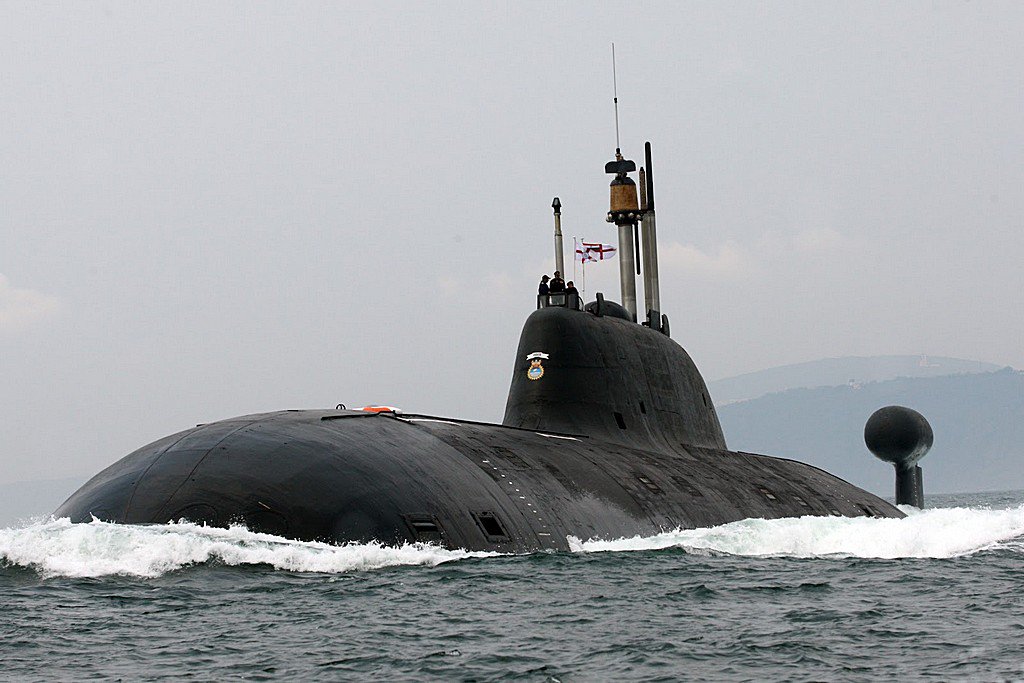
INS Chakra


Reputed military analysts have asserted that India needs to impose a military cost on Pakistan for its cross border attacks such as in Pathankot and Uri.

In a just published article titled Lessons from the Uri Attack Lt Gen Philip Campose, former Vice Chief of Army Staff, suggests:

"Militarily, the cost of terror attacks for Pakistan should be raised to unacceptable levels by exploiting Indian military strengths to target Pakistan’s weak points. Concurrently, own vulnerabilities should be secured."

The option has been repeatedly put on the table, only to be rejected as being unviable by our political leadership. Most of the arguments against this option are specious. Here are my thoughts on one of them

Some defense analysts point out that India will not be able to leverage it military quantitative and qualitative advantage over Pakistan in a short conflagration limited to the LoC because our forces are evenly matched. As a result, Indian military options are severely limited.

The conclusion is flawed because the supporting logic is presumptive and ignores vital facets of the asymmetry that exists in war
fighting potential. For example, India has military assets unmatched by Pakistan. A nuclear submarine that can wreak havoc in the Arabian sea against the Pakistan Navy. IAF Su-30MKI fighters can dominate vast stretches of the Arabian Ocean along the Pakistani coast. Our Brahmos equipped warships, in coordination with INS Chakra and IAF BVR equipped Su-30MKI and AWACS, would put Pakistani warships at grave risk.

The logic for confining an Indian military response to the LoC is dubious in military terms, as the extent of the military asymmetry varies sharply along the Indo-Pak border and the Arabian sea. The asymmetric is very pronounced in the Arabian sea, quite pronounced along the IB, and marginal along the LoC. Why on earth would we want to confine our military response to the LoC?

Any military action must have a clear and easily achievable aim. In order to ensure success, we should respond in sectors with high asymmetry.

Targeting Pakistani warships or Maritime Reconnaissance aircraft over the Arabian sea under the fig-leaf pretext that they were maneuvering in a hostile fashion is a low hanging fruit. The adversary just does not have the assets to take on the India Navy. He would be forced to either respond over land or run to the UN and International Court of Justice. A military response on land would put Pakistan on step one of the nuclear escalatory ladder, a long climb away from the nuclear threshold, allowing India to punish it some more.

There are other possibilities. The Indian Army has the capability to seize Pakistan territory along the International Border in a cold start sharp military action with the aim of humiliating Pakistan. Those who may question the legality of such an action need to be told that our  military response needs to be effective, not legal, just as Pakistan's provocation at Pathankot and Uri were effective, but not legal.

Tuesday, September 20, 2016

Uri: It's too late for retribution, but here is what we can do

The Director General Military Operations (DGMO) Lt. Gen. Ranbir Singh briefing the media on the terrorist attack at Army Camp, in Uri, Jammu and Kashmir on September 19, 2016.

Yes, it's too late for India to take any overt action against Pakistan for its attack on the Brigade HQs at Uri, which martyred 18 Indian soldiers. The window for a response has long closed. Responding now would be foolhardy and result in casualties disproportionate to any payoff.

A military action, must have a clear achievable aim. What would be the aim of any military action now?

Retribution? The terrorists are quite dead. By calling them terrorists, not ISI trained warfighters which they were, we absolved the Pakistan army of responsibility, so there is no logic in seeking retribution from the Pakistan army!

Hitting terrorists in camps? Terrorists may train in camps, but the Indian Army won't find them sleeping in any of them. They would have merged with the populace at the first news of the Uri attack.

Teaching Pakistan a lesson? It involves escalatory risks and will definitely result in many more coffins and dolorous footage of grieving family members. Most importantly, 'Teaching Pakistan a lesson' is not a clear achievable aim!

A Viable Option

If India still wants retribution, the best approach would be to declare the Uri attack as an act of war by Pakistan, which it indeed was; by no stretch of imagination was it a terrorist strike. Let's face the truth - Successive Indian governments have termed cross border attacks on Indian military installations as terrorist strikes, in order to duck the responsibility to respond to them. 

In the case of Pathankot and Uri, where commandos trained by the ISI crossed the border and directly struck Indian military installations, Pakistan didn't export terror to India, it attacked India! 

Pakistan is exploiting the Indian government's proclivity to weigh loss of soldier lives against loss of economic growth rate to the hilt. Labeling Pakistan a terrorist state and seeking its isolation after the Uri attack is an extension of the narrative that euphemistically labels an act of war as a terrorist strike. 

Declaring the Uri attack as an act of war would give India a viable, non escalatory, military response option. India could respond in a manner that Pakistan is incapable of matching.

For example, India could sink a Pakistan Navy warship or down a Maritime reconnaissance aircraft, taking responsibility only if some evidence were to emerge of Indian involvement. 

Lacking nuclear submarines, or long range fighters like the Su-30MKI, it would be impossible for Pakistan Navy to respond in a similar manner. 

Any Pak mobilization to counter Indian retaliation, would be viewed as escalatory by the world. More importantly it would be tantamount to revving up to nationwide grief.

Introspection

The Uri attack should not have been allowed to happen.

Here are some grievous mistakes made by India and its Armed Forces that led to the massive loss of life.

  1. There was no response action plan in place, despite Pathankot.
  2. There was no coordinated response to intel of a planned infiltration. ISTAR assets were not deployed to confirm the intel and thwart infiltration using artillery fire.
  3. Security at Brigade HQs was extremely lax despite an alert. The attackers inexplicably breached perimeter defenses without being challenged.
It's likely that many senior army officers' heads will roll on account of the above lapses.

Prevention

India can prevent future attacks from across the border by adopting the following three simple, non escalatory measures.

  1. The government should allow the Army and the IAF to use armed helicopters over unpopulated areas in close proximity of the LoC. Such use would allow the Army to plug infiltration routes more effectively.
  2. The Army must be given carte blanche to stop infiltration. Intel on planned infiltration should be verified using ISTAR assets. If confirmed, the LoC in the sector must go live with small arm fire, artillery fire and Special Ops to thwart the infiltration. 
  3. The Army must be given carte blanche to revenge infiltration. Following a Pathankot like strike, the Army must be able to retaliate immediately in whatever manner it feels best within the sector used for infiltration. The Army should have clearance to strike targets upto 60-km deep using rockets.
The nation is grieving. While there is solace in retribution, there is also likelihood of more grief. Our endeavor should be to foil Pakistan's low intensity war against us. It can be done through introspection, addressing our shortcomings and forceful leadership.

Thursday, September 15, 2016

Naval Integrated Fire Control-Counter Air (NIFC-CA)

Image: Courtesy US Navy

Naval Integrated Fire Control-Counter Air (NIFC-CA) is a US Navy battle network based on the concept of Cooperative Engagement Capability (CEC).

NIFC-CA network allows any component of a Carrier Strike Group (CSG) to act as a sensor or shooter for another component of the unit. The network uses an elevated sensor, such as Boeing EA-18G Growler airborne Electronic Attack (EA) aircraft or E-2D AEW&CS, to transmit targeting data concerning a threat to a Boeing F/A-18E/F Super Hornet or a missile equipped warship, which could then launches a weapon to destroy the target.

Efforts are ongoing to integrate the US Marin Corp's latest fighter - F-35B Lightening2 - as an elevated, deep penetrating sensor of a NIFC-CA network.

NIFC-CA facilitates combining legacy capabilities (F/A-18E/F, EA-18G) with technological advances, current (F-35) and future (UCLASS, MQ-25A), to provide an integrated common picture to everyone involved.

The NIFC-CA program has been making steady progress for several years,

USS Theodore Roosevelt (CVN-71) was the first carrier to deploy with the initial version of NIFC-CA in March 2015.

Another carrier will deploy with the battle network.

NIFC-CA Evolution

In September 2016, at the White Sands Missile Range in New Mexico, a simulated AEGIS Baseline 9 configured ship engaged a low flying cruise missile target with an SM-6 missile, exclusively using targeting data provided to the ship by sensors on board a Marine Corps F-35B.

The test proved the viability of using a F-35 (all variants) as an an Intelligence, Surveillance, Target Acquisition, and Reconnaissance (ISTAR) platform, relaying its data back to a shooter through the Multi-Function Advanced Data Link (MADL).

In actual operations, the ISTAR F-35 would be supported by USN EA-18Gs and F/A-18E/Fs equipped with powerful standoff jammers and long-range missiles, respectively. The non-stealthy, legacy fighters would use data received from the F-35 to jam and engage enemy targets while staying out of denied airspace.

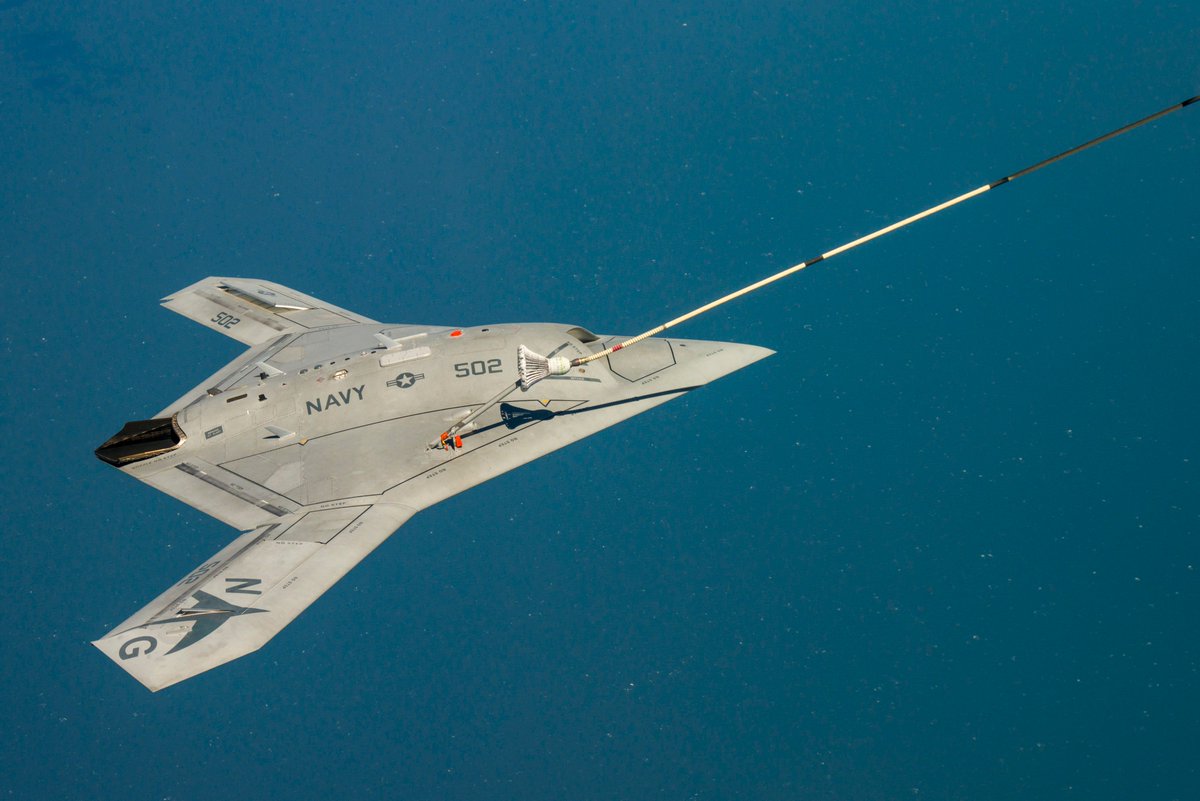
In the future, MQ-25A Stingray and/or derivative would replace or complement F-35 in the ISTAR role, besides supporting strike fighters with aerial-refueling.

Tuesday, July 19, 2016

HAL Seeking Private Sector Partner to Manufacture its 320 daN turbojet for missiles / drones

HAL developed 425 Kgf Manik turbojet for Nirbhay cruise missile

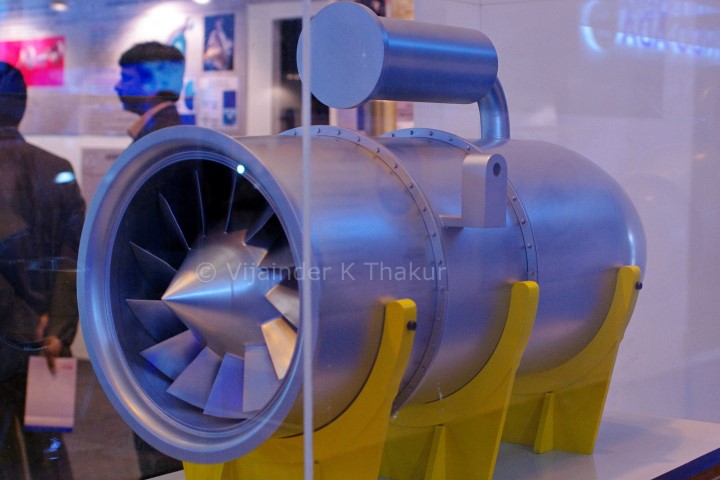
HAL intends to design and develop a 320 daN (326 kgf) thrust class jet engine for various applications.

The single spool turbo jet engine would have an envelope diameter of 310 mm and length of 740 mm.

It would be capable of operating in altitude range of Sea Level to 8.5 km.

The engine would have a SFC of 1.175 kg/daN-h, a starting envelop of 8.5 km to SL @ 0.4 to 0.8M, endurance of 1,000 sec

Physical Parameters and Weight


Length <= 740mm (Excluding LRUs)
Diameter <= 310mm
Dry weight < 44-kg (Excluding LRUs and cartridge Starter)

Initial Requirement

2 engines for Technology Demonstrator (TD)
10 prototype engines for various certifications / qualification trials
5 deliverable engines for limited series production

Private Sector Manufacturing Partnership


HAL on May 31, 2016 released a RFI for 'Selection of an Indian partner to manufacture aero engine in India.'

The due date for submission of a response to the RFI is August 10, 2016

HAL has invited interested Indian partners to undertake the manufacture of the engine by establishing all the required facilities including test rigs and engine test bed. HAL will manufacture 2 technology demonstrators and 3 qualification test units.

In the proposed partnership arrangement, the marketing of end product will be in the scope of HAL.

The current projection is to produce about 12 engines over 2 years time frame after initial development phase. The engine under development is likely to undergo changes during the productionisation. Once the development phase is completed, it is anticipated that the total no of engines required would be around 250 over 5 to 6 year period.

***

You can support my efforts aimed at sharing information on Indian Defense and Space Research by purchasing my maiden novel 'Triumph in Surrender,' a thriller romance set in contemporary IAF.


Sunday, July 17, 2016

ISRO's Forthcoming ATV-D02 Scramjet Test Details


The photo above of the ATV-D01 mission shows two scramjets strapped to the second stage of a Rohini-560


ISRO is poised to fly the maiden test of its scramjet engine developed under the Air Breathing Propulsion Project (ABPP) in the next few days .

A component of ISRO's Reusable Launch Vehicle (RLV) project, the ABPP aims to reduce the size of launch vehicles and increase their payload capacity, facilitating cheaper access to outer space.

ISRO refers to the scramjet test mission as ATV-D02 or Advanced Technology Vehicle Development Flight 2. (In March, 2010 ISRO conducted an unpowered flight test of the Scramjet engine using the ATV-D01 mission.)

The ATV-D02 mission will use a Rohini-560, a two stage sounding rocket, to test the scramjet. The rocket will feature two active scramjet engine modules and the associated fuel feed system. The scramjet engines would be symmetrically strapped to the second stage of the rocket for the experimental flight. (Rohini-560 is ISRO's largest sounding rocket. The 560 designation comes from the 560mm diameter of the rocket.)

ATV-D02 will use scaled down ramjets, each half-meter long and weighing 45-m long.

Apart from demonstrating hypersonic ignition at Mach 6, ISRO hopes to sustain combustion for 5 seconds.

The Rohini second stage will achieve a height of 70 km and sustain Mach 6 +.05 and dynamic pressure (80 + 35 kPa) for seven seconds. These conditions are required for a stable ignition of active scramjet engine combustor. Once lit, the scramjet will sustain hypersonic flight for five seconds.

At Mach 6, the drag on a air vehicle is considerable. A challenge with scramjet propulsion is to develop more thrust than drag. ISRO hopes to demonstrate good thrust value with its scramjet engine.

*** Support my blogging efforts by purchasing my maiden novel 'Triumph in Surrender'.  ***

Thursday, July 14, 2016

Bharat Forge Kalyani and Uralvagonzavod Sign 155mm SP Howitzer Co-production Deal


"MSTA-S" self-propelled guns. Source:mil.ru [via RIR]

General Director of the "Uralvagonzavod" corporation Oleg Sienko and the CEO of the Indian company Bharat Forge Kalyani of the Kalyani Group signed a memorandum of understanding providing for the establishment of the co-production of self-propelled artillery units (SAU) in India. It's not clear if the deal will bring the Russian gun back into contention for supplying SP 155mm howitzers to India under its artillery modernization program. [source]

The ET reported on July 1, 2016 that MoD had wrapped price negotiations with L&T for purchase of 100 guns, earmarked for deployment along India's border with Pakistan.

A contract has been finalized and will be forwarded for approval to the Cabinet Committee on Security.

The value of the contract - Rs 4,500-crore - makes it the largest to be entrusted to the industry.

L&T, along with its technology partner Samsung, will produce the guns in India at L&T's Strategic Systems Complex at Talegaon near Pune with close to 50% indigenous content.

The Indian Express reported on January 11, 2016 that MoD on December 22, 2015 opened the price bid of L&T, the only gun to qualify in the trials. Price negotiations with L&T will commence this month and are likely to be concluded in this financial year. The deal for 100 guns is estimated to cost between Rs 4,500 to Rs 5,000 crore. The contract will also have a follow-up option clause of 50 additional K9 Vajra-T guns.

The first 10 guns are to be supplied by L&T to the Army within 18 months of signing, with the balance 90 guns to be supplied in the next two years.

Additional details are available on my paid (Rs 500/- per year) access site IDP Sentinel.

Access to the site is free for one year for those who purchase my maiden novel 'Triumph in Surrender'. Click here to purchase the book from Amazon.

The reason for the small access fee are explained at this link.


Russia's Project 23000E Shtorm (Storm) Aircraft Carrier Design: A Strong Contender

Photo credit: Artem Tkachenko / Wikipedia


Russia has offered its "Shtorm" nuclear aircraft carrier design to India for purchase, the Defense News reported on July 12, 2016. A diplomat with the Russian Embassy confirmed that a Russian team visiting India last week made the offer. The Deccan Herald confirmed the visit today reporting that the Russian team had met Defense Secretary G Mohan Kumar. MoD is likely to seek opinion of the Navy and undertake a detailed cost-benefit analysis before taking a call on the offer. In March 2016 the Izvestia newspaper had reported that Russia's Krylovsky State Research Center (KRSC) would be offering its new multipurpose heavy aircraft carrier design called Project 23000E Shtorm (Storm) for the Indian Aircraft Carrier-2 (IAC-2) project. The Shtorm project was first revealed to the public in June at the Army-2015 show near Moscow, where a scale model of the ship was exhibited. The model featured a split air wing comprising navalized T-50 PAKFAs and MiG-29Ks, as well as jet-powered naval early warning aircraft and Ka-27 naval helicopters. The presence of AEW&CS models on the deck suggested the carrier would be able to operate heavy aircraft, perhaps using a Russian developed EMALS analog. The Shtorm design has a displacement of up to 100,000 tons, is 330 meters long, 40 meters wide, and has a draft of 11 meters. It has a nuclear power plant, although initial plans state a conventional one may also be used. The ship is designed to sail at up to 30 knots (around 55 km/h) and withstand sea state 6-7 (characterized by waves up to 9 meters high).

Navy Seeing Design Finalization by 2016 End

The Hindu reported on January 22, 2016 that design of the carrier would be frozen by the end of 2016. Feasibility study has started and would be completed in 8-10 months leading to a design freeze. Design consultancy will be sought from foreign companies with expertise in carrier design and construction. Five countries have been identified for the purpose — the U.S., Russia, France, the U.K. and Italy — all of which currently operate carriers. With the December 2016 deadline looming, the Shtorm would be a strong contender with an already finalized design.

Design Cooperation with the US

India and the US are exploring the feasibility of co-designing INS Vishal under DTTI. That may prove to be too little too late.

Nuclear Propulsion

EMALS based carrier operations require lot of electrical power, mandating nuclear propulsion (NP). Russia has built and operated nuclear powered heavy cruisers. It earlier helped India develop NP for Arihant class SSBN. It's likely that Russian NP ToT for a super carrier would come with less strings attached than US ToT. Additional details on the IAC-2 (INS Vishal) project are available on my paid (Rs 500/- per year) access site IDP Sentinel.
Access to the site is free for one year for those who purchase my maiden novel 'Triumph in Surrender'. Click hereto purchase the book from Amazon.

The reason for the small access fee are explained at this link.