Showing posts with label Army. Show all posts

Monday, September 26, 2016

Uri Attacks: India doesn't have a military option! Really?

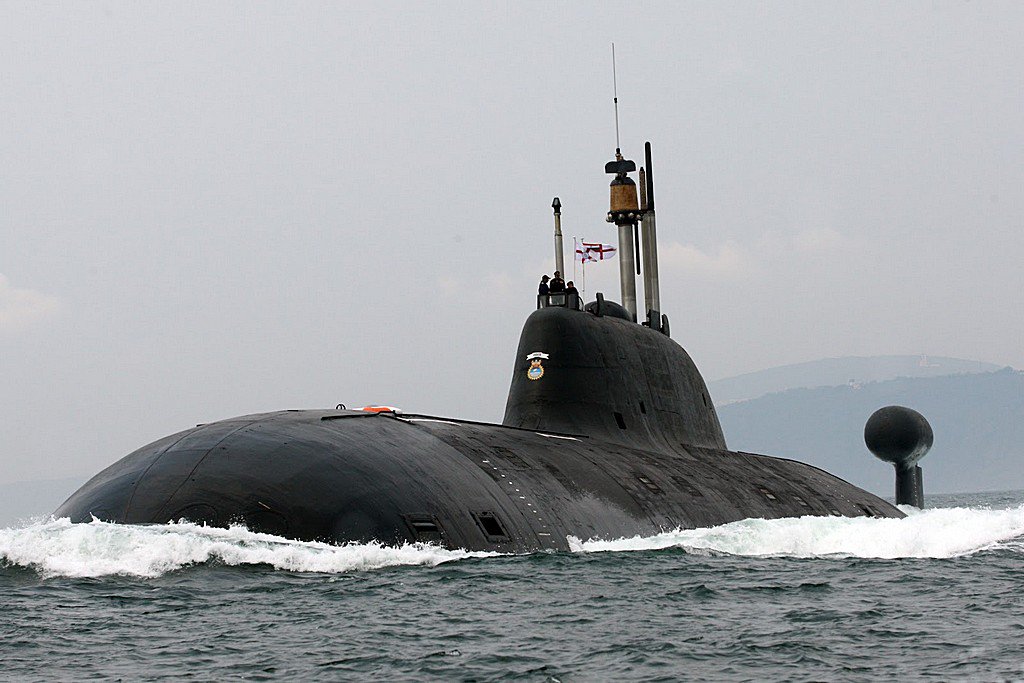
INS Chakra


Reputed military analysts have asserted that India needs to impose a military cost on Pakistan for its cross border attacks such as in Pathankot and Uri.

In a just published article titled Lessons from the Uri Attack Lt Gen Philip Campose, former Vice Chief of Army Staff, suggests:

"Militarily, the cost of terror attacks for Pakistan should be raised to unacceptable levels by exploiting Indian military strengths to target Pakistan’s weak points. Concurrently, own vulnerabilities should be secured."

The option has been repeatedly put on the table, only to be rejected as being unviable by our political leadership. Most of the arguments against this option are specious. Here are my thoughts on one of them

Some defense analysts point out that India will not be able to leverage it military quantitative and qualitative advantage over Pakistan in a short conflagration limited to the LoC because our forces are evenly matched. As a result, Indian military options are severely limited.

The conclusion is flawed because the supporting logic is presumptive and ignores vital facets of the asymmetry that exists in war
fighting potential. For example, India has military assets unmatched by Pakistan. A nuclear submarine that can wreak havoc in the Arabian sea against the Pakistan Navy. IAF Su-30MKI fighters can dominate vast stretches of the Arabian Ocean along the Pakistani coast. Our Brahmos equipped warships, in coordination with INS Chakra and IAF BVR equipped Su-30MKI and AWACS, would put Pakistani warships at grave risk.

The logic for confining an Indian military response to the LoC is dubious in military terms, as the extent of the military asymmetry varies sharply along the Indo-Pak border and the Arabian sea. The asymmetric is very pronounced in the Arabian sea, quite pronounced along the IB, and marginal along the LoC. Why on earth would we want to confine our military response to the LoC?

Any military action must have a clear and easily achievable aim. In order to ensure success, we should respond in sectors with high asymmetry.

Targeting Pakistani warships or Maritime Reconnaissance aircraft over the Arabian sea under the fig-leaf pretext that they were maneuvering in a hostile fashion is a low hanging fruit. The adversary just does not have the assets to take on the India Navy. He would be forced to either respond over land or run to the UN and International Court of Justice. A military response on land would put Pakistan on step one of the nuclear escalatory ladder, a long climb away from the nuclear threshold, allowing India to punish it some more.

There are other possibilities. The Indian Army has the capability to seize Pakistan territory along the International Border in a cold start sharp military action with the aim of humiliating Pakistan. Those who may question the legality of such an action need to be told that our  military response needs to be effective, not legal, just as Pakistan's provocation at Pathankot and Uri were effective, but not legal.

Tuesday, September 20, 2016

Uri: It's too late for retribution, but here is what we can do

The Director General Military Operations (DGMO) Lt. Gen. Ranbir Singh briefing the media on the terrorist attack at Army Camp, in Uri, Jammu and Kashmir on September 19, 2016.

Yes, it's too late for India to take any overt action against Pakistan for its attack on the Brigade HQs at Uri, which martyred 18 Indian soldiers. The window for a response has long closed. Responding now would be foolhardy and result in casualties disproportionate to any payoff.

A military action, must have a clear achievable aim. What would be the aim of any military action now?

Retribution? The terrorists are quite dead. By calling them terrorists, not ISI trained warfighters which they were, we absolved the Pakistan army of responsibility, so there is no logic in seeking retribution from the Pakistan army!

Hitting terrorists in camps? Terrorists may train in camps, but the Indian Army won't find them sleeping in any of them. They would have merged with the populace at the first news of the Uri attack.

Teaching Pakistan a lesson? It involves escalatory risks and will definitely result in many more coffins and dolorous footage of grieving family members. Most importantly, 'Teaching Pakistan a lesson' is not a clear achievable aim!

A Viable Option

If India still wants retribution, the best approach would be to declare the Uri attack as an act of war by Pakistan, which it indeed was; by no stretch of imagination was it a terrorist strike. Let's face the truth - Successive Indian governments have termed cross border attacks on Indian military installations as terrorist strikes, in order to duck the responsibility to respond to them. 

In the case of Pathankot and Uri, where commandos trained by the ISI crossed the border and directly struck Indian military installations, Pakistan didn't export terror to India, it attacked India! 

Pakistan is exploiting the Indian government's proclivity to weigh loss of soldier lives against loss of economic growth rate to the hilt. Labeling Pakistan a terrorist state and seeking its isolation after the Uri attack is an extension of the narrative that euphemistically labels an act of war as a terrorist strike. 

Declaring the Uri attack as an act of war would give India a viable, non escalatory, military response option. India could respond in a manner that Pakistan is incapable of matching.

For example, India could sink a Pakistan Navy warship or down a Maritime reconnaissance aircraft, taking responsibility only if some evidence were to emerge of Indian involvement. 

Lacking nuclear submarines, or long range fighters like the Su-30MKI, it would be impossible for Pakistan Navy to respond in a similar manner. 

Any Pak mobilization to counter Indian retaliation, would be viewed as escalatory by the world. More importantly it would be tantamount to revving up to nationwide grief.

Introspection

The Uri attack should not have been allowed to happen.

Here are some grievous mistakes made by India and its Armed Forces that led to the massive loss of life.

  1. There was no response action plan in place, despite Pathankot.
  2. There was no coordinated response to intel of a planned infiltration. ISTAR assets were not deployed to confirm the intel and thwart infiltration using artillery fire.
  3. Security at Brigade HQs was extremely lax despite an alert. The attackers inexplicably breached perimeter defenses without being challenged.
It's likely that many senior army officers' heads will roll on account of the above lapses.

Prevention

India can prevent future attacks from across the border by adopting the following three simple, non escalatory measures.

  1. The government should allow the Army and the IAF to use armed helicopters over unpopulated areas in close proximity of the LoC. Such use would allow the Army to plug infiltration routes more effectively.
  2. The Army must be given carte blanche to stop infiltration. Intel on planned infiltration should be verified using ISTAR assets. If confirmed, the LoC in the sector must go live with small arm fire, artillery fire and Special Ops to thwart the infiltration. 
  3. The Army must be given carte blanche to revenge infiltration. Following a Pathankot like strike, the Army must be able to retaliate immediately in whatever manner it feels best within the sector used for infiltration. The Army should have clearance to strike targets upto 60-km deep using rockets.
The nation is grieving. While there is solace in retribution, there is also likelihood of more grief. Our endeavor should be to foil Pakistan's low intensity war against us. It can be done through introspection, addressing our shortcomings and forceful leadership.

Thursday, July 14, 2016

Bharat Forge Kalyani and Uralvagonzavod Sign 155mm SP Howitzer Co-production Deal


"MSTA-S" self-propelled guns. Source:mil.ru [via RIR]

General Director of the "Uralvagonzavod" corporation Oleg Sienko and the CEO of the Indian company Bharat Forge Kalyani of the Kalyani Group signed a memorandum of understanding providing for the establishment of the co-production of self-propelled artillery units (SAU) in India. It's not clear if the deal will bring the Russian gun back into contention for supplying SP 155mm howitzers to India under its artillery modernization program. [source]

The ET reported on July 1, 2016 that MoD had wrapped price negotiations with L&T for purchase of 100 guns, earmarked for deployment along India's border with Pakistan.

A contract has been finalized and will be forwarded for approval to the Cabinet Committee on Security.

The value of the contract - Rs 4,500-crore - makes it the largest to be entrusted to the industry.

L&T, along with its technology partner Samsung, will produce the guns in India at L&T's Strategic Systems Complex at Talegaon near Pune with close to 50% indigenous content.

The Indian Express reported on January 11, 2016 that MoD on December 22, 2015 opened the price bid of L&T, the only gun to qualify in the trials. Price negotiations with L&T will commence this month and are likely to be concluded in this financial year. The deal for 100 guns is estimated to cost between Rs 4,500 to Rs 5,000 crore. The contract will also have a follow-up option clause of 50 additional K9 Vajra-T guns.

The first 10 guns are to be supplied by L&T to the Army within 18 months of signing, with the balance 90 guns to be supplied in the next two years.

Additional details are available on my paid (Rs 500/- per year) access site IDP Sentinel.

Access to the site is free for one year for those who purchase my maiden novel 'Triumph in Surrender'. Click here to purchase the book from Amazon.

The reason for the small access fee are explained at this link.


Tuesday, August 18, 2015

RFP for Air Defense Guns and Ammunition Likely in September

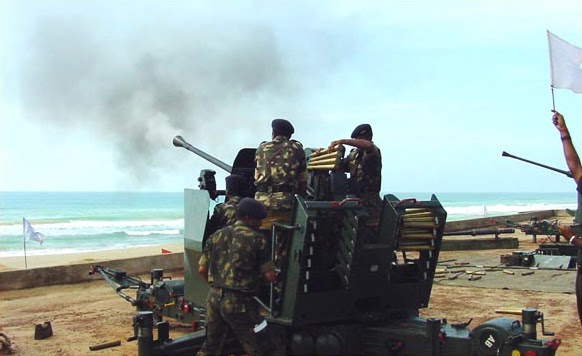
L-70 Towed AD Gun of the Indian Army
As a prelude to issuing a Request for Proposal (RFP) for Air Defense Gun (Successor) with Ammunition, the Indian Army has invited vendors desirous of competing for the contract to submit information (Appendix E) as per Para 24(d) of Chapter 1 of DPP-2013 by 13 September 2015.

The Army released a RFI from OEMs/Vendors in India in April 2014 for a gun that is capable of engaging air targets during day and night using Fire Control Radar and  Electro Optical Fire Control System (EOFCS). The gun should also be capable of engaging air targets passively, without the Fire Control Radar. Preferred gun caliber is 30-mm or above; the guns are required to be broad gauge transportation compatible.

The Army wants a gun that can effectively engage targets in mountainous terrain.

MOD reportedly sent the RFI to Tata Power SED, Larsen & Toubro, Punj Lloyd, Bharat Forge, and state-owned Ordinance Factory Board (OFB) and Bharat Earth Movers.

The Indian Army is planning to procure towed Air Defense (AD) Guns and ammunition along with Maintenance Transfer of Technology (MToT). The project involves manufacture of 1,102 AD guns over the next 15 years to replace the 1950s vintage L-70 acquired from Swedish firm Bofors and the Zu-23mm acquired from USSR's Podolsky Electromechanical plant.

In the first stage, the manufacturer will have to supply the army with 428 guns over the next five years. Several lakh rounds of ammunition would need to be manufactured in India.

IDP Sentinel members can read details at the following link.

Towed Air Defense (AD) Guns (IDP Sentinel)

Thursday, August 6, 2015

VRDE Developing BMP-2 Sarath Upgrade

Kayani Group's BMP-2 upgrade concept at DefExpo 2014

Vehicle Research & Development Establishment (VRDE) has released a tender seeking a development partner for upgrade of BMP-2 Sarath ICV's 30mm Gun turret stabilizer system and development of an interfaced Gunner & Commander sighting system.

The vendor would be required to prove the complete system on the Sarath ICV by demonstrating target acquisition, aiming & firing on the halt and on the move at a static or moving ground & aerial target with an accuracy of 1mil or better.

The Development Partner (DP) would be required to:

  1. Develop twin axis stabilized Gunner’s Main sight
  2. Develop twin axis stabilized Commander’s Panoramic sight.
  3. Engineer Modification on the turret to suitably replace existing Gunner sight and Commander Aerial sight with developed Gunner Sight and Commander sighting system & associated sensors in the same envelope of existing sighting system.
  4. Develop & Fabricate necessary adapters for mounting of sights and sensors.
  5. Interface sighting system with Stabilizer.
  6. Engineer modifications to stabilizer to interface with sighting systems.
  7. Adopt of existing Control Handles & other MMIs for operation of complete FCS.
  8. Develop FCS, software modifications; incorporate range tables and switch configurations in existing gunner & commander control handles to enable firing of various ammunition from the main gun & co axial weapon from Gunner and Commander sight.
  9. Evolve various modes of operation such as commander master, gunner master, target designation, Sight master, Gun Stabilizer master.
  10. Supply Gunner & Commander Stations.


In addition, the vendor would be responsible for testing and trials of the systems.

The existing Stabilizer specifications and functionality need to be retained. The modifications need to be carried out in stabilizer system for interfacing & integration with Commander’s Panoramic sight and gunner sight retaining existing modes of operation. The vendor shall have complete know how of existing stabilizer system. No armor cutting on turret will be carried out for fitment of sighting system and associated Electronics.

Infantry Combat Vehicle (ICV) Modernisation

Indian Army released a Request for Information (RfI) on October 21, 2014  from vendors willing to undertake Comprehensive Upgrade of BMP-2/2K covering Mobility, Fire Power and Survivability. The upgrade will be applied to approximately 2,600 vehicles comprising existing inventory as well as APCs to be produced in the future.

Foreign vendors are free to compete directly for the procurement.

Firms bidding for the upgrade contract would be required to upgrade one BMP-2/2K for trials on “No Cost No Commitment” basis.

Russia exhibited its proposed upgrade of the BMP-2 ICV at DefExpo 2014.

The kit based Russian upgrade can be implemented at low cost and in short time. The upgrade requires minimal modifications of the tower. Additional weapon fit can be implemented in place on a BMP-2.

Pune based Kalyani Group pitched an upgraded BMP-2 Infantry Combat Vehicle (ICV) at the DefExpo 2014.. The upgraded BMP-2 features Rafael's Samson MkII remotely controlled weapon system with a 30mm cannon from ATK and two Spike LR missiles from Rafael. The turret, which features  two MiniPOP optronic sights for the gunner and commander, is designed to fit armor protection according to the level specified by the customer.

IDP Sentinel members can read more at the link below:

Infantry Combat Vehicle (ICV) Modernisation (IDP Sentinel)

Saturday, June 13, 2015

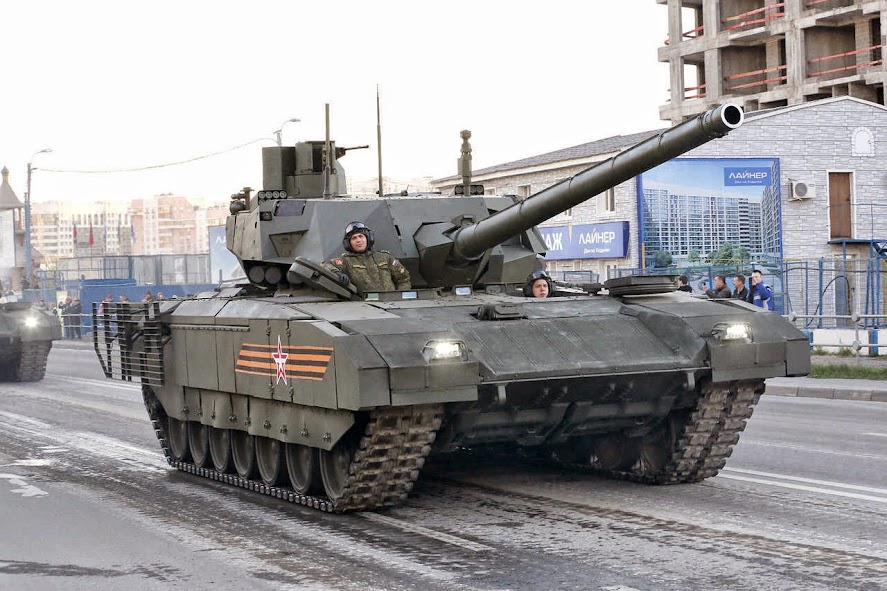
Breaking & Thumkar Exclusive: Indian Army Seeks its Own Armata - Future Ready Combat Vehicle (FRCV)

The newly unveiled Russian Armata tank

The Indian Army plans to design and develop a futuristic combat vehicle called the Future Ready Combat Vehicle (FRCV)  to replace the T-72 tanks of the Armored Corp starting 2025-27. [RFI]

This tracked fighting vehicle would feature a modular design that will be leveraged to create a family of combat vehicles.

The FRCV's modular design would be flexible to an extent where it can be configured to operate in varying terrain.

The following variants are planned to be developed on the FRCV platform:


  1. Tracked Main Battle Tank - Primary variant.
  2. Tracked Light Tank.
  3. Wheeled Version.
  4. Bridge Layer Tank (BLT).
  5. Trawl Tank and Mine Ploughs.
  6. Armored Recovery Vehicle (ARV).
  7. Self Propelled Artillery Gun/Howitzer.
  8. Air Defense Gun/Msl System.
  9. Artillery Observation Post Vehicle.
  10. Engineer Reconnaissance Vehicle.
  11. Armored Ambulance.
  12. FRCV Development Process


The FRCV has been conceived as a Design and Development project, to be executed in three stages as under:


  1. Design Stage.
  2. Prototype Development Stage.
  3. Production Stage.
During the three development stages, the Design Agency and Developing Agency (DA) could be separate entities. The best design would be chosen and given to nominated DA(s) for production of the prototype(s). The selected prototype will be given to Production Agency(s) (PAs) for bulk production.

The FRCV would be required to conduct sustained continuous operations by day and night in all weather conditions in terrain and temperature ranges obtaining on India’s Western borders.

The FRCV should be in the `Medium Tank’ category whose physical dimensions should facilitate transportability over existing terrain, in-service military bridges and major civilian infrastructure (including bridges) in the border areas (on either side of the Western border).

Crew


The number of crew members should be such that they can perform their
designated tasks, and operate all on-board systems without hindrance and without any overlapping of duties/ responsibilities.

Fire Power


Should be well matched to contemporary MBTs in engagement ranges, all weather day/night fighting capability, depth of penetration and variety of ammunition.
Should have very high accuracy [High FRHP (First Round Hit Probability)] and very high lethality [High SSKP (Single Shot Kill Probability)], at par with contemporary MBTs.

Protection.


Should provide very high all-round protection, including ballistic, active and any other form of anti-armor technologies, to ensure survivability in the contemporary and future battlefield.
Should incorporate signature reduction technologies.
High response evasion/ anti-detection system.

Mobility


Should have adequately high power-to-weight ratio to enable all on-board systems to be run simultaneously, without disrupting the agility and mobility of the vehicle.
Should have high operating range, comparable to contemporary MBTs

IDP Sentinel members can read more details at the link below

Future Ready Combat Vehicle (FRCV) - IDP Sentinel

Monday, June 1, 2015

News Roundup: AMCA Powerplant, Army's Tactical Communication & Battlefield Management Systems

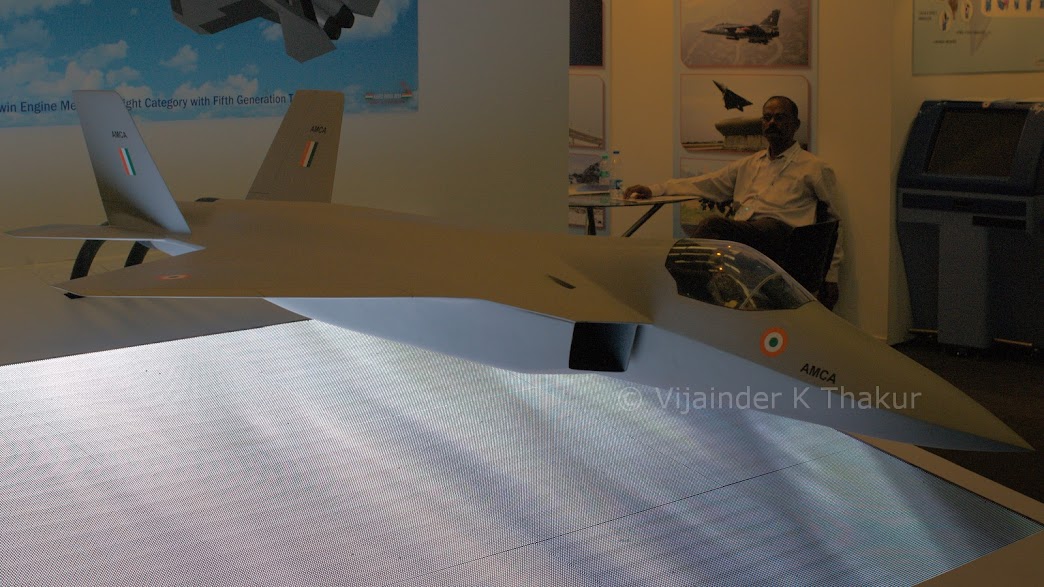
AMCA Scale Model at Aero India 2015

Carter Visit Crucial for AMCA Development 

US Defense Secretary Ashton Carter's visit to India on Wednesday, June 3, 2015 will be crucial to progress of India's Advanced Medium Combat Aircraft (AMCA). 

According to Business Standard, Indian officials plan to press Carter on sharing US hot engine technology with India under DTTI, as alluded to in the joint statement released during US President Barack Obama's visit to India from January 25 to 27, 2015.

The IAF wants the AMCA to be a 25-ton class aircraft fitted with a 110-kN engine. Currently there is no 110-kN class engine is available in the world market.  However, GE Aviation is developing a 120-kN variant of the F414 called the F414 EPE (Enhanced Performance Engine).

The F414 EPE is a hot engine - its turbine blades are made of new materials and use more efficient cooling, enhancing turbine temperature tolerance by 150 °F (66 °C). The engine produces 18 percent more thrust than the F414, mostly because of increased turbine temperature.

What works well for India is that the LCA Mk-2 and the LCA Navy Mk-2 are to be powered by the F414 which has a thrust of 22,000 lb (98 kn), India placed an order for 100 F414 engines in 2011.A few would be delivered off the shelf, and the rest produced in India.

ADA wants to build prototypes of AMCA using F414 engine, and use the F414 EPE for series production aircraft.  The hope is, India would fund development of a F414 EPE variant for the AMCA under DTTI and in the process gain access to hot engine technology. US readiness to part with the technology or otherwise would prove crucial to the AMCA project. 

IDP Sentinel members can read more details at the link below


Indian Army Tactical Communication System (TCS) RFP Expected in 6 months


BEL Chairperson & Managing Director S.K. Sharma in his first media interview on May 31, 2015 said that he expected a RFP for the project in six months.

Tactical Communications System (TCS) is conceived as a high-bandwidth, mobile, data and voice network that can be rolled out, even in enemy territory during war.

The Army will use TCS to provide a dedicated mobile communication system with anti-jamming and electronic countermeasures capabilities.

IDP Sentinel members can read more details at the link below.


Indian Army Battlefield Management System (BMS) RFP Expected Next Year


BEL Chairperson & Managing Director S.K. Sharma also said that he expected a RFP for the Battlefield Management System (BMS) next year. 

The BMS is conceived as a wireless network that links digital devices carried by combat soldiers, interlinking them, their commanders and a range of battlefield sensors. This provides a common battle picture to each individual. 

The system will integrate all combat units - armored, artillery and infantry regiments, infantry battalions and helicopter flights - and enables commanders to track every soldier and weapon on the battlefield and exchange reports, photos, data and verbal and written communications. The BMS will also facilitate sharing of data from seismic sensors, surveillance radars, long range optical sensors and thermal imaging devices in the battlefield.

When deployed, BMS will cover more than 70 per cent of soldiers while digitising the tactical battlefield and creating a secure IoT (Internet of Things) for the army.

IDP Sentinel members can read more details at the link below:

Tuesday, May 19, 2015

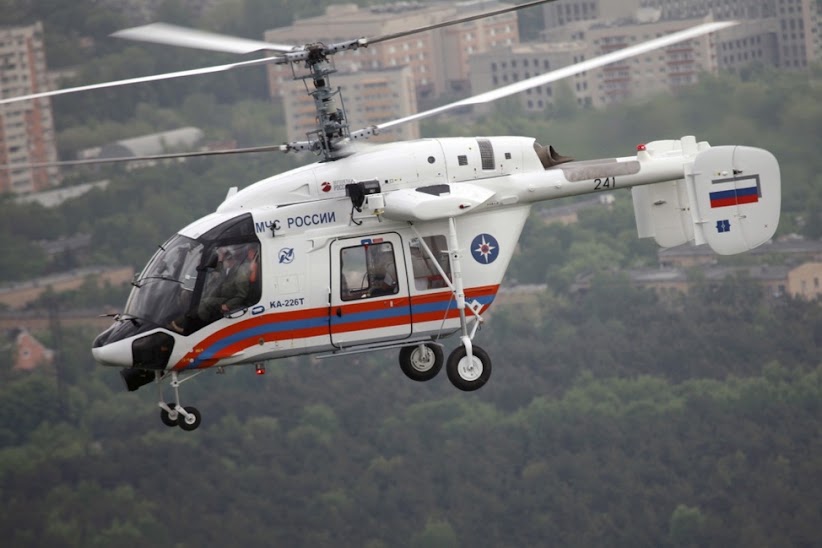
Why MoD Picked the Kamov Ka-226T 'Hoodlum' over the Eurocopter AS550 C3 Fennec

Ka-226T Photo Courtesy: Russian Helicopters

The Defense Acquisition Committee (DAC) on May 13, 2015 accepted Russia’s offer to build 200 Ka-226T light-utility helicopters under the Make in India initiative. The cost and other moralities are being worked out.

An official source told Janes that around 50 Ka-226Ts may be imported off the shelf to address immediate IAF and Army Aviation Corp (AAC) requirements.

HAL would likely license produce the aircraft in India with the Gurgaon based SUN Group, which has a tie-up with Russian Helicopters, manufacturing main Ka-226T parts in India, including fuselage, column and main rotor.

HAL hopes to achieve a annual production rate of 30 to 40 Ka-226T helicopters, steadily increasing indigenous content, achieving 30 percent within the next 3 to 4 years.

India and Russia agreed in principle to assemble Kamov-226T helicopters in India during Russian President Vladamir Pution's visit to India on December 11, 2014.

At a joint media interaction with Putin, Modi said, "I am pleased that Russia has offered to fully manufacture in India one of its most advanced helicopters. It includes the possibility of exports from India. It can be used for both military and civilian use. We will follow up on this quickly."

Follow-up quickly is just what the government has done, in a refreshing and reassuring change from the ways of the past.

Ka-226T vs AS550 C3

IAF and AAC personnel evaluated and approved the Kamove Ka-226T 'Hoodlum' and Eurocopter AS550 C3 Fennec as part of the procurement process for 197 light helicopters to replace aging Chetak and Cheetah helicopters in service.

So why did the MoD opt for the Ka-226T?

The biggest reason would have to be the Russian offer, made by President Putin himself. There is no parallel offer from Eurocopter.

Here are some other reasons that may have prompted the MoD decision in favor of Ka-226T


  • Being twin engine (Tubromeca Arrius 2G1), the Ka-226T is safer than the single engine (Turbomeca Arriel-2) AS550 C3.
  • Ka-226T's Turbomecca Arrius 2G1 engines are manufactured by France's Safran. HAL and Safran have an existing technical tie-up; they jointly developed the Shakti engine for HAL's Dhruv Light Utility Helicopter (LUH) and Light Combat Helicopter (LCH). The Shakti is a derivative of Safran's Turbomecca TM333-2B engine.
  • The Arrius 2G1, which is customized for the Ka-226, can reportedly use multiple grades of fuel without performance penalty. 
  • The Ka-226T engines can reportedly be restarted in 35 seconds; the AS550 C3 engine needs 45 seconds.
  • Ka-226T rotor blades can be folded back towards the tail boom, facilitating compact storage and easy transportation.
  • Ka-226T autopilot features four axis stabilization facilitating hovering, which is not case with AS550 C3.
  • The Ka-226T is bigger and heavier featuring more cargo space and 40 percent heavier payload (1160 kg vs 760 kg)
  • A helicopter with contra-rotating rotors is more stable in gusty winds such as those encountered in mountainous regions.
  • The use of contra-rotating rotors reduces rotor diameter, which facilitates higher max speeds

References: 

Monday, February 2, 2015

Do Indian Plans to Counter Chinese Threat Help China Tighten the Noose?

New Chinese Light Tank on the Tibetan plateau. Photo via China Defense Blog

In the Sino-Indian stand-off along the LAC, India seems to be doing the talking, and China the walking.

Bureaucratic tardiness in defense procurement and a loud mouthed press seem to be giving China both clues and time to make sure India remains hopelessly on its back foot.

Invariably, the PLA is already doing what the Indian Army plans to do! Look at these examples.

High Altitude Helicopters to Transport Guns

India invited bids for 15 heavy-lift helicopters in May 2009 to ferry the BAe Land Systems M777 ultra-light howitzers that the Indian Army intended to procure for its new raising - the XVII Mountain Strike Corps.

Boeing (CH-47F Chinook) and Mil (Mi-26 T2) submitted competing bids. In 2012, following extensive technical and commercial evaluation, Boeing's bid was assessed as being more competitively priced and the government decided to procure the helicopters from the US under FMS. In parallel, a decision was also taken to procure the M77 gun from the US under FMS.

Both projects have made no headway so far!

Meanwhile, China recently tested a Z-18A helicopter on the Tibetan plateau at an altitude of 8000-m. The helicopter is reportedly meant to transport AH-4 155 mm light artillery system developed by the China North Industries Corporation which weighs around 4 tons!

Do you get the point?

The Z-18A can also be used for anti submarine warfare and as a troop and VIP carrier. Our press has talked ad nauseam about the M777/Chinook projects but there has been hardly a mention of the Z-18A and AH-4 155-mm gun.

Incidentally, China also has 18 "Black Hawk" attack helicopters manufactured by Sikorsky that can operate on the Tibetan plateau, just in case you were thinking about the 22 Apaches to be procured along with the Chinooks under FMS.

The Chinese are not just a few steps ahead in the game. They are far ahead!

High Altitude Variant of Mi-26T

It was recently reported that Russia and China will co-develop a high altitude version of M-26T helicopter with a take-off weight of 38 tons for use on the Tibetan plateau.

The new helicopter will be smaller and lighter than the Mi-26T, but feature the same engines giving it the reserve of power to lift heavy stuff even at 8000-m

Tanks for the Tibetan Plateau

The Indian Army biggest fear along the LAC is that China might use its superior infrastructure to rapidly mobilize PLA formations and launch a determined push into Arunachal Pradesh, overwhelming Indian forces which would still be in an early stage of mobilization.

Faced with such an eventuality, the Indian Army's only counter would be to open another front, break through Chinese defenses and use armor to strike deep into Tibet.

The problem with the strategy is that it requires light tanks that can be easily transported to the LAC.  India doesn't have light tanks and is relying on it medium sized T-72s and T-90s to do the job! Despite the difficulty in transporting them on the poorly built border roads, the Army has managed to do position these tanks along the LAC.

DRDO hasn't been of any help to the Army in terms of light tanks. According to the DRDO the 60-ton Arjun behemoth is the answer to all armor requirements of the Indian Army!

Meanwhile, since 2011 pictures of a Chinese light tank have been appearing on the internet. The tanks is equipped with a 105-mm gun and features armor protection through sloped glacis plates. The tank has been photographed while being transported to Tibet on flat-bed rail cars. [source]

Chinese Analog of C-130J

India signed a deal for procuring six C-130J-30 Special Operations aircraft in 2008 from the US through FMS. All the 6 aircraft have been delivered. One aircraft - KC-3803 - was lost in an accident on March 28, 2014.

In July 2014, India ordered an additional 6 aircraft bringing the cumulative value of the purchase to $2.06 billion. 

The C-130J procurement is mostly aimed at supporting the newly raised MSC's operations on the Tibetan plateau. The aircraft handles well at high altitudes and can land in pitch darkness on unpaved landing grounds.

Meanwhile, China has been steadily upgrading its An-12 CUB airlifter. The IAF had An-12 but it discarded many years back! The latest version of the Chinese aircraft, Shaanxi Y-9, was recently displayed at the Z airshow. The Y-9 is widely regarded to be a Chinese equivalent to the C-130J Hercules. [source]

Friday, January 16, 2015

'Make in India' Revives M777 155mm / 39 Caliber Towed Howitzer Deal

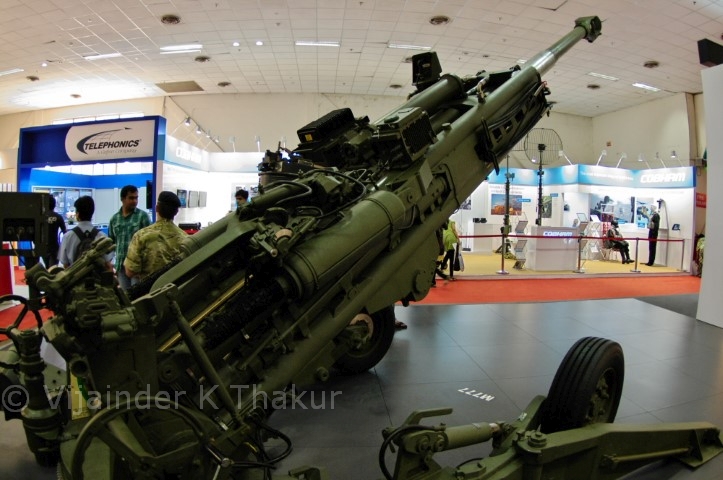
M777 at DefExpo 2012

Janes reported on January 14, 2015 that BAE Systems has offered to transfer its entire M777 155mm/39-caliber howitzer assembly line from the US to India.

"Encouraged by Prime Minister [Narendra] Modi's 'Make in India' call, we have developed and submitted a strengthened proposal on the M777 case [to India's Ministry of Defense]. This includes a higher degree of indigenisation on the weapon system," BAE Systems said in a statement

"We have included in our offer the transfer of the [M777] Assembly Integration & Test (AIT) capabilities into India," the statement added.

Interestingly, the DRDO has lately been upset by the Indian Army's failure to place orders for the Arjun Catapult system which the DRDO developed in quick time against a specific Army request by mounting the towed 130 mm Russian field gun on an Arjun Mk-1 MBT chassis.

The Army understandably prefers the 4,218 kg, helicopter transportable, titanium built, US howitzer with good range and accurate ammunition over the nearly 45-t Arjun Catapult behemoth that could never equip the Army's mountain divisions.

It may be recalled that in July, 2014, Raksha Mantri Arun Jaitley had told the parliament that the 145 ultra-light howitzers deal had hit a dead end.

"The case has not progressed due to cost issues and because the vendor has not been able to come up with a proposal fully-compliant to the offset requirements," Jaitley said. [via PIB]

IDP Sentinel Members can read additional details about the proposed M777 procurement at the link below.

BAE Systems M777 155mm / 39 Caliber Towed Howitzer for Indian Army (IDP Sentinel)

Monday, December 22, 2014

Reconnaissance and Surveillance Helicopters (RSH) RFI Response Date Extension Makes Ka-226 Front Runner

Photo Courtesy Russian Helicopters

India and Russia agreed in principle to assemble around 400 Kamov-226T helicopters a year in India,during Russian President Vladamir Pution's visit to India on December 11, 2014.

At a joint media interaction with President Putin, PM Modi said, "I am pleased that Russia has offered to fully manufacture in India one of its most advanced helicopters. It includes the possibility of exports from India. It can be used for both military and civilian use. We will follow up on this quickly." [via PTI]

The Kamov-226 was a contender in the July 2008 RFP for 197 military Light Utility Helicopters (LUH) to replace the existing fleet of Chetak and Cheetah helicopters in the three service. The RFP has since been scrapped.

Procurement has been re-initiated through a MoD RFI dated September 29, 2014 aimed at identifying probable INDIAN VENDORS (including an Indian company forming joint venture/ establishing production arrangement with OEM) who can provide Reconnaissance and Surveillance (RSH) Helicopters for use by the Indian Army (IA) and Indian Air Force (IAF), followed by licensed production / indigenous manufacture in the country.

The Kamov-226 is likely to become the leading contender for the RSH helicopter if India and Russia can quickly settle on the terms of joint manufacture.

It may be noted that the last date of acceptance of response against the RFI was initially November 11, 2014, but was later extended through a corrigendum to December 23, 2014. A second corrigendum extended the last date to February 17, 2015!

The Hindu on December 22, 2014 reported citing an unnamed source that no partner has been identified from the Indian side for partnering with Russia on the Kamov-226 project.

“Hindustan Aeronautics Limited is a major player but private sector is also part of the negotiations” sources told The Hindu.

Wednesday, October 22, 2014

Indian Army Releases RFI for Comprehensive Upgrade of BMP-2/2K

BMP-2 Sarath ICVs at RD 2014


On October 21, 2014  Indian Army released a Request for Information (RfI) from vendors willing to undertake Comprehensive Upgrade of BMP-2/2K, covering Mobility, Fire Power and Survivability. The upgrade will be applied to approximately 2,600 vehicles comprising existing inventory as well as ICVs to be produced in the future.

Foreign vendors are free to compete directly for the procurement.

Firms bidding for the upgrade contract would be required to upgrade one BMP-2/2K for trials on “No Cost No Commitment” basis.

Upgrade proposals would be evaluated by a Technical Evaluation Committee (TEC) to ensure compliance with RFP. The equipment of all TEC cleared vendors would be put through a trial evaluation in India. A staff evaluation would be carried out by SHQ to analyse the result of field evaluation and shortlist the equipment for introduction into service.

Qualitative Requirements (QRs) for Upgrade

The upgrade must not compromise the existing amphibious capability of BMP 2/2K, or their ability to operate in varied climatic and terrain conditions varying from extreme hot desert conditions to extremely cold high altitude regions.

Any increase in weight of the APC due to the upgrade must be compensated by a more powerful engine that fits into the existing engine compartment. There should be no reduction in internal space.

The upgrade is expected to span the following major systems of the ICV:

Engine, Transmission, Gear and suspension system, Cooling system, Weapons system and ammunition, Gunner Sighting (Day and Night), Commander Sighting, Fire Control System (FCS), Anti Tank Guided Missile (ATGM), Level of protection and Maintainability,

The Indian Government had earlier announced that the Indian Army would be upgrading it's entire fleet of approximately 1,900 Infantry Combat Vehicles (ICVs) comprising BMP-2/2K to BMP-2M standard to enhance the fleet's firepower and lethality.

Upgraded ICVs will be fitted with the latest generation Fire Control System, Twin Anti Tank Guided Missile (ATGM) Launchers, 30 mm Automatic Grenade Launchers and Commander's Thermal Imaging Panoramic sights.

In addition, they will feature better observation and surveillance, night-fighting capability and fire control.

They will be powered by a new 380 HP engine to enhance the ICVs’ cross-country mobility, flotation and gradient negotiating capability. Existing BMP-2s which equip the Indian Army’s Mechanized Infantry regiments are powered by 285 HP Russian-origin UTD-20 285 engine, which limits their versatility.

ICVs are used for breaching enemy defenses and transporting troops behind enemy lines while keeping them safe from small arm fire.

IDP Sentinel members can read details about existing offers from competing vendors for upgrade of BMP-2 at the link below.

Infantry Combat Vehicle (ICV) Modernisation (IDP Sentinel)


Thursday, October 9, 2014

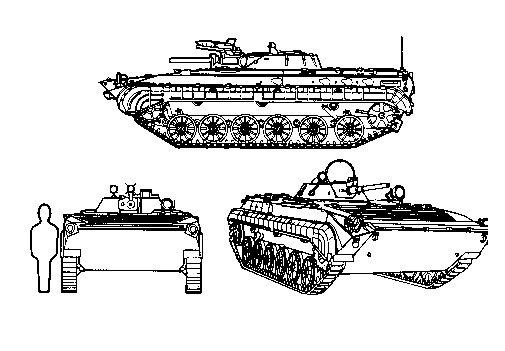
Army Tenders for BMP-1 ICV Reengining with Indigenous 400+ HP Automatic Transmission Powerpack

BMP-1 Graphic via Wikipedia
The Indian Army has invited proposals for re-engining its BMP-1 ICVs with an indigenous 400+ HP automatic transmission powerpack.

BMP-1 ICVs are currently powered by the 285 HP UTD-20 engine, which at times is found to be inadequate for cross country mobility, floatation and gradient negotiations.

The laden weight of ICV BMP-I is 13(+2%) Ton and the Army wants the new Powerpack to improve mobility, acceleration and gradient negotiation capability of the ICV without compromising vehicle's floatation capability.

The proposed Powerpack should fit within the existing power pack compartment of BMP-1 without disturbing the ICV's centre of gravity or impairing any of its functional or operational characteristics including floatation. Even the existing final drive location is to be maintained.

The 400+ HP indigenous engine should be diesel fueled, water/liquid cooled, turbo-charged, with at least two PTOs, electronically controlled and should be light
weight for enhanced power to weight ratio. It should be more fuel efficient and should offer extended service intervals. Fuel, lubricants and coolant used should be of the type for which indigenous equivalents are available and preferably of the same grades as those being used by other tracked vehicles in the mechanized forces of the Indian Army. Peak torque of the engine should be over 1200 Nm at 1300-1600 rpm. The engine should incorporate latest technologies with expected life of the engine (MTBO) exceeding 1200 hrs.

Fitted with the new Powerpack, the ICV should be be able to achieve max speed of 65-kph on hard level ground, max mission mode max speed of 20-kph and min speed of 5-kph for 8 hrs. It should be able to negotiate gradients of 35-deg in soft sand/ loose sand/ hard level ground/ marsh land.

Increment in the weight of BMP-I due to integration of the upgraded Powerpack should not exceed 500 kg. It must be ensured that amphibious capability of the BMP-I is not compromised due to the additional weight.

The transmission should be fully automatic and modular in design for easy installation and maintenance. It should preferably have 3 or 4 forward and at least one reverse range (ratio). The steering should be infinitely variable & regenerative type without use of brakes and clutches with pivot turn and dead Engine steering capability. It should have manual over ride facility. Parameter requirements are as under:-

A cruise range of 550-km is required

Infantry Modernization Projects - IDP Sentinel Members Only

Wednesday, October 1, 2014

DRDO Developing Gagan DGPS Based Automatic Take Off and Landing (ATOL) System


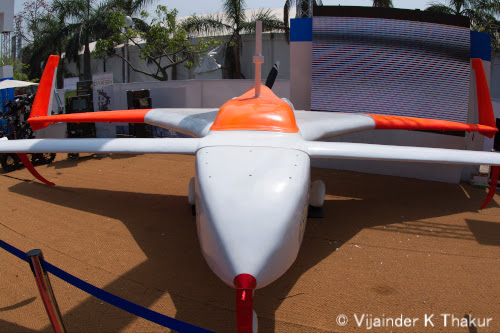
Rustom-1 MALE at DefExpo-2012

DRDO plans to carry out flight trials of a DGPS based Automatic Take Off and Landing  (ATOL) System.

Differential Global Positioning System (DGPS) is an enhancement to Global Positioning System that improves GPS location accuracy from the 15-meter nominal to an incredible 10 cm in a well implemented system!

The DRDO developed ATOL system would use Gagan DGPS developed by ISRO and DGCA which is now operational countrywide.

DRDO has equipped a Rutan Long Ez Manned Aircraft (YN7501) with Accord Technologies NexNav GPS-SBAS receiver and a GPS receiver with antenna for the trials which would be conducted at HAL Airport and Kolar Runway.

The Rustom-1 MALE developed by DRDO is basically an unmanned version of the Rutan Long Ez, a home built aircraft with a canard layout designed by Burt Rutan's Rutan Aircraft Factory.

Rustom-1 MALE has roughly the same performance as the Israeli Searcher UAV which is widely used by the Indian Army (IA) and the Indian Air Force (IAF). The IA has told DRDO that it will place orders for Rustom-1 only if the UAV is equipped with an ATOL system, as take-off and landing using an external pilot are accident prone.

DRDO's Aeronautical Development Establishment (ADE) has initiated procurement of the Cassidian MDR-NES (MLDRF) for fitment on the Rustom-1 to facilitate automated flare-out and landings. The GAGAN DGPS based system will facilitate taxying, take-off and alignment with the runway center line during approach.

ADE has sought vendor assistance in conducting the flight trials spanning around 10 hours through a recently released RFI. The selected vendor will conduct and manage the manned flights so that ADE can focus on the ATOL system performance.

Additional Reading


PLA's Chumar Incursion Ends, But Is All Well Along LAC?

IA-PLA Border Meeting Point
A 20-day stand-off between Indian Army (IA) and PLA toops ended amicably on September 30, 2014.

Chinese Foreign Ministry said in a press release, "On Sept. 30, the frontier defense troops of the two countries completed simultaneous withdrawal according to the steps formulated by the two sides and restored peace and tranquility in the area."

The press release added that the two sides will continue to communicate on issues relating to maintaining peace and tranquility of the border areas through the China-India border consultation and coordination mechanism, In diplomatic parlance, the press release said there are contentious issues still to be resolved, but through talks, not troop deployments.

India's External Affairs Ministry confirmed on Tuesday, September 30, 2014 that both sides "carried out disengagement and redeployment of border troops" on September 26 and 27. The troops were back in positions that they occupied on on September 1, 2014.

“The two sides have also agreed that a meeting of the Working Mechanism for Consultation and Coordination on India-China Border Affairs (WMCC) will be convened in India on October 16-17 to discuss various issues pertaining to the maintenance of peace and tranquility in the border areas,” the statement said.

Confounding enough, the stand-off, perhaps the most contentious so far, occurred during Chinese President Xi Jinping's visit to India on September 16 through September 18, 2014.

There were actually two stand-offs - in the Chumar and Demchok sectors. The Chumar stand-off was the more serious one, involving hundreds of troops from both sides.

Going by TOI reporting, which was more insightful than reporting by other news outlets, PLA troops entered Indian controlled territory in Chumar on September 10, 2014 after Indian soldiers prevented PLA troops equipped with cranes, bulldozers and other equipment from building a road right up to Chepzi on the LAC.

During flag meetings called to resolve the incursion, PLA commanders said that their troops would withdraw only if Indian troops pulled down a tin shed bunker that they had constructed in what was disputed territory.

The Demchok sector incursion occurred five days before the Chumar faceoff, when Chinese nomads pitched their tents nearly 500-m deep into Indian territory around Ninglung Nullah, to prevent Indian workers from building a water irrigation channel under the NREGA scheme.

A detailed push-by-push / day-by-day account of the Chumar incursion is appended below.

On September 25, 2014 Indian Foreign Minister Sushma Swaraj announced that she had met the Chinese foreign minister on the sidelines of the UN General Assembly session and the two countries have reached an agreement to withdraw their troops by September 30 to positions that they occupied on September 1. She did not state what else was agreed to during the meeting.

Going by a TOI report, it was India which blinked by agreeing to dismantle the contentious tin shed bunker and agreeing not to build more as a quid-pro-qua for PLA withdrawal.

The TOI report is corroborated by the following circumstantial evidence.

The agreement between the foreign ministers of the two countries entailed restoration of the status as it existed on September 1. Why? According to the Indian press PLA incursion in Chumar started on September 10 and in Demchok around 5 days earlier.

A logical explanation is that there were transgression even before. Why else would the two sides agree to restore status quo ante as on September 1?

Did the earlier transgression(s) involve Indian troops constructing tin sheds / bunkers in disputed territory?

Was the PLA incursion provoked? In Chumar by construction of tin sheds? In Demchok, perhaps by the building of a canal in close proximity of the LAC? After all, an irrigation canal in close proximity of the border does have military significance.

Why does the Army repeatedly build bunkers or cover them with tin sheds?

Yes, I can appreciate that our patrolling troops need every bit of warmth during their overnight rest, but then the structures are construed by the PLA as violation of the agreement not to build any infrastructure in disputed territory. How do patrolling PLA troops manage to survive the chilly nights without shelters?

Surely, this is a matter that can be resolved through discussion or circumvented through better equipment.

If the bunkers / tin sheds constructed by the IA are not in disputed territory, why does the IA repeatedly agree to dismantle them?

I don't know the answers, but I do consider the questions legitimate?

Chumar Incursion: Push by Push Account

(Based on press reports)

On September 10, 2014 Indian soldiers prevented PLA troops equipped with cranes, bulldozers and other equipment from building a road right up to Chepzi on the LAC in the Chumar sector. [via TOI]

Sunday, September 14, 2014


Around 300 Chinese troops entered Indian territory where they were confronted by a group of around 100 soldiers from the Army and the ITBP.  China is constructing a road close to the LAC in the sector and the Indian Army has objected to the constructions since it's perceived to be within Indian territory.

Under an agreement between the two sides, any country indulging in defense construction has to inform the other side.

Initially, it was believed that the PLA was engineering a face off to divert attention of India from the road construction work being undertaken on their side.

Monday, September 15, 2014

A Brigadier level flag meeting at Spanggur Gap failed to resolve the crisis. It was decided to hold a follow-up meeting on Wednesday.

Tuesday, September 16, 2014

Some of the Chinese troops returned on Tuesday and it was generally expected that the others would also retreat to their side of the perceived LAC.

Two flag meetings were held, but they failed to resolve the imbroglio.

Wednesday, September 17, 2014

India and China held two Brigadier level flag meetings at the border personnel meeting point in Chushul to discuss the situation. The flag meetings were inconclusive. The intrusion of Chinese civilians in the Demchok area was also discussed during the meetings.

Fresh Incursion

As many as 100 PLA soldiers arrived from a hillock of Chumar area even as the flag meeting were on, bringing the total number of PLA troops within Indian territory to 350.

The fresh intrusions took place just a few hours ahead of Chinese President Xi Jinping's arrival in India on a state visit.

India also rushed some more troops in the area and both sides indulged in repeated banner drill.
Modi Raises Issue with Xi Jinping

In Ahmedabad, Prime Minister Modi reportedly raised the incursion issue with President Xi, who told the Indian leader that the PLA would withdraw within 24 hours. [via TOI]

Thursday, September 18, 2014

Chinese officials accompanying President Xi Jinping told Indian officials on Thursday that PLA troops would withdraw. [source TOI]

Chinese troops started withdrawing from Indian territory in the Chumar area from 9:45pm on Thursday. Indian Army which was present in large number in the area also started simultaneously reducing their presence. 

The Indian Army continued to maintain vigil because after withdrawing from Indian territory PLA troops camped just across the LAC.  [source TOI]
Friday, September 19, 2014

NDTV reported that Chinese troops had started to withdraw on Friday after President Modi took up the incursion with President Xi for the second time on Friday during a restricted level meeting between the two delegations that lasted 3 hours. 

Hours after withdrawing, about 35 PLA soldiers reportedly crossed into Indian territory again and stationed themselves on a hillock. Meanwhile, the 300 PLA soldiers who had withdrawn remained close to LAC. [source PTI]

TOI journalist Rajat Pandit tweeted late Friday that there had been no PLA withdrawal. A print report datelined Saturday said that despite President Xi's assurances, there had been no withdrawal by the PLA. 

The report quoted MoD sources as saying, there was "no change in the ground situation" till Friday evening at Chumar, where around 1,000 soldiers from each side are holding five to six "tactical positions" spread along a 2.5-km front in sub-zero temperatures at an altitude of around 14,500-ft.

"The PLA troops have weaker tactical positions which are difficult to sustain in the sector. They may withdraw after posturing for another day or two to save face. If they do, we will also thin out our troops in the sector to restore status quo ante. Till then, our soldiers will stand firm," said a source.

PLA and Indian troop are positioned between 200-m to 800-m at different points and there is no threat of the situation spiraling out of control. 

A PLA lieutenant inadvertently strayed into Indian positions during the ongoing Chumar faceoff. "He was detained and later handed over to the PLA," said a source.

According to the TOI report, three flag meetings between local military commanders had failed to resolve the deadlock. Two days ago both sides had brought in troop reinforcements and inducted helicopters to airdrop food and supplies for their soldiers and keep a watch around the disputed area.

According to The Indian Express, no PLA withdrawal occurred on Friday as reported in the press, instead opposing troops had "adjusted to logistically convenient” positions within the same area. 

According to The Tribune, Army’s Kiari-based 70 Brigade at Chumar and Demchok has been advised by Army headquarters to hold its existing positions on the high mountain pass named ‘30-R’ and around it till the PLA withdraws across the LAC to its own areas of Chepzi (Zhipuqi-Quebusi).

COAS General Dalbir Singh Suhag met Prime Minister Narendra Modi and presented all options to him. Senior Army officers briefed officials at the MoD.

Saturday, September 20, 2014

PLA troops were still occupying six to seven tactical positions in the Chumar sector

Indian forces had to make a tactical retreat 2-km into Indian territory at one of the eight places of standoff in Chumar in the face of heavy Chinese troop presence. [source TOI]

The 35-odd PLA soldiers who had intruded into Indian territory on Friday remained put for the second consecutive day, with Chinese helicopters air dropping food packets for them. 

Additionally, over 50 Chinese troops entered the Chumar area on Saturday at a point different from Friday's intrusion. 

The Chinese soldiers immediately alighted from the vehicles and positioned themselves barely 100-m away from the Indian Army, which had decided not to withdraw completely from the region even after the Chinese PLA had returned on their own to their side on Thursday night.

As a result of the fresh intrusions, the Indian Army halted its cautious withdrawal and started pitching their tents again for possible stand-off.

Around 100 PLA troops are estimated around Point 30-R, a post in Chumar that the PLA frequents because the Indian Army maintains an observation post which dominates the line of actual control (LAC) and gives advantage to India in keeping a vigil on the Chinese activity deep across the border. [source PTI]

Sunday, September 21, 2014

The PTI reported that PLA troops, who had arrived on Saturday, started pitching seven tents on Sunday well within the Indian territory, ignoring warnings by the Indian Army to vacate the area.

The TOI reported that till Sunday evening around 1,000 PLA troops were still occupying six to seven tactical positions in the Chumar sector.

"Some of them often re-position themselves for better logistics. A few return to their administrative bases in the rear for the night, and then come back in the morning. It's a well-planned operation by PLA, which has never set up camps in the area before," a source told the TOI.

Over 1,000 Indian troops are keeping a close watch on the PLA soldiers, creating a situation that is "fluid but not tense" since such cat-and-mouse games are common place in the sector.

The Army and ITBP have intensified patrolling along the entire LAC and 15 battalions earmarked for defense of the sector have been put on high alert.  

According to the TOI, "there are four battalions each under the 70 Brigade at Kiari and the 114 Brigade at Tangtse, as also five units of the Ladakh Scouts. The 14 Corps at Leh, which looks after the Kargil sector as well as eastern Ladakh, also has the 81 Brigade as "a reserve formation", which can swiftly be deployed towards Kargil or eastern Ladakh when required."
Monday, September 22, 2014

The TOI revealed that Indian forces had to make a tactical retreat 2-km into Indian territory at one of the eight places of standoff in Chumar three days ago in the face of aggressive and heavy Chinese troop buildup. More reinforcements were sent later and troops are now holding position.

Sources told the TOI that the standoff continued as China wasn't ready to cease its road-construction near the border and India was refusing to dismantle structures it has built near the LAC. 

Army chief General Dalbir Singh Suhag has called off is 3-day visit to Bhutan as PLA troops are holding positions despite diplomatic lobbying.

Meanwhile in China

On Monday it was reported that Chinese president Xi Jinping reshuffled the top positions in the People's Liberation Army promoting three generals known to be close to him.

The president also admonished PLA brass at a meeting on Sunday, September 2014 attended by Fang Fenghui, chief of the PLA general staff.

Xinhua news agency carried an official statement that said, "All PLA forces should follow the instructions of President Xi Jinping, also chairman of the Central Military Commission (CMC), and update their operations to meet new goals and missions set by the CMC."

The statement also talked about the need "to improve the efficiency of military command under new circumstances". Xi also emphasized the need for "streamlining the operational headquarters of all PLA forces" with revised protocols.

"The meeting focused on streamlining the operational headquarters of all PLA forces with information technology and revised several important protocols," the statement said. 

Chinese foreign ministry spokeswoman Hua Chunyin said on Monday that there was no need to have "unnecessary suspicion" on both sides on the border issue. Leaders of the two countries have "reached an important consensus on politically resolving the border issue through friendly mechanism.

"China and India have sufficient capacity and confidence to maintain peace and tranquility in the boundary areas." [source TOI]

Tuesday, September 23, 2014

PLA Seeks Flag Meeting

On Tuesday, the PLA sought another flag meeting at Spanggur Gap between local military commanders

The PLA wants Indian troops to demolish a recently-built hut at Tible in the Chumar sector. The Indian Army believes the PLA has clearlu violated the 2005 border protocol by attempting to extend the road ahead of Chepzi into the Chumar sector.

"The PLA troops were constructing the road in the disputed area, where soldiers from both sides patrol but do not hold positions. We will not budge from the site till the PLA troops withdraw," a source told the TOI.

"Informal parleys" between the rival troops on the ground are also intermittently taking place. India is in no hurry to concede to the PLA request for a fourth flag meeting.

A top-level group, which includes national security advisor Ajit Doval, Army chief General Dalbir Singh Suhag and representatives from the foreign ministry, intelligence agencies and ITBP, among others, is debating the PLA request.

PM Narendra Modi is expected to be briefed on the face-off on Wednesday. 

Till Tuesday evening, there was no change in the ground situation, tactically or numerically," said a source. 

Demarche

India issued a demarche to China articulating its concerns over Chumar face-off. [source]

“It is our territory, we will push them back,” minister of state for home affairs Kiren Rijiju said today. 

The demarche — an official document exchanged between governments typically communicating a concern or a protest — was issued both in New Delhi and Beijing over the past two days, a senior foreign ministry official told The Telegraph.
Wednesday, September 24, 2014

According to the Indian Express, Army Officials had yet to respond to the two day old PLA request for a flag meeting because the face-off had already escalated to diplomatic channels. 

The Indian Express also reported that India is going to propose a mutual withdrawal in the next flag meeting, to prevent any escalation on account of the massive troop build-up in the area.

Chinese ambassador Le Yucheng reportedly visited South Block for talks with senior officials of the external affairs ministry. Source told TOI that the ambassador was not "summoned" for lodging of any protest. 

PLA Troops Thin Out at 30-R

Around 150-200 Chinese soldiers pulled back from the 30-R position since Tuesday afternoon.

However, since the withdrawal was partial and PLA intent unclear, Indian troops continued to maintain their dominant positions in the sector. [source]

Thursday, September 25, 2014

A Major General level flag meeting, the fourth to resolve the imbroglio, was held at the Spanggur Gap border meeting point. 

An agreement was reached whereby the PLA will not extend the road it was trying to construct in the "disputed area" ahead of Chepzi towards Chumar, and in turn India will demolish the recently-built observation hut at Tible in the sector and refrain from building bunkers there in order to restore the pre-September 10 status quo. 

The two armies worked out the modalities to complete the troop pullbacks by Saturday evening. 

Indian Foreign Minister Sushma Swaraj announced that she had met the Chinese foreign minister on the sidelines of the UN General Assembly session and the two countries reached an agreement to withdraw their troops by September 30 to positions that they occupied on September 1. She did not state what else was agreed to during the meeting. 

Tuesday, September 30, 2014

China and India completed the withdrawal of troops from a standoff at the border on Tuesday, September 30, 2014 

Chinese Foreign Ministry said in a press release, "On Sept. 30, the frontier defense troops of the two countries completed simultaneous withdrawal according to the steps formulated by the two sides and restored peace and tranquility in the area." 

The two sides will continue to communicate on issues relating to maintaining peace and tranquility of the border areas through the China-India border consultation and coordination mechanism, the press release added, perhaps hinting that points of contention still existed.

India's External Affairs Ministry confirmed on Tuesday, September 30, 2014 that both sides "carried out disengagement and redeployment of border troops" on September 26 and 27. The troops were back in positions that they occupied on on September 1, 2014.

“The two sides have also agreed that a meeting of the Working Mechanism for Consultation and Coordination on India-China Border Affairs (WMCC) will be convened in India on October 16-17 to discuss various issues pertaining to the maintenance of peace and tranquillity in the border areas,” the statement said.

In a flag meeting on Tuesday at the Spanggur Gap, PLA and IA confirmed that both sides had withdrawn as per the plan agreed in the earlier flag meeting.

Chumar

Chumar is located in J&K, more than 300-km south east of Leh, close to the border of Himachal Pradesh. The area, where heights vary from 12,000 to 15,000 feet, has been a flash point between the two sides with Chinese making several attempts to end India's dominance in the area by claiming it as Chinese territory.  There have been several face-offs in the last two-three years.

Position 30-R in Chumar is a hillock at an altitude of about 14,500-ft which is 30-m higher than its surroundings.
Wednesday, July 9, 2014

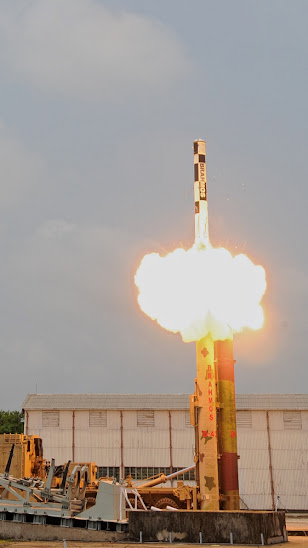
Brahmos Test on July 8, 2014: What Made it Different?

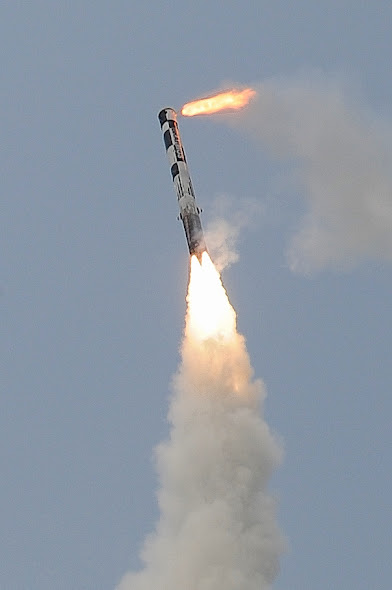
Brahmos developmental test on July 8, 2014.

DRDO classified the Brahmos missile test on July 8, 2014 as a developmental flight and its press release stressed that the test demonstrated the missile's ability to strike a hidden target without seeker based terminal guidance. The press release also claimed that the navigational system used on the missile was a world first.

According to the TNIE, the missile featured a G3oM navigational system on chip (SOC) weighing just 17-gm, which was developed by DRDO's Research Center Imarat (RCI) lab and produced by Bengaluru based private company Accord Software.

Based on an agreement with Russia and India's funding of the GLONASS system, India has access to GLONASS military signal, which is more accurate than the civil signal. India has also developed its own GPS augmentation system, GAGAN, which has an accuracy close to the GPS military signal. In other words, India has assured access to two highly accurate satellite based navigation systems.

Based on an analysis of past press reports, it appears that the G3oM chip can utilize either GLONASS military signal, or GAGAN, seamlessly and automatically switching between the two, to provide positional updates to host missile or aircraft to an accuracy of 3m.

G3oM reportedly features two antennas for  redundancy; in case one antenna gets shielded as a result of maneuvering by the host missile, aircraft or even tank, the other antenna ensures access to the satellite signal.

In future, Indian missiles will also have access to the military signal of IRNSS.

The G3oM is small enough to be fitted on Pinaka artillery rockets and smart bombs to make them deadly accurate.

IDP Sentinel members can read more about the Brahmos and its variants at the link below.

Brahmos Missile - IDP Sentinel

Tuesday, July 8, 2014

Brahmos LACM Destroys Hidden Target in Supersonic Steep Dive Using Satellite Navigation: Bunker Buster?

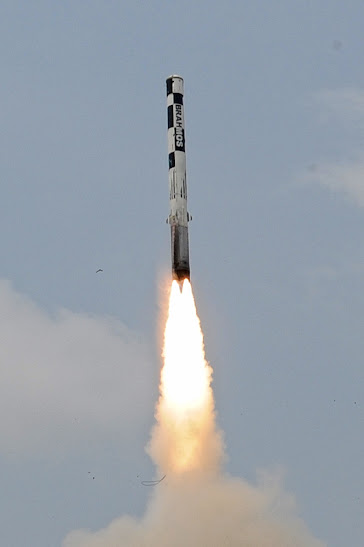
Brahmos LACM test on July 8, 2014
A land attack variant of the Brahmos missile was successfully tested from ITR on July 8, 2014. The missile featured a totally indigenous airframe and relied entirely on satellite based navigation to accurately destroy a hidden target in a steep glide supersonic attack. Possibly a bunker buster variant of the missile with a ground penetrating warhead.

According to a Brahmos press release

The launch took place from a from a Mobile Autonomous Launcher (MAL) prepared by the Brahmos 3rd regiment of Indian Army team at 1038 hrs. The missile flew through the designated 290 km distance at Mach 2.8 and achieved high precision with steep dive once again.


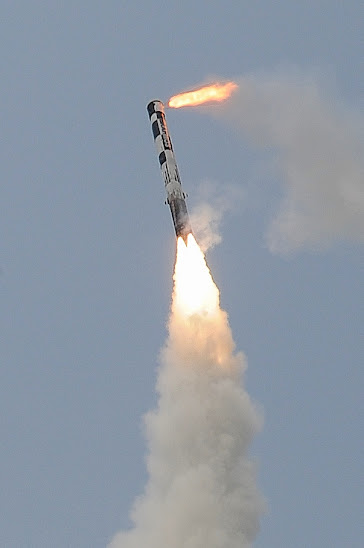
Brahmos LACM test on July 8, 2014
In a historical first, the advanced guidance system integrating multiple navigation satellites powered with new software algorithm, developed indigenously by Indian scientists and industries resulted in pinpoint accuracy of the missile system against hidden land targets.

Indigenous airframe produced by L&T and Godrej, guidance system by HAL, OBC, MIU by Ananth Technologies Ltd., Electronics industries, software development and guidance scheme by DRDO/RCI have been proved in the flight increasing the content from Indian industries.

Brahmos LACM test on July 2014

Highlights of the test:

1. Achieving high level of accuracy with multiple navigation satellites integrated with advanced software, without homing device, thus enabling pinpoint accuracy and further enhancing the precision capability against hidden land targets including mountainous regions.

2. Accomplishing the supersonic steep dive capability against difficult land targets.

3. Realization of airframe, both composite & metallic, built by the Indian industries which were tested and evaluated and altogether provided substantial increase of Indian produced content in the missile.

Tuesday, June 24, 2014

OFB's Dhanush 155-mm/45-cal Gun Cleared for Production after Critical Trials

Dhanush features advance electronic equipment for accurately laying the gun on target at long ranges. 

OFB's Dhanush 155-mm/45-cal towed gun on Friday, June 20, 2014 successfully completed critical trials at Pokharan paving the way for production to commence.

According to TNIE, the trials were witnessed by Minister of State for Defense Production Rao Inderjit Singh.

The trials cleared doubts about the gun arising from a barrel burst in August 2013, during last year's summer trials. OFB investigated the incident and concluded that neither the gun nor its barrel were at fault. It carried out internal firing trials to validate the conclusion.

Following Fridays success, the Army will now follow through the summer trials from the point where they were abandoned last year.

The gun successfully underwent winter trials at high altitudes in Sikkim last winter.

The Indian Army and Ordinance Factory Board have teamed up to build the 155-mm/45-cal Dhanush towed gun using TOT from the late 1980s contract to purchase 155-mm / 39-cal FH 77 B02 for the Army. Besides longer range than the Bofors gun, Dhanush features advanced electronics to accurately lay the gun on target.

The Army has projected an initial requirement for 414 of these guns, each of which will cost over Rs 14 crore, as part of its long-delayed artillery modernization program.

IDP Sentinel members can read more about the Dhaush towed gun at the link below.

Dhanush 155 mm/45 Caliber Upgraded Bofors Howitzer - IDP Sentinel


Friday, May 30, 2014

Was Modi's Message to China's Li Keqiang - We will accept the LAC as the border?

Border post on the LAC at Bum La Pass, Tawang, Arunachal Pradesh.


Prime Minister Narendra Modi possibly created history on Thursday May 29, 2014, and ironically no one seems to have noticed, thanks to our wayward newsmedia that considers anything non controversial as non news and currently has Article 370 coming out of all its orifices outlets.

The Indian PM told Chinese Premier Li Keqiang during a telephonic conversation on Thursday that the Indian government had resolved to "utilize the full potential of our strategic and cooperative Partnership with China...to work closely with the Chinese leadership to deal with any outstanding issues in our bilateral relations by proceeding from the strategic perspective of our developmental goals and long-term benefits to our peoples."

I am not a diplomat, but I don't think I have to be one to understand what Modi meant when he said "to deal with any outstanding issues in our bilateral relations by proceeding from the strategic perspective of our developmental goals and long-term benefits to our peoples."

For India's relations with China to flourish, the outstanding border dispute between the two nations with civilizational links needs to be resolved; not by round after round of official babu talks,  but a strategic political vision. A vision that focuses on "our developmen goals" and brings "long-term benefits to our peoples."

What Modi told Li Kequiang was - Lets move forward. Moving forward means leaving your past behind. India's relations with China have, for the past over 50 years, remained shackled by their border dispute.

A "strategic perspective" must look beyond intractable claims about our mutual border; it must look beyond give and take to resolve the border dispute. It must consider mutual give and forget.

A "strategic perspective" must come with the attitude - "What border dispute?"

For over 50-years India and China have clamored for their 'historical' border, unmindful of their differing perceptions on what was the historical border. Well 50-years is history by itself; the LAC could now well be viewed as the historical border and there is no difference in difference in perception over it.  (I believe the Chinese ambivalence on the LAC in Ladakh is really aggressive posturing, not a real difference in perception.)

So did Modi signal to China that it was time for India and China to resolve their border dispute along the lines suggested by the Chinese themselves earlier? By accepting the LAC as the new international border?

I think so. China's decision to send their foreign minister Wang Yi to India in the second week of June to follow-up on the Modi - Li Keqiang conversation is a clear indication that Modi has said something that China is delighted to hear.

Monday, May 19, 2014

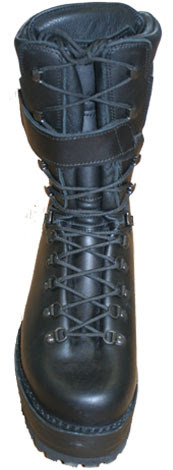
Indian Army Initiates Procurement of Anti Mine Boots for Infantry Soldiers

Anti Mine boots PPE50 from Energetics Technology, UK

MOD has initiated procurement of Boot Anti Mine Infantry (BAMI) for Infantry soldiers through the recent release of a RFI to identify probable vendors.

The Indian Army has in the past used boots procured from Czech Republic but troops found them heavy (4-kg) and uncomfortable. Indigenous anti-mine and snow boots designed by Footwear Design and Development Institute (FDDI), though lighter at 2.9-kg, did not meet other Army QRs.

MOD now wants to procure BAMI from a foreign vendor in a quantity large enough to enthuse the vendor to transfer technology for producing the boots locally in India.

Anti Mine boots are designed to protect troops from Anti Personnel mine to an extent where the injury from the blast, triggered by stepping on the mine, does not mandate amputation. The boots absorb most of the shock from the blast through sacrificial destruction of protective layers in the sole.

Anti Mine boots enable soldiers to fully recover from stepping on an anti-personnel mine. In a typical case, pressure from an anti-personnel mine blast can be to the order of 45,000kg/cm square. Without protective boots, such force would typically tear a limb apart. Anti-mine boots can reduce blast pressure to around 160kg/cm square. The reduced pressure results in relatively minor injury, such as fracture and some soft-tissue damage, precluding  It's unlikely to result in a limb amputation. Also, the reduced extent of injury allows more time between mine strike and medical evacuation, reducing the chances of a soldier bleeding to death on the battlefield, as so often happens during a battle. Soldiers recover more quickly at redcued medical cost.

The challenge is to make anti mine boots light and comfortable enough to allow soldiers to perform their missions. Instead of providing absolute protection, boots trade-off some protection for the imperative of mission accomplishment.

Without BAMI, attacking infanty soldiers breach protective minefields laid by the enemy by trailing tanks with  mine ploughs; in more difficult terrain the infantry uses explosive to blast a lane through the minefield. In both cases, the enemy is alerted to the attack. The use of BAMI enables attacking infantry to breach a minefield more stealthily.

MOD is looking for anti mine boots that can be used in various types of terrain (Plains, Deserts, Jungles, Glaciated, and High Altitude & Mountainous) encountered in India? The ministry is willing to consider strap on version of anti-mine footwear provided they can be worn over the in-service DMS boot used by Indian Army?