Friday, December 5, 2025

After Defense, Space & Nuclear Energy, Shipbuilding Joins India-Russia Strategic Pillars

Image by Grok via X


Update


During the course of the just concluded 23rd India - Russia Summit in New Delhi, the two nations signed a MoU on Training of Specialists for Ships Operating in Polar Waters: Between India's Ministry of Ports, Shipping and Waterways and Russia's Ministry of Transport, to train Indian seafarers for Arctic navigation.


Also, they signed a MoU on Shipbuilding Cooperation Framework: Covering joint ship design, technology transfer, local manufacturing, and maritime infrastructure. 


The MoUs signal India's readiness to partner with Russia in developing and using the NSR (Northern Sea Route) through the Arctic and build Ice-class ships.


Russian First Deputy Prime Minister Denis Manturov told Sputnik in an interview, "Organizing joint production of Arctic-class vessels could become a promising area of cooperation."


Joint ice-class shipbuilding will not only add more depth to the strategic relationship between India and China, it will facilitate increased trade between the two countries.


Ice-class ships are vessels with reinforced hulls designed to safely navigate areas with floating or broken sea ice, such as those seen during Arctic summers.


They differ from icebreakers, which are specialized vessels—often equipped with very powerful propulsion systems, including nuclear power—that can break through solid ice, including winter ice cover. Icebreakers typically have rounded, sloping bows that ride up onto the ice and break it under the ship’s weight and forward motion.


Jointly constructing ice-class ships would be mutually advantageous for both countries. It would allow India to leverage its robust shipbuilding infrastructure, while Russia would leverage its extensive experience in building icebreakers and ice-class ships.


Russia and India have been negotiating to boost trade by developing the Eastern Maritime Corridor (EMC), also known as the Chennai–Vladivostok corridor, and the Northern Sea Route (NSR)—through investments in port infrastructure and shipbuilding, particularly the construction of ice-class tankers to transport oil, and training Indian crews to operate cargo ships safely in the Arctic Ocean, negotiating ice blocks and frozen waters.


Northern Sea Route (NSR)

The NSR stretches about 5,600 km (≈3,500 miles) through the Arctic Ocean from Murmansk near Russia's border with Norway eastwards to the Bering Strait near Alaska. The route is an alternative to the Suez Canal and is around 40% shorter. It passes through challenging Arctic waters that are navigable mainly during ice-free months or with the assistance of Russian nuclear and diesel icebreakers.


With climate change reducing sea ice, the NSR is becoming increasingly navigable and is emerging as a more economic alternative to the Suez Canal.


Reduced shipping costs through the NSR make Russian resource exports—crude, LNG, and coal—more competitive, particularly for large consumer countries like China and India.


Currently, annual cargo volumes through the NSR fluctuate between 35 and 40 million tons.


To facilitate volume growth and transform the NSR into a major international shipping corridor, Russia is seeking partners to invest in support infrastructure, nuclear icebreakers, and ice-class cargo ships. Currently, the number of ice-class ships is insufficient to achieve the target of 200 million tons.


Eastern Maritime Corridor (EMC)

The Eastern Maritime Corridor (EMC), also known as the Chennai–Vladivostok Maritime Corridor, connects Chennai Port in India with Vladivostok in Russia's Far East. Spanning approximately 5,600 nautical miles (10,300 km), the corridor links India to the NSR. The EMC-NSR combination reduces cargo transit times from the traditional 40 days via the Suez Canal to about 24 days, bypassing congested chokepoints and avoiding West Asian regions prone to geopolitical instability.


The corridor was first proposed during PM Modi's 2019 visit to Vladivostok. Its relevance surged when India's trade with Russia grew over 200% year-on-year in early 2024. The importance of the route for energy security and supply chain diversification became evident.


Joint Working Group on the NSR


Following the 22nd India-Russia Annual Summit on July 9, 2024, in Moscow, India and Russia established a Joint Working Group (JWG) on the Northern Sea Route under the India–Russia Intergovernmental Commission.


The JWG aims to enhance bilateral maritime ties with a focus on Arctic navigation and trade routes.


Conclusion


With India and Russia targeting $100 billion in bilateral trade by 2030, the imperative to exploit the potential of the EMC and NSR—through collaboration in building infrastructure and ice-class ships—is obvious. As such, it is likely that India and Russia will firm up a partnership during President Putin's forthcoming visit to India.


By deepening its strategic partnership with Russia, India can prevent Moscow from becoming overly dependent on China, thereby preserving a more balanced Russia-India-China (RIC) dynamic. 


Thursday, December 4, 2025

India Braves Steep Price Escalation to Lease Second SSN from Russia


After nearly 10 years of negotiations, India and Russia have reportedly signed a $2-billion deal for the lease of another SSN from Russia for a 10-year period, NDTV reports, quoting sources.

(According to PIB, no new contract has been signed. The submarine is being leased under a contract signed in March 2019. There has been a delay in the delivery and the new delivery is scheduled for 2028.)

The lease terms stipulate that the submarine can only be used to train Indian Navy (IN) sailors to operate SSNs currently under development in India.

India had earlier leased the Akula-class submarine Nerpa for 10 years. The lease began on December 29, 2011, at the Bolshoi Kamen shipbuilding facility in the Primorye region (Far East), where the Nerpa was based. The boat was commissioned into the Indian Navy as INS Chakra in April 2012.

The submarine met with an accident in October 2017, when its sonar dome was damaged while entering harbour in Visakhapatnam.

Russian specialists fabricated replacement panels at their facility in Russia and brought them to Visakhapatnam for installation on the leased boat.

In 2019, India considered extending the lease but opted not to do so, reportedly due to the condition of the submarine.

Around 2015, the IN had expressed interest in leasing a Yasen-class submarine as a follow-up to INS Chakra. However, in 2016, Moscow and New Delhi agreed on a follow-up lease of a second Akula-class boat.

Negotiations for the lease began in 2016 but proved protracted because of a near-doubling of the lease price. The Chakra deal had cost $970 million.

It remains to be seen what type of submarine will be leased under the new contract.

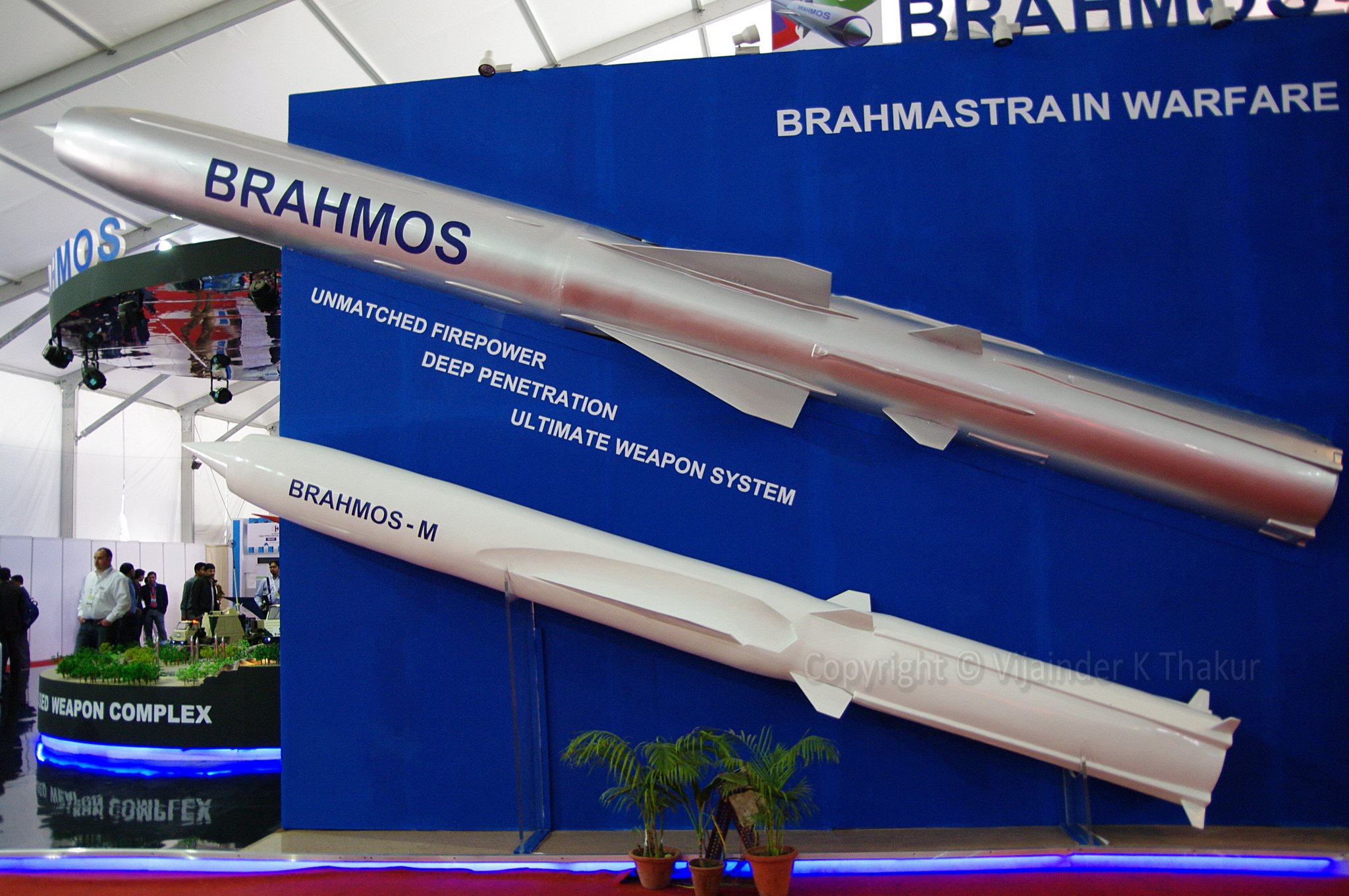
Fourteen Years On: Will BrahMos-NG Become More Than a Concept?

via X

As stated in my earlier post, it has been widely reported in the Indian press that the summit talks between the Indian Prime Minister and the Russian President—scheduled for today and tomorrow—will cover cooperation on the development of the BrahMos-NG missile.

The BrahMos-NG is not a BrahMos variant; it is a clean-sheet design of a high-supersonic missile that will be smaller and lighter than the current BrahMos. The NG was conceived to facilitate:

1. Carriage by lighter fighter jets such as the Tejas Mk.1A and MiG-29UPG.

2. Carriage inside the internal weapons bay of the FGFA, the stealth fighter that India and Russia were developing for the IAF around 2011.

The missile was initially projected to be 6 m long and 0.5 m in diameter. It was to have a top speed of Mach 3.5 and carry a 200–300 kg warhead to a maximum range of 290 km.

More recently, it has been reported that the new missile would be capable of launching from standard submarine torpedo tubes—just like the submarine-launched Exocet used on Type-75 Scorpene submarines.

In July 2019, a BrahMos official reportedly told India Today that the missile would be 5 m long—possibly to enable torpedo-tube launch.

BrahMos-NG – Misleading Development Timelines

Over the years, MoD and BrahMos officials have made overly optimistic statements about the development of BrahMos-NG.

A senior defence official reportedly told Times Now in November 2017 that the air-launched BrahMos-NG was “currently in the design stage,” adding that the missile would be ready by 2019.

In February 2024, BrahMos Aerospace’s Export Director Pravin Pathak stated that flight tests of the BrahMos-NG would begin before end-2025.

He said:

“In parallel with construction of the plant… the first flight samples of the new BrahMos-NG rocket will be assembled for flight testing… before the end of 2025.”

Development Actually Begins

There is good reason to believe that real development began only in September this year.

On September 9, TASS reported that BrahMos Aerospace is designing the missile and intends to begin autonomous testing next year.

TASS quoted Alexander Maksichev, Russian Managing Director of the JV, as saying:

“We are currently at the working design stage… and then we will move on to autonomous tests.”

He added that it was too early to discuss the timeline for actual flight testing.

"Autonomous testing" is likely ground-based testing. Flight testing could require an additional year or two, considering the need to upgrade a test aircraft—likely an IAF MiG-29—with supporting hardware and software.

After 14 years of announcements, it finally appears that the project is moving decisively forward and is awaiting a final political push from President Putin and Prime Minister Modi.

A New Ramjet Engine

Because BrahMos-NG must be significantly smaller and lighter, it requires a new, scaled-down ramjet engine.

During Aero India 2019, a BrahMos official stated that Russia’s NPO Mashinostroeyenia is developing this new engine.

This engine, like the missile itself, is a clean-sheet design. Feasibility studies and engineering analysis were reportedly completed around 2020.

Link With the Su-57

Russia has made a very tempting offer to India to buy its Su-57 stealth fighters for the IAF. 

In July, the IAF had projected to the Indian government a requirement for 2-3 squadrons of stealth fighters in view of the depletion of its fighter aircraft inventory, delay in AMCA development and the existing threat perception. 

If the government decides to take up the Russian offer, which appears rather compelling since it includes transfer of technology, the IAF would want the Brahmos-NG to be compatible with the variant of the Su-57 that it acquires. The missile would have to fit inside the internal bomb bays of the stealth fighter conforming to the load carrying the bays.

During the recently concluded Dubai Airshow, the Su-57 displayed a pair of Kh-58UShK anti-radiation missiles in its forward internal weapons bay during flight rehearsals and demonstrations. 

The Kh-58UShK has a launch weight of 650 kg. Extrapolating, it would appear that the max weight carrying capacity of the forward internal weapons bay is around 1,300 kg. 

In March 2019, BrahMos CEO Sudhir Misra stated that the Tejas underwing hardpoint can support a maximum load of 1,250 kg, including the launcher. This implies that the NG would weigh less than 1,250 kg.

The NG must therefore weigh below 1,300 kg. By contrast:

Standard BrahMos weighs ~3,000 kg

BrahMos-A weighs ~2,500 kg

Thus, miniaturisation is key.

In addition to physical fitment, radar and mission-computer integration would require Russian-Indian collaboration.

If Not Su-57—AMCA Compatibility

If India does not pursue the Su-57, the missile will need to be compatible with AMCA’s internal bay—an uncertain proposition at this stage of AMCA development.

Conclusion

Much remains to be done before BrahMos-NG becomes operational. Russia has begun work on the engine and on a new high-supersonic air-launched missile. India must now decide whether to participate meaningfully—before timelines slip, just as they did in the case of FGFA.

BrahMos Missile - What Uprade Does India Want from Russia?


via X

It is being widely reported in the Indian press that during President Putin's visit to New Delhi later today, India and Russia are likely to review the development of the BrahMos missiles and its proposed variants. 

Here is a quick analysis of the cooperation India is seeking for the existing BrahMos missile. In a subsequent post, I will dwell on the assistance we need for the development of the BrahMos-NG variant, which still remains largely conceptual. Notably, in March 2011, former BrahMos Aerospace chief A. Sivathanu Pillai had announced the start of its development with much fanfare

BrahMos Upgrade

India is not seeking Russian assistance to upgrade the existing BrahMos missile to increase its range, as some sections of the Indian press have reported. Instead, it is seeking Russian cooperation to reduce the missile’s production cost and thereby enhance its export potential.

The use of the BrahMos missile during Operation Sindoor not only impacted runways and hangars in Pakistan in a bad way, it also impacted global interest in the missile—in a good way. Indian Defence Minister Rajnath Singh has stated that at least 14 countries have expressed interest in acquiring the BrahMos supersonic cruise missile following its demonstrated success in the operation.

BrahMos Export Performance

The problem with the export of the Brahmos is that it's way too expensive. As such, procuring it in operationally significant numbers is beyond the fiscal capabilities of several small nations. 

India has so far exported the BrahMos missile to the Philippines, with deliveries of multiple batches completed under a $375 million deal signed in 2022. 

Recent reports suggest that in October 2025 India signed export contracts with two undisclosed countries worth approximately $455 million.

Negotiations are underway for the export of the missile to Vietnam ($700 million) and Indonesia ($450 million).

BrahMos Unit Price

Based on procurement figures of the Indian Armed Forces, the standard BrahMos missile is estimated to cost $2–3 million per unit, while the extended-range (ER) variant typically ranges from $3–4 million.

Prices can vary within both standard and ER categories depending on whether the missile is configured as an anti-ship variant or a land-attack cruise missile (LACM), each carrying different mission-specific features.

Cost Comparisons

Because of its high supersonic speed and large warhead, the BrahMos is a unique and potent missile. Only Russia and China have peer missiles. 

Russia's Onyx (P-800 Oniks) missile is a Brahmos analog that has been extensively and very effectively used in the war in Ukraine. Russia exports the missile. It's price is estimated at approximately $1.25 million based on multiple defense analyses and reports. 

The British Storm Shadow missile - which admittedly is a subsonic missile, but being stealthy, has good penetration - has a price tag estimated to be around $2 million.

Reasons for High Cost of Brahmos

The fact that India is discussing the unit cost of the BrahMos with Russia strongly suggests that Russia is exporting critical BrahMos components to India for final assembly. In other words, Russia’s profits come from the sale of these components—not from the missile itself. The reality is that BrahMos Aerospace functions less as a true joint venture and more as a structured arrangement in which the foreign partner earns revenue by supplying high-value parts.

In this respect, BrahMos Aerospace is no different from many of India’s joint ventures with Western or Israeli aerospace firms, where the commercial model similarly relies on exporting components rather than sharing the full value chain of the weapon system.

What is likely, however, is that Russia may be willing to make an exception for India—precisely to underscore how highly it values the strategic partnership.

Preliminary Cost Reduction Negotiations

BrahMos Aerospace Deputy CEO Chilukoti Chandrasekhar visited Moscow in September 2025 to discuss with the Russians India's plans to expand production capacity and lower costs. 

During his visit, responding to a question from TASS, he told journalists.

"The Russian side and the Indian side, both of us, are working to reduce the cost of the missiles so that more export orders can be honored at the same time. To augment the requirements for export as well as for our own need — for our own armed forces — we need to augment our production facilities also. We are working with our Russian partners to augment this facility," he said in response to a question from TASS.


Wednesday, December 3, 2025

Beating the Heat: How Anti-Thermal Cloaks Are Changing Drone Warfare

Russian troops reportedly used anti-thermal cloaks to evade detection by surveillance drones equipped with thermal-imaging (TI) sensors, allowing them to penetrate Ukrainian lines in Krasnoarmeysk at night.

The troops entered Ukrainian-held territory despite the presence of enemy drones, ambushed equipment and personnel, and mined roads to cut off supply lines—leaving the adversary confused and disorganised.

The cloaks—nicknamed “anti-drone raincoats” due to their poncho-like design and waterproof qualities—incorporate insulating and reflective materials such as nylon with embedded aluminium or silver particles, or layered Mylar (a reflective foil-like material) sandwiched between fabric.

These “raincoats” prevent the escape of infrared (IR) radiation emitted by the human body, which TI sensors detect as heat signatures. Their outer surface remains close to ambient temperature, reducing the thermal contrast needed for TI detection.

They are particularly effective during “thermal crossover” periods, when air and ground temperatures are nearly equal. This typically occurs after daybreak and sunset, as well as in rain or fog. During the day, the raincoats can also be effective when troops remain close to objects such as rocks or vegetation that are warmer than the surrounding air.


Tuesday, December 2, 2025

Heron Mk.2: Israel’s Surprise Turnaround on Technology Transfer to India


The Economic Times reported on December 1, 2025, that talks are underway for additional procurement and local manufacture of Heron Mk.2 drones.

A source told ANI, “All three branches have decided to purchase the Mk-II.”

The discussions are centered on IAI’s obligation to meet the Indigenous Content (IC) standards mandated for the local manufacture of MALE UAV systems. The requirement calls for 60 percent local work and manufacturing.

Eventually, the Heron Mk.2 is expected to be weaponized with locally manufactured precision-guided munitions.

India and Israel have been in talks since 2016 to weaponize the IAF’s existing inventory of Searcher and Heron drones. However, little progress has been made because of Israel’s reluctance to share critical drone technologies.

In early February 2020, reports indicated that IAI and HAL would sign a contract during DefExpo 2020 to manufacture Heron Mk.2 drones in India, with 100 units planned to meet the requirements of the defence services. Nothing materialized from this proposal.

Israel Aerospace Industries (IAI) is now actively bidding on India’s ₹30,000-crore tender for 87 MALE UAVs, offering deep transfer of technology for 100% local assembly of Heron Mk.2 airframes, engines, avionics, and payloads in India.

One possible explanation for India’s renewed interest in locally manufacturing the Heron Mk.2 could be the DRDO’s recent success in developing weaponization technologies, including sensors, drone-launched PGMs, and drone-based weapon-launch computer systems